Bill Submitted to Locate Integrated Headquarters of Power Generation Public Companies in Jinju Innovation City

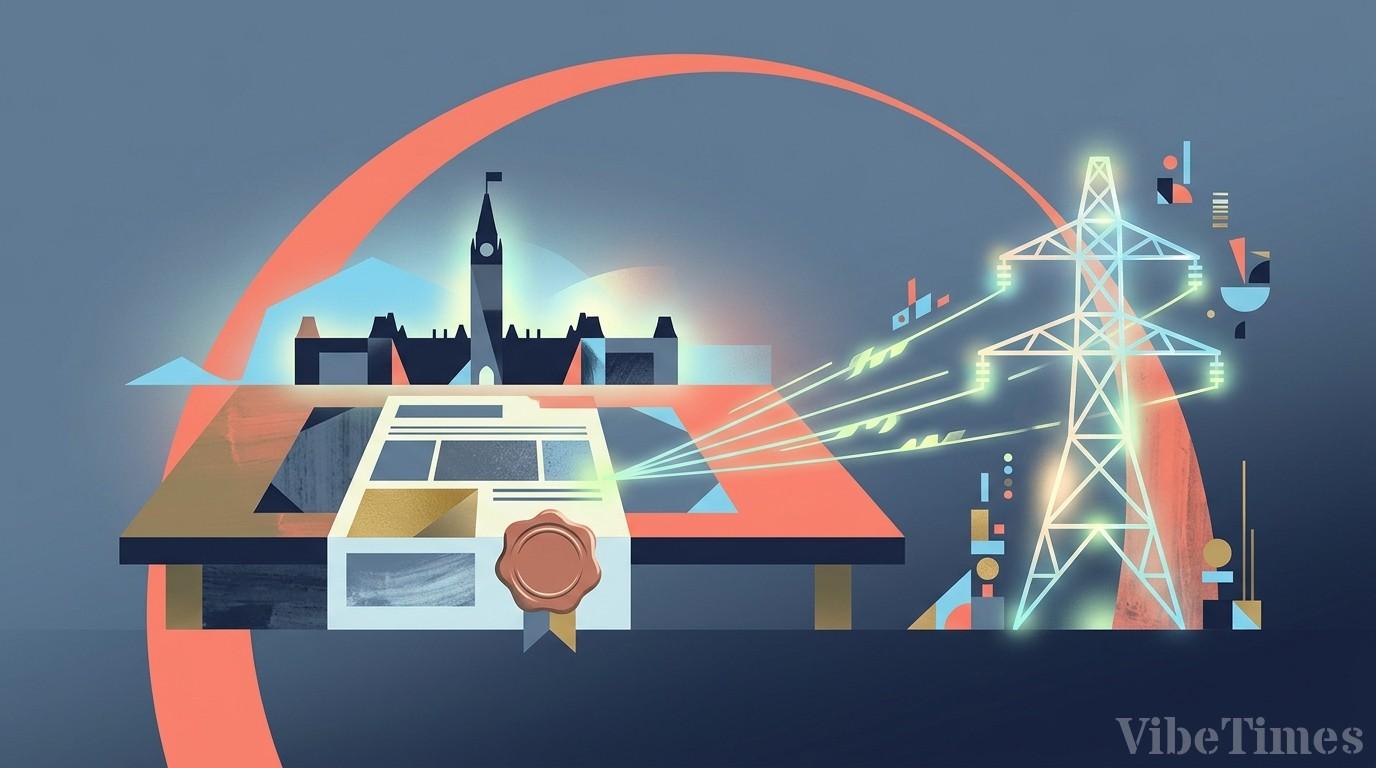
A Bill to Locate the Integrated Headquarters of Power Generation Public Companies in Jinju Innovation City Has Been Submitted to the National Assembly
People Power Party Rep. Kang Min-kook proposed a bill on the Korea Power Corporation on the 27th, which focuses on locating the headquarters of power generation public companies in Jinju Innovation City, South Gyeongsang Province. This bill aims to integrate power generation public companies currently operating scattered across the country to improve management efficiency and accelerate regional balanced development. Rep. Kang seeks not only the physical integration of power generation companies but also the substantive revitalization of innovation cities by specifying the location of headquarters in a particular region. This is based on the logic that the restructuring of energy public institutions should go beyond simple organizational slimming to become a new growth engine for the regional economy.
Currently, domestic power generation public companies are divided by region, facing continuous criticism for costs incurred from similar redundant tasks and fragmented decision-making systems. The bill proposed by Rep. Kang presents an integrated corporation operating system to eliminate these inefficiencies and designates Jinju as the hub. Jinju Innovation City is already home to some KEPCO subsidiaries and related institutions, making it considered the optimal location for creating an energy industry cluster. If the bill passes, Jinju is expected to emerge as a veritable center of the national energy industry, generating economic effects worth hundreds of billions of won and creating jobs.
Competition Between Ruling and Opposition Parties for Legislative Leadership in the September Regular National Assembly Is Intensifying Over Livelihood Issues and Special Prosecutors
Ahead of the September regular National Assembly, the Democratic Party has launched an all-out legislative and budget war to support the policy direction of the Lee Jae-myung government under the goal of 'Great Leap Forward of Korea.' According to Yonhap News, Democratic Party lawmakers held a workshop on the 27th to emphasize internal unity and discuss ways to recover public sentiment in response to the declining approval ratings of the administration. In particular, intense debates are taking place within the party over the handling of special prosecutor bills to investigate the truth about manipulated investigations and indictments. While Chief Spokesperson Park Sung-joon argues for prompt handling during the regular National Assembly, Policy Committee Chairman Kwon Chil-seung is showing a cautious stance that resolving livelihood issues is the top priority, moving to adjust party priorities.
The opposition's moves are interpreted as strategic positioning to win public sentiment ahead of the 2028 general election. The Democratic Party's floor leadership believes that gaining national consensus is essential for the special prosecutor bill on manipulated indictments and is coordinating the timing. At the same time, they plan to actively use the fast-track system to produce tangible legislative results on livelihood issues such as price stability and real estate measures. At the policy committee level, they are preparing specific bills for housing stability and household debt resolution, focusing on highlighting the failures of the ruling party and government. This is interpreted as an intention to demonstrate their appearance as a ruling party-in-waiting with policy alternatives, going beyond simple opposition.
Comprehensive Legislative Activities Continue for the Normalization of Educational Settings and the Cultivation of Future Talent
In the education sector, competition over bills to protect teacher authority and improve digital education environments is heating up. Rebuilding Korea Party Rep. Park Hyo-bin and Reform Party Rep. Jo Eung-cheon are focusing on policy proposals to strengthen the protection of teachers' educational activities in the National Assembly Education Committee. Rep. Jo Eung-cheon advocates for parallel strengthening of digital education environments and teacher authority, promising to introduce bills that reflect voices from the field. Rebuilding Korea Party Rep. Yeom Hye-ah also emphasized that teachers' educational rights must be guaranteed to build a future education system, calling for expanded policy support. These movements are responses to growing social concerns about the collapse of public education as cases of teacher rights violations have surged recently.
The normalization of public education is not simply about institutional improvements, but is achieved when a system is built that guarantees the human rights of both teachers and students. Rep. Woo Hyoung-chan emphasized the legislative branch's oversight function, calling for expanded policy support to protect teacher authority and the passage of the special prosecutor bill for Corporal Chae.
Legislative attempts to nurture talent for future industries are also taking shape. Democratic Party Rep. Shin Jung-hoon proposed an amendment to establish an energy gifted school at the Korea University of Energy Technology located in Naju, South Jeolla Province. This is a strategy to secure national competitiveness by discovering and nurturing energy-specialized talent early. Meanwhile, Democratic Party Rep. Lee Kwang-hee proposed the so-called 'Choi Young-joon Prevention Act' to strengthen verification of sexual crime records for public office candidates, focusing on raising moral standards in the public sector. Legislative activities covering education and ethics fields are expected to become points of conflict between the ruling and opposition parties during the regular National Assembly session.
Energy Restructuring and Judicial Risk Response Are Expected to Serve as Key Variables in the Political Landscape of the Second Half of the Year
The political landscape in the second half of the year is expected to be determined by the massive restructuring plan for the integration of power generation public companies and the confrontation between ruling and opposition parties surrounding various special prosecutor bills. The Korea Power Corporation bill proposed by Rep. Kang Min-kook, which could change the landscape of the energy industry, is expected to be dealt with in depth at the Industry, Trade, Energy, SME, and Startups Committee. The integration of power generation companies involves sensitive issues such as workforce restructuring and organizational reorganization, so the labor community's response and differences between ruling and opposition parties are expected to be the biggest key to the bill's passage. Experts predict that if the integrated corporation is launched, annual budget savings of several trillion won will be possible through strengthened purchasing negotiation power and prevention of duplicate investments.
Discussions on special prosecutor bills questioning the fairness of the judicial system are likely to become a stumbling block for ruling-opposition cooperation throughout the regular National Assembly session. People Power Party Rep. Yoon Sang-hyun is strengthening the ruling party's defense logic while being wary of the situation where the activities of the National Assembly Special Committee on State Administration Investigation related to the ballot paper shortage incident are transferring to discussions on a special prosecutor for the National Election Commission. On the other hand, opposition lawmakers such as Rebuilding Korea Party Rep. Kim Su-hye made clear their intention not to lose the initiative in welfare policies, emphasizing guaranteeing the people's health rights and expanding medical accessibility. In the upcoming regular National Assembly, the report cards of the ruling and opposition parties are expected to be divided depending on whether the livelihood bills proposed by each lawmaker can lead to actual budget allocation and legislative completion.
Comprehensively speaking, this September regular National Assembly is analyzed to become a battleground where energy industry restructuring for regional balanced development and institutional improvements for establishing public service ethics interlock. In particular, the power generation company integration bill, which combines regional interests and national energy policy, is expected to undergo considerable growing pains during the discussion process. In the investment market, volatility in energy-related stocks and regional development sectors may expand according to these legislative trends, requiring close monitoring. The passage schedule of the bill may be flexible depending on the national audit and budget review schedules, but the livelihood-centered legislative competition is expected to continue for the time being.
