Trump declared the Russia-Ukraine energy truce before any agreement was reached

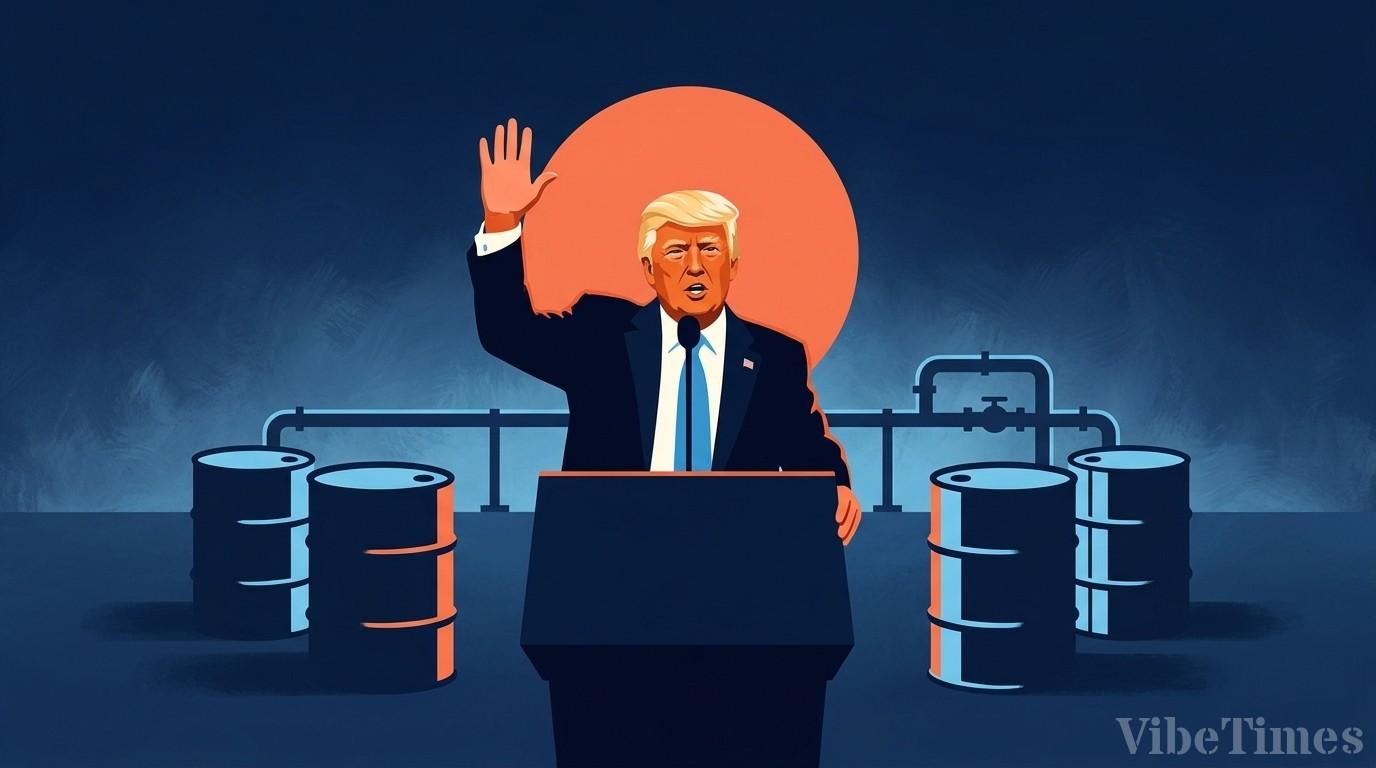
President Trump unilaterally announced an energy truce between Russia and Ukraine.
The move is seen as the Trump administration's policy line toward Russia and Ukraine—marked by pressure on both leaders, including remarks suggesting they "need a new president"—being put into actual action. In other words, rather than extracting agreement at the negotiating table, the United States declares the outcome first and compels the two countries to follow. This "declaration-first" diplomacy could also be applied to Korean Peninsula issues down the line, making it a matter South Korea cannot simply overlook.
Why an energy truce, and why now
As the Russia-Ukraine war has dragged on, attacks on energy infrastructure have become an increasing burden for both countries. Ukraine has dealt a blow to Russia's exports through strikes on its oil refineries, while Russia, too, is under pressure ahead of winter from damage to its power transmission and heating infrastructure. Because energy facilities are directly tied to civilian life, they easily serve as bargaining chips for partial ceasefires even while military combat continues.
President Trump has long made an early end to the war a signature pledge. This unilateral announcement carries the character of showcasing his delivery on that promise to the international community. However, if the unilateral declaration was made without verification of whether it reflects an official agreement between Russia and Ukraine, whether the truce will actually hold is a separate question. Past partial ceasefire agreements have repeatedly collapsed on the ground almost immediately after being announced.
The task left for Korean diplomacy
The problem is South Korea. The Lee Jae-myung government's diplomacy toward the United States has been compared to a "penalty kick without a goalkeeper"—meaning that, until the other side kicks the ball, there is effectively no way to block it. The metaphor captures the reality that South Korea's options for responding are limited in the face of the unpredictable decisions of the Trump administration.
The Lee Jae-myung government, which faces the task of achieving major decisions and results within the Trump administration's term, needs to restructure the rhythm of its negotiations with Washington to match the pace created by unilateral announcements like the Russia-Ukraine energy truce. As shown by People Power Party chief spokesperson Park Sung-hoon's concern about deteriorating South Korea-U.S. relations after interpreting the White House's "adherence to alliance standards" stance as a warning aimed at President Lee, Korea's political establishment is already reading every remark from the Trump administration as a measure of the alliance.
Energy markets and spillover effects
If Russia and Ukraine halt attacks on energy facilities, uncertainty in international oil and natural gas markets is likely to ease somewhat. With supply disruption concerns reduced, downward pressure could be applied to crude oil futures prices. Conversely, if the truce fails and attacks resume, a risk-premium-driven spell of volatility is likely to return.
President Lee's statement that "special favors in which the public bears the burden of nuclear power plants while profits are monopolized by specific companies must be treated with caution," along with his chairing of a public briefing on Korea's Green New Deal Transition (K-GX), show that the government is positioning energy security and nuclear policy as pillars of managing external uncertainty. Whether the Russia-Ukraine truce holds or collapses, international energy price fluctuations are expected to act as a direct variable in South Korea's debate over its nuclear and renewable energy mix.
Outlook: the fork between declaration and implementation
In the short term, Russia and Ukraine are highly likely to trade accusations of violating the truce. Whether the United States attaches enforcement measures—such as reinstating sanctions or adjusting support in the event of violations—will likely determine how long the truce lasts.
For South Korea, this phase must be weighed for its ripple effects on North Korea-Russia relations and the situation on the Korean Peninsula. The deeper Russia enters a phase of readjusting ties with the West, the more the dynamics of North Korea-Russia alignment could shift. With the Lee Jae-myung government having already played its cards for easing tensions with Pyongyang—halting loudspeaker broadcasts and banning anti-North leaflets—the key question will be whether the diplomatic space created by the Russia-Ukraine truce can be channeled into dialogue on the Korean Peninsula. Given that the agreement emerged under searing pressure, down to remarks that the leaders "need a new president," the reasonable approach would be to prioritize managing contingencies over optimism until the truce's effectiveness can be verified.