Single-Person Households: Groceries vs. Meal Kits—Which One Pays Off?

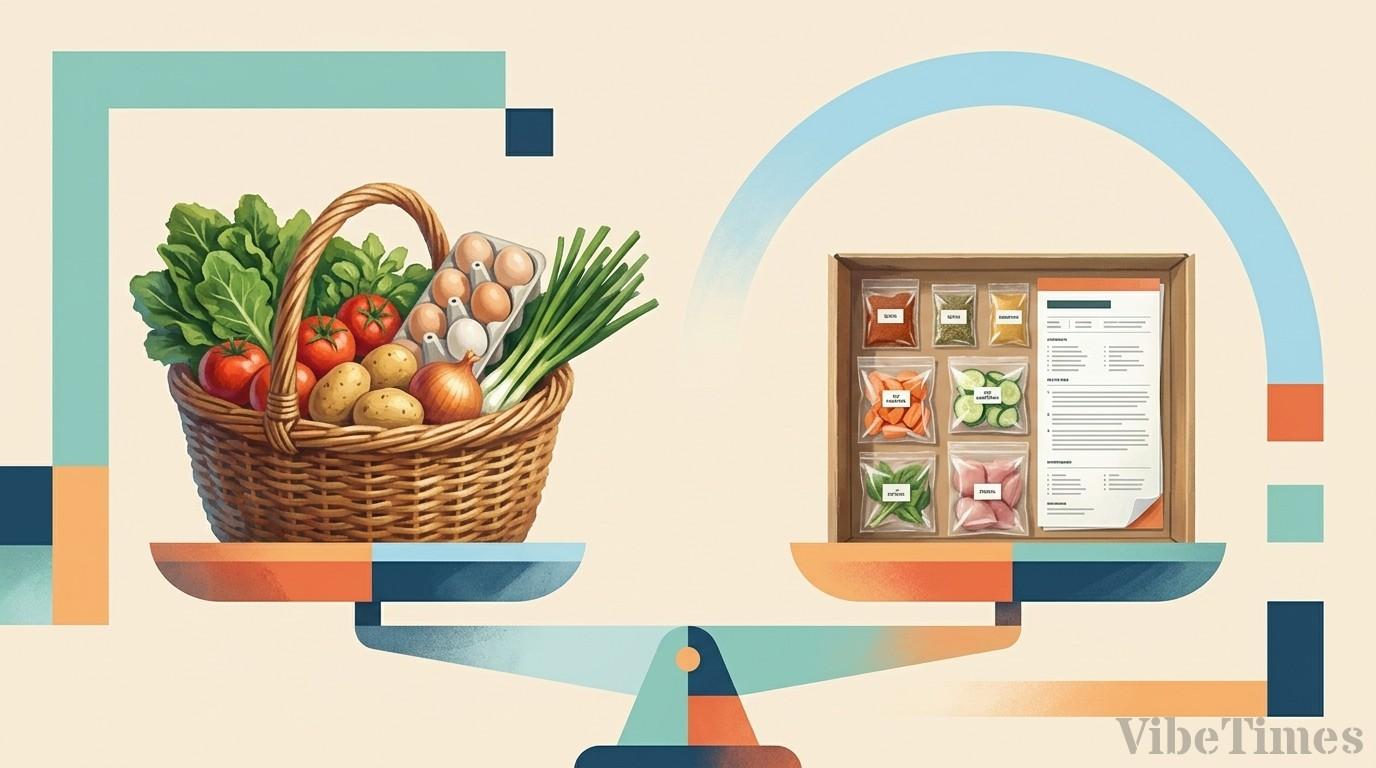
The cost of a single meal for a one-person household can differ by up to twofold depending on how it is prepared. A bowl of kimchi fried rice made from scratch carries a real cost of 3,000–4,500 won, while the meal kit version runs 4,500–6,000 won. That gap, however, flips with cooking frequency. For those who cook only once or twice a week, grocery shopping—once losses from discarded ingredients are added in—becomes the pricier option. The conclusion first: there is no single right answer; three variables—cooking frequency, the value of one's time, and the ability to manage waste—settle the question.
7.82 Million Households Set the Table Alone
Single-Person Households Now 35.5% of All Households
Under Statistics Korea figures, South Korea's single-person households hit an all-time high of 7.82 million in 2023, accounting for 35.5% of all households. Their average monthly food spending stands at 300,000–400,000 won, weighted heavily toward dining out, delivery, and convenience foods. The structural problem is clear: ingredients bought for one person leave excess. A whole stalk of scallions and a few onions rotting in the fridge have become part of everyday life for those living alone.
A 4–5 Trillion Won Meal Kit Market, and Inflation-Driven Demand for Cost Comparisons
South Korea's meal kit market expanded from roughly 3.9 trillion won in 2021 to 4–5 trillion won by 2024–2025. As dining out and delivery costs surged, more consumers began weighing the economics of a meal solved at home. Meal kits have kept growing on the back of a clear value proposition: they eliminate ingredient prep.
The Unit-Cost Battle, Calculated Per Meal
Meal Kits Range From 3,000 to 12,000 Won Depending on Type
Meal kit prices vary widely by type. Premium kits—such as those from Baek Jong-won's Theborn, CJ Diset, and Fresige—run 5,000–12,000 won per serving and come with prepped, fresh ingredients. Mid- to low-priced sets like GS Retail's youus and E-mart's Piku are sauce-and-ingredient kits priced at 3,000–6,000 won. Refrigerated ready meals that only need reheating, such as lunch boxes and salads, cost 3,000–8,000 won, while HMR items like Market Kurly's group-purchase side dishes run 8,000–15,000 won for two servings, though the per-meal cost drops when divided across several meals.
The prevailing industry assumption is that meal kits tack on a premium of 1.5 to 2 times over ordinary ingredients as the price of cutting out cooking labor. What that premium really buys is not the ingredients but the prep work and the time.
The Real Cost of Groceries: Spoilage Is the Battleground
The ingredient cost of home cooking is low. Spreading staple ingredients—rice, eggs, tofu, seasonal vegetables—across multiple meals can push the per-meal cost down to 2,000–3,500 won. The problem lies in the hidden costs. Many surveys indicate that fresh-food spoilage rates for single-person households reach 20–30%. Even if a serving of kimchi fried rice costs 2,500–3,500 won in ingredients, adding 500–1,000 won in spoilage losses narrows the real cost to 3,000–4,500 won. A complete accounting also requires adding 30,000–50,000 won for an initial stock of seasonings and 40–60 minutes of time per meal, from grocery shopping to dishwashing.
Stir-Fried Pork Reveals Both the Gap and the Reversal
A full jeyuk bokkeum (spicy pork stir-fry) set makes the difference vivid. Ingredients totaling 4,000–5,000 won, including 200 grams of pork, undercut the 6,000–9,000 won price of a meal kit or ready-made version. Stretch the leftover meat into the next meal and the per-serving cost falls into the 3,000-won range. Salad cuts the other way. Homemade runs 2,500–4,000 won per serving, but requires buying small quantities of many ingredients, sending spoilage soaring; for those who eat salad only once or twice a week, a 5,000–8,000 won finished product is the sensible buy.
Cooking frequency decides the answer
At three meals a week, the winning conditions for each side diverge
For households that put a home-cooked meal on the table every day, groceries win by a landslide. Cook three to four times a week or more and the ingredients get used up, stabilizing unit costs. Cap it at one or two sessions and spoilage losses plus time costs outstrip the ingredient savings. Real-world comparisons in solo-living communities such as Naver's Knowledge iN repeatedly reach the same conclusion: for small-batch cooking in one- to two-person households, meal kits—with leftover ingredients near zero—hold the edge.
Putting a Price on Time
Back out a monthly salary and a commuter's time is worth 15,000–20,000 won an hour, making 30 minutes of cooking an opportunity cost of 7,500–10,000 won. Viewed through that lens, expert analysis that meal kits make sense the higher one's income gains traction. For those who savor cooking for its own sake, the equation reverses—cooking carries recreational value, and grocery shopping wins.
A Hybrid Strategy for a Monthly Food Bill in the 300,000-Won Range
Groceries for Rice, Meal Kits for the Main Dish
A monthly food spending simulation based on eating two meals a day at home shows the differences. Dining out or ordering delivery for everything runs 450,000–600,000 won; relying entirely on meal kits and ready-made meals, 400,000–550,000 won. Cooking everything from scratch comes to 250,000–350,000 won, while mixing the two approaches brings it down to 300,000–400,000 won. A practical playbook exists. Rice costs under 500 won per meal and eggs 300–400 won each, so buy staples in bulk and use meal kits only for main dishes—one side dish pairing completes a 6,000–7,000 won meal.
Techniques to Drive Waste to Zero
Frozen dumplings, at 300–500 won apiece with a 0% spoilage rate, are ideal for single-person households. Portioning meat and vegetables into single-serving packs for the freezer right after purchase can push spoilage below 10%. Online subscription deliveries and bundle discounts yield savings of 5–15%. Meal kits with short shelf lives frequently see flash discounts of 30–50%, so the rule is to buy when they go on sale.
Two Caveats Worth Watching
Many meal kits contain 50–80% of the 2,000 mg daily sodium guideline in a single serving, so checking nutrition labels is a must. Prices also fluctuate widely. Grocery shopping that looks cheap turns into a loss if purchases are made without a consumption plan, as discarded ingredients pile up. The surest answer in an era of rising prices is to track spending week by week—one week using only groceries, one week only meal kits—and find your true unit cost, factoring in spoilage and meals eaten out.
