Do Your Pre-Bed Stretching Before You Shower, Not After

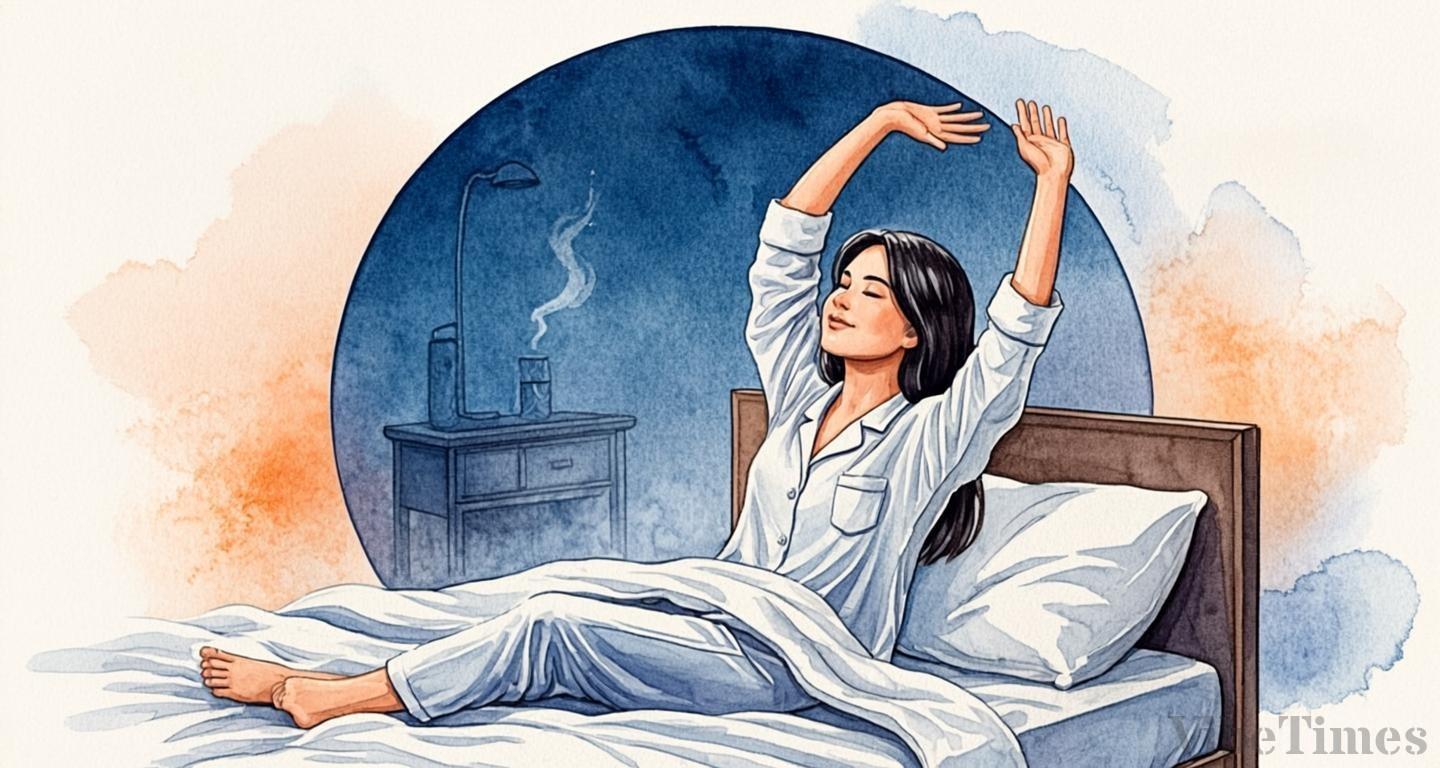
The key to a good bedtime routine lies not in the activities themselves, but in their order.
To get straight to the point: stretching first, followed by a warm shower 30 to 60 minutes later, is physiologically the most advantageous sequence. According to a 2019 meta-analysis in Sleep Medicine Reviews, people who took showers of about 10 minutes in water at 40–42.5℃ one to two hours before bed reduced the time it took them to fall asleep by an average of roughly 36%. As these numbers show, the ability to fall asleep can be dramatically improved through the design of timing and sequence.
Your Body Temperature Must Drop Before You Can Fall Asleep
The Melatonin Switch Turns On When Body Temperature Falls
The human body activates melatonin secretion and enters deep sleep only when core body temperature drops by about 0.5–1℃. Both showering and stretching interfere with this temperature rhythm and the balance of the nervous system. Thus, which one you do first is not a matter of preference, but a matter of engineering sleep physiology.
The Real Benefit of a Shower Comes From the 'Downward Curve'
The principle behind how a warm shower aids sleep is surprisingly simple. Immediately after a shower, blood vessels in the skin and extremities dilate, releasing body heat outward, and core body temperature subsequently drops sharply, producing a sleep-inducing effect. The key mechanism is deliberately raising body temperature only to let it fall. Since this downward curve must complete just before bedtime, the shower should, in principle, be placed at the final stage of the routine.
Three Reasons Stretching Should Come First
Muscle Relaxation Counteracts the Shower's Arousing Effect
Light stretching and yoga release muscle tension and activate the parasympathetic nervous system — the body's rest mode — lowering heart rate and blood pressure. Entering the shower with the body already relaxed softens the shower's temporary arousing effect. Multiple studies from the 2020s have also reported that light evening yoga is effective in shortening the time it takes to fall asleep and improving sleep quality.
Moving After Body Temperature Rises Wakes the Body Back Up
Stretching after a shower, when body temperature is already elevated, can activate the muscles, increase blood flow, and heighten alertness once again. The reverse order allows the temperature-decline curve to connect naturally with the moment you fall asleep. From a hygiene standpoint, too, it is beneficial for bedding cleanliness, as the sweat produced during stretching gets washed away.
However, intensity is everything
Not all stretching is automatically good. Excessive joint mobilization that causes pain can actually increase alertness, and high-intensity exercise raises cortisol and body temperature, disrupting sleep. It is safest to avoid vigorous exercise altogether within two to three hours of bedtime.
Practical Guide: A 90-Minute Routine You Can Start Tonight
Recommended Timeline
Begin 90 minutes before bed with 15 minutes of stretching. Loosen the lower back and spine in child's pose, open the hips in butterfly pose, and release tension with neck and shoulder rolls. Lying on your back with your legs raised against a wall is effective for improving circulation in the legs and activating the parasympathetic nervous system. Hold each pose for 20–30 seconds, and pair it with 4-7-8 breathing — inhaling for 4 seconds, holding for 7, and exhaling for 8 — to amplify the relaxation effect.
Then, one hour before bed, take a shower for about 10 minutes in water at 38–41℃. Let warm water flow generously over the back of your neck and shoulders, and keep warm immediately afterward, allowing your body temperature to fall gradually. Spend the remaining 30 minutes reading or meditating before getting into bed, so that the temperature-decline curve aligns precisely with the moment you fall asleep. On days when a shower feels like too much, a 15-minute foot bath in warm water produces a similar effect.
Combinations to Avoid
Water hotter than 43℃, a shower right before bed, and vigorous stretching immediately after a shower are all a worst-case combination that promotes wakefulness. Hot water in particular stimulates the sympathetic nervous system, sending you to bed while your body temperature is still high. For the same reason, sleep hygiene guidelines from the Korean Sleep Research Society and others advise avoiding excessive exercise right before bed and recommend relaxing activities instead.
Bigger Factors Than Order
Caffeine and Insomnia: The Exceptions
No matter how well you sequence your routine, it is useless if you consume caffeine late in the day. Caffeine should be cut off at least six hours before bed, and the blue light from smartphones also affects sleep more than sequencing does. Those with cardiovascular conditions should be cautious about prolonged baths in water above 40℃.
Experts commonly advise that because individual differences are large, the order in which your own body feels most relaxed should come first. However, if insomnia symptoms persist for more than three weeks, consulting a sleep clinic should take priority over adjusting your routine. The key is not any particular movement, but repeating the rhythm of raising and then lowering body temperature at the same time every day — and consistent habituation itself is regarded as the single biggest factor in improving sleep.