Overnight parcel delivery shifts to be capped at 12 times a month

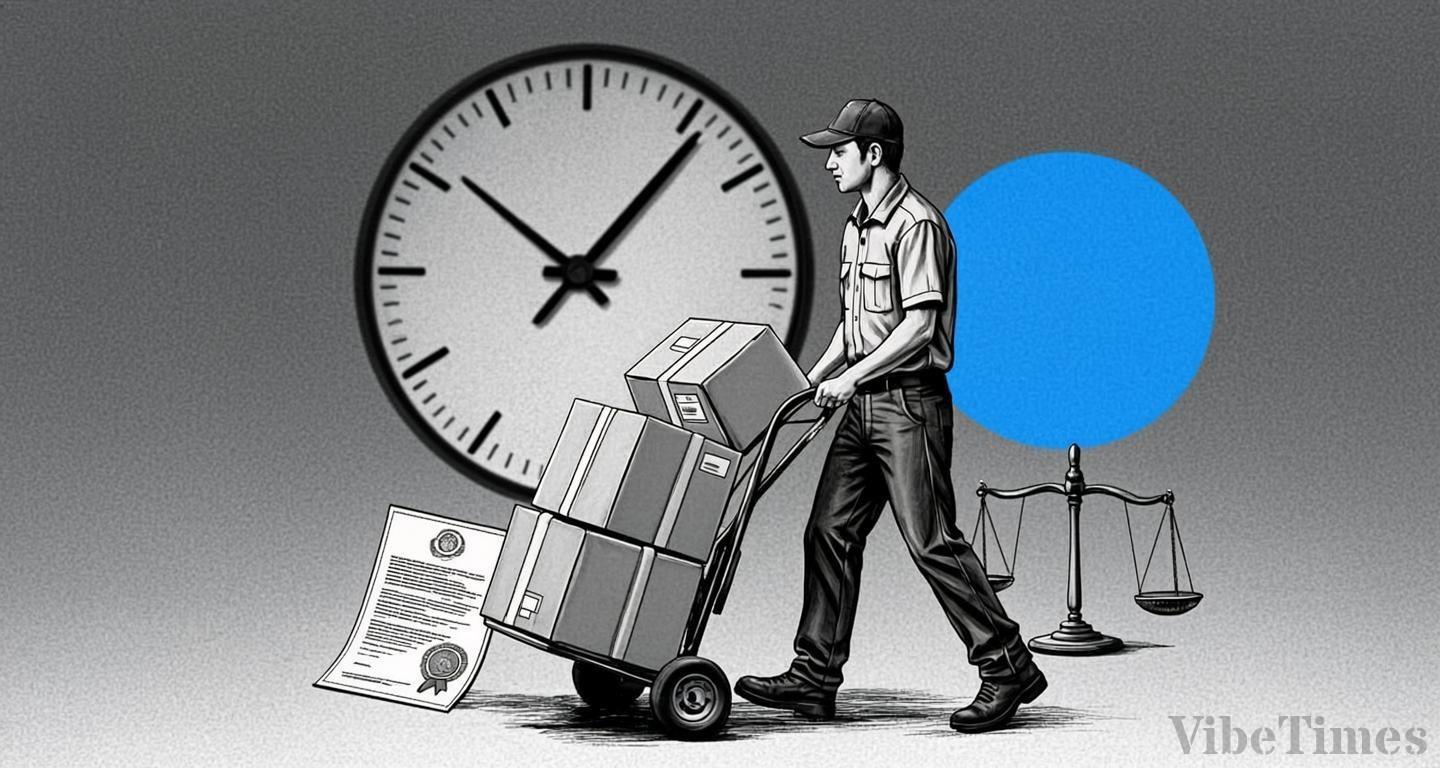
Couriers' night work now limited to 12 days a month
Rep. Park Hong-bae of the Democratic Party has introduced a bill to cap overnight work by parcel delivery workers at 12 times per month. The bill also seeks to legally guarantee a minimum of 11 hours of rest after the end of a shift. It aims to institutionally curb the long night hours that have long driven parcel workers into overwork and industrial accidents.
Why overnight parcel work is now under scrutiny
The parcel industry has long operated on a double structure of early-morning truck loading and nighttime sorting. Couriers must arrive at terminals as early as 4 or 5 a.m. to pick up their shipments, while sorting workers sift through parcels late into the night. At understaffed terminals, working more than 12 hours a day has been far from rare. South Korea's parcel volume reaches billions of boxes a year, yet regulation of the working hours of those who move them has effectively been neglected.
Night work in particular takes a heavier toll on the body than simply working long hours. Occupational health research consistently concludes that repeated nighttime exposure disrupts the human circadian rhythm, raising the risk of sleep disorders and cardiovascular disease. A series of deaths of parcel workers from overwork and industrial accidents, which became a social issue, formed the backdrop to this legislation.
What the bill's key provisions are
The bill rests on two pillars. First, it limits overnight work by parcel workers to no more than 12 times a month. Second, it guarantees at least 11 consecutive hours of rest between the end of one shift and the start of the next. The 11-hour rest rule is a standard adopted in the European Union's Working Time Directive, intended to secure adequate sleep and recovery time.
The bill is reported to cover couriers employed by parcel companies and subcontracted carriers, as well as sorting workers in general. It dovetails with discussions on recognizing parcel couriers within subcontracting and outsourcing structures as de facto employees. Once the regulation takes effect, parcel companies will have to adjust how they allocate shipment volumes and their terminal operating hours, making additional hiring inevitable.
Industry and labor remain at odds
Labor groups welcomed the bill as belated but warranted, calling it a minimum safety net for preventing industrial accidents. The industry, however, worries about costs. A reduction in overnight logistics volumes could delay next-morning deliveries, and making up for that would require additional investment in night staff and terminal facilities. Some also point to the possible shrinking of the early-morning and same-day delivery services consumers have grown accustomed to.
Parts of the business community argue that the timing and pace of the regulation need adjusting, warning that rising logistics costs could be passed on to consumer prices. Labor counters that the practice of consuming workers' sleep to cut labor costs can no longer be tolerated. The central battleground of the legislative process is likely to be who bears the cost burden, and in what proportion.
Legislative process and outlook
The bill must clear the National Assembly's Environment and Labor Committee, then pass a subcommittee and a full committee vote to become law. With National Assembly Speaker Woo Won-shik vowing smooth processing of livelihood bills during the regular session, momentum could build for passage of labor-related legislation. But with industry opposition remaining and technical details to be worked out, negotiations are expected over how overnight shifts are counted and what exceptions will be allowed.
In the long run, the bill's purpose will only be fulfilled if expanded automation of overnight sorting advances in tandem with genuine employee protections for parcel couriers. How quickly the structure changes—one in which the box on the doorstep at dawn is made at the cost of someone's sleep—is up to the National Assembly.