President Lee Jae-myung to Hold Press Conference Addressing the Nation on the 18th

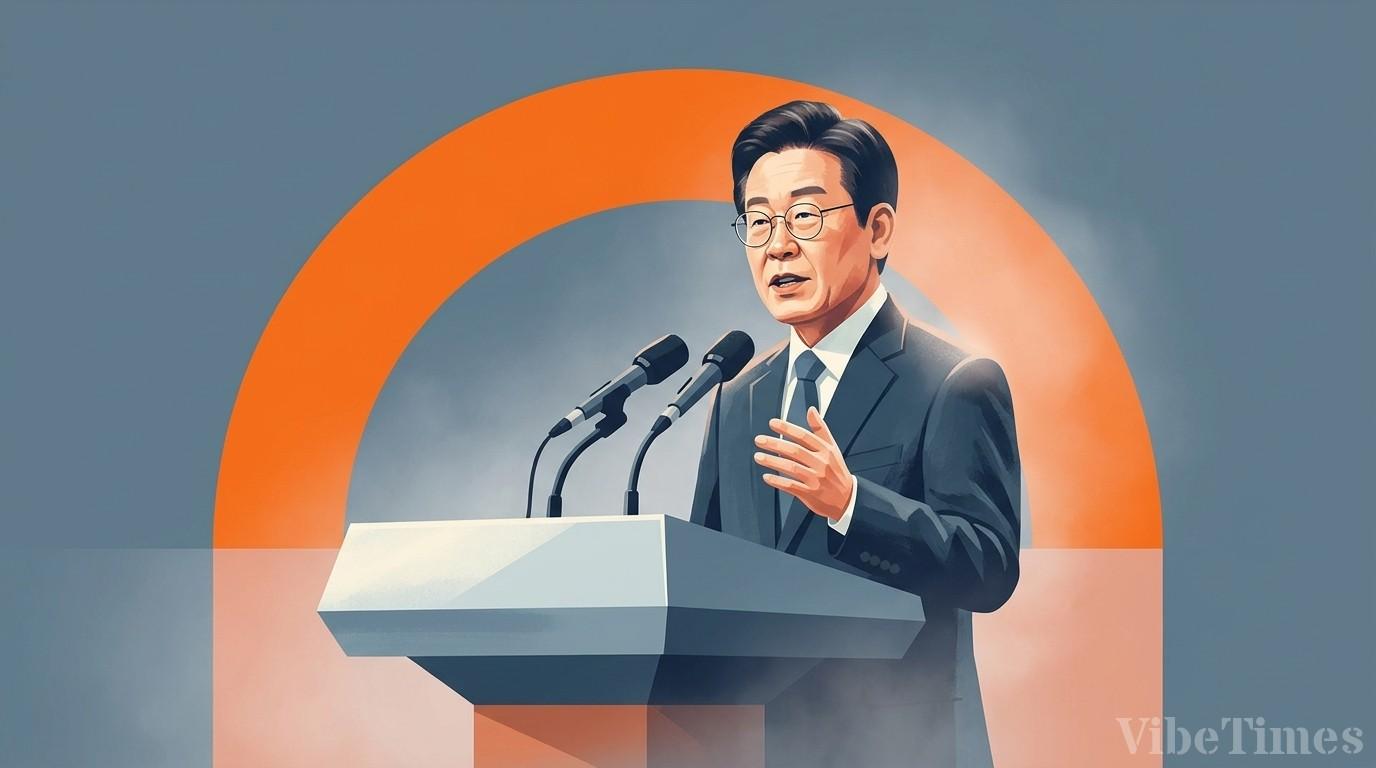
President Lee Jae-myung will hold a press conference addressing the nation on the 18th, where he will personally explain the overall state of national affairs for the first time since taking office.
According to the presidential office, the press conference is being prepared as an occasion to publicly explain and clarify the recurring personnel controversies and policy issues that have emerged since his inauguration. It appears that the decline in presidential approval ratings also served as background for the event: ratings, which started relatively high early in his term, have fallen for nine consecutive weeks according to Realmeter surveys, dropping below the 35 percent mark. Notably, support among people in their 20s has remained in the 10 percent range, leading observers to say the presidential office has reached a moment when it must halt a step-by-step erosion of public support.
Accountability for Personnel Decisions Already in the Spotlight Before the Conference
The timing of the press conference is no coincidence. On the 30th of last month, President Lee nominated six ministerial candidates for his second cabinet — including Yong Hye-in and Kim Seung-won — without prior notice. Of these, Yong Hye-in, a member of the Rebuilding Korea Party, withdrew her candidacy just 14 days after her nomination. The withdrawal came after former Prime Minister Kim Min-seok urged the candidates to step down, criticizing the personnel process as "using a bulldozer instead of a hoe." Opposition parties and the media pointed to so-called 'reward-based appointments' and a narrow talent pool as recurring causes of the personnel failures.
The proposed structure of the Public Prosecution Office also posed a problem. After President Lee ordered revisions and improvements to the proposal, the Ministry of Justice is redesigning the organization and staffing ahead of the office's planned launch on October 2. He also ordered additional vetting of the candidate for head of the Bureau of High-Ranking Officials Investigation, making it difficult to avoid criticism that the candidate vetting system itself was flawed. In short, the entire personnel line has entered a period of re-examination.
What Must Be Addressed… Issues Abound
President Lee faces no shortage of tasks at the press conference on the 18th. The first is a direct apology and declaration of accountability for the personnel failures. How firmly the president states that "the responsibility is mine" is expected to determine the pace at which trust in the second cabinet is restored. The second is the 2027 budget bill. The government has drafted a budget of 820.9 trillion won in total spending, including a newly created 162.3 trillion won 'Future Response Fund.' Without an explanation of how the funding will be secured and of fiscal sustainability, negotiations between the ruling and opposition parties will not be easy.
The third is foreign strategy. In his Liberation Day address, President Lee presented three major blueprints for 'inclusive, stable, and responsible peaceful coexistence,' prompting pushback from the People Power Party, which argued that some of his remarks left the door open to a second term. If this comes up again at the press conference, the constitutional revision and re-election debate could be elevated to a central issue in national politics. Another point of interest is how the president will translate diplomatic and trade achievements into tangible benefits for everyday life — including his statement that dependence on Middle Eastern oil has been lowered to around 50 percent, and discussions with Uzbekistan on critical minerals, AI, and defense industry cooperation.
Variables That Will Determine the Press Conference's Success
Tak Hyun-min, former presidential protocol secretary, emphasized during a broadcast appearance on the 15th that President Lee "must take sharp questions." In other words, he argued, trust can only be built if the event is not a controlled press conference that screens questions in advance, but one that submits itself to live on-air scrutiny. Indeed, with crisis awareness running high within the ruling party — so much so that Rep. Lee Kwang-jae described the falling approval ratings as an 'orange light' — if the press conference amounts to nothing more than a perfunctory messaging exercise, it could only deepen public discontent.
Another variable is the labor community. On the 3rd, President Lee held a tea meeting at the presidential office with the heads of the two major labor federations, calling for social dialogue on pending issues such as the mega special economic zones. But the Korean Confederation of Trade Unions criticized that a full year after he ordered measures against discrimination against migrant workers, no fundamental solutions have materialized. If the press conference sidesteps labor and distribution issues, the erosion of his support base — including among people in their 20s — could accelerate. As the saying goes, true leadership in a moment of crisis lies in unwavering composure; how calm and concrete President Lee's answers prove to be is expected to be the decisive factor of this press conference.