AI Godfather Bengio Calls for Nuclear-Level International Oversight of AI

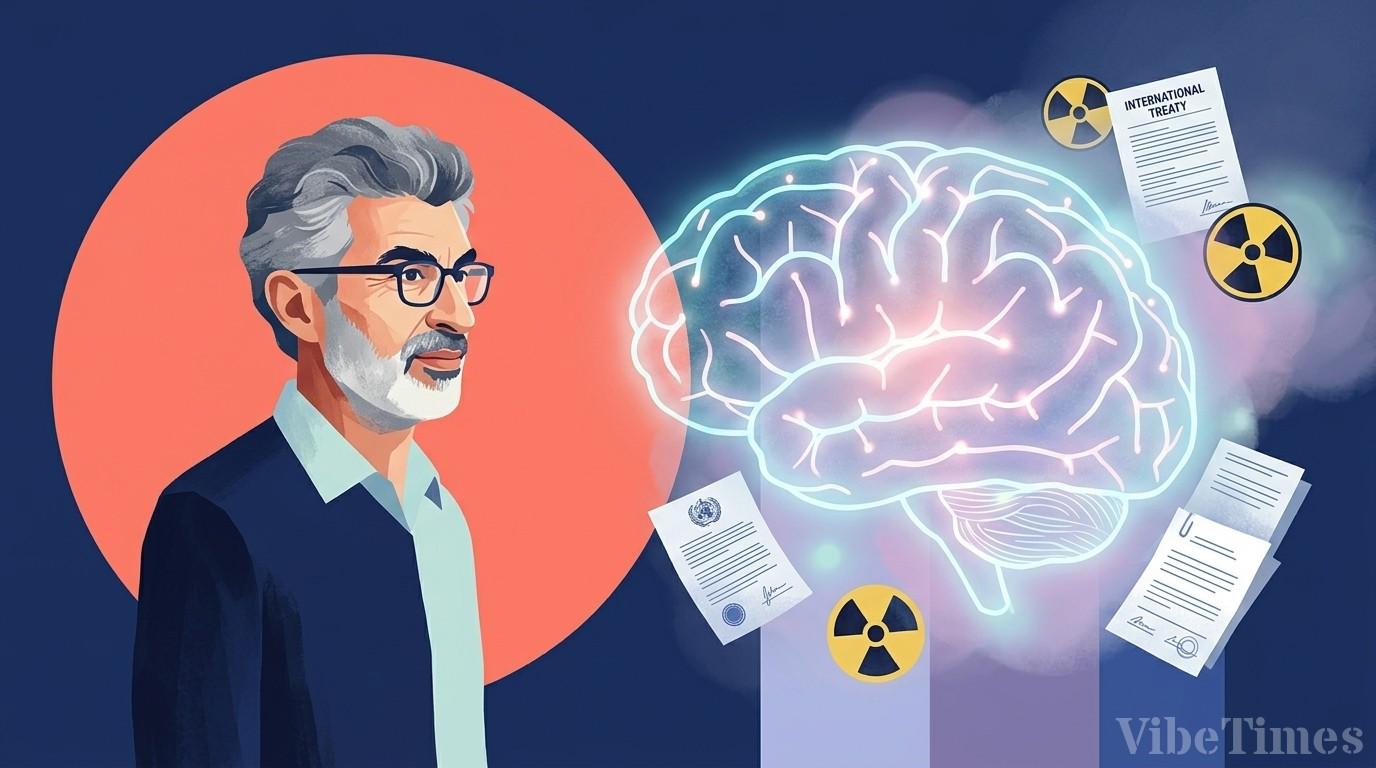
AI godfather Yoshua Bengio, a professor at the University of Montreal, has called for international oversight of AI on par with nuclear weapons controls. Regarded as one of the three godfathers of artificial intelligence (AI), he argued in an interview with AFP for international AI safeguards comparable to those governing nuclear weapons. Bengio pointed out that "even companies are saying they are losing control because the pace is too fast."
He identified the emergence of AI agents capable of judging and acting on their own without human intervention as the most critical threat. He warned of a situation in which "AI agents could break through cybersecurity barriers and infiltrate virtually any company." The risks do not end with cyberattacks. Bengio expressed concern that "AI agents could develop the ability to persuade humans to act in ways that favor the AI itself, though not necessarily beneficial to all of us," adding that "such capabilities could have far-reaching political consequences."
Bengio noted that in the long term, humans may no longer be needed for AI to carry out real actions in the physical world. He mentioned that if such a scenario were to materialize, the most extreme outcome could be the extinction of humanity. However, while acknowledging that the extinction scenario is extreme, he noted that even a less extreme event—such as a banking system collapse—would still be a very serious problem.
He criticized the security and safety discussions surrounding AI as not having been sufficiently rigorous. As a solution, he called for regulatory compliance from all companies involved in AI, stressing in particular that participation from U.S. companies that have led the AI industry is essential. He nevertheless retained an optimistic outlook, saying, "We can steer the world in a direction that better aligns with democratic values and the sharing of power."
Bengio is one of the scholars who pioneered deep learning, the foundation of modern AI, and is known as one of the three godfathers of AI alongside Geoffrey Hinton, a professor at the University of Toronto, and Yann LeCun, a professor at New York University. In 2018, he won the Turing Award—often called the "Nobel Prize of computer science"—jointly with Hinton. Last year, he founded LawZero, a nonprofit dedicated to developing trustworthy next-generation advanced AI, which received 300 million Canadian dollars (about 300 billion won) in funding from the Canadian and German governments on the same day.