Lee Jae-myung Holds Press Conference as Approval Rating Hits Record Low of 33.8%

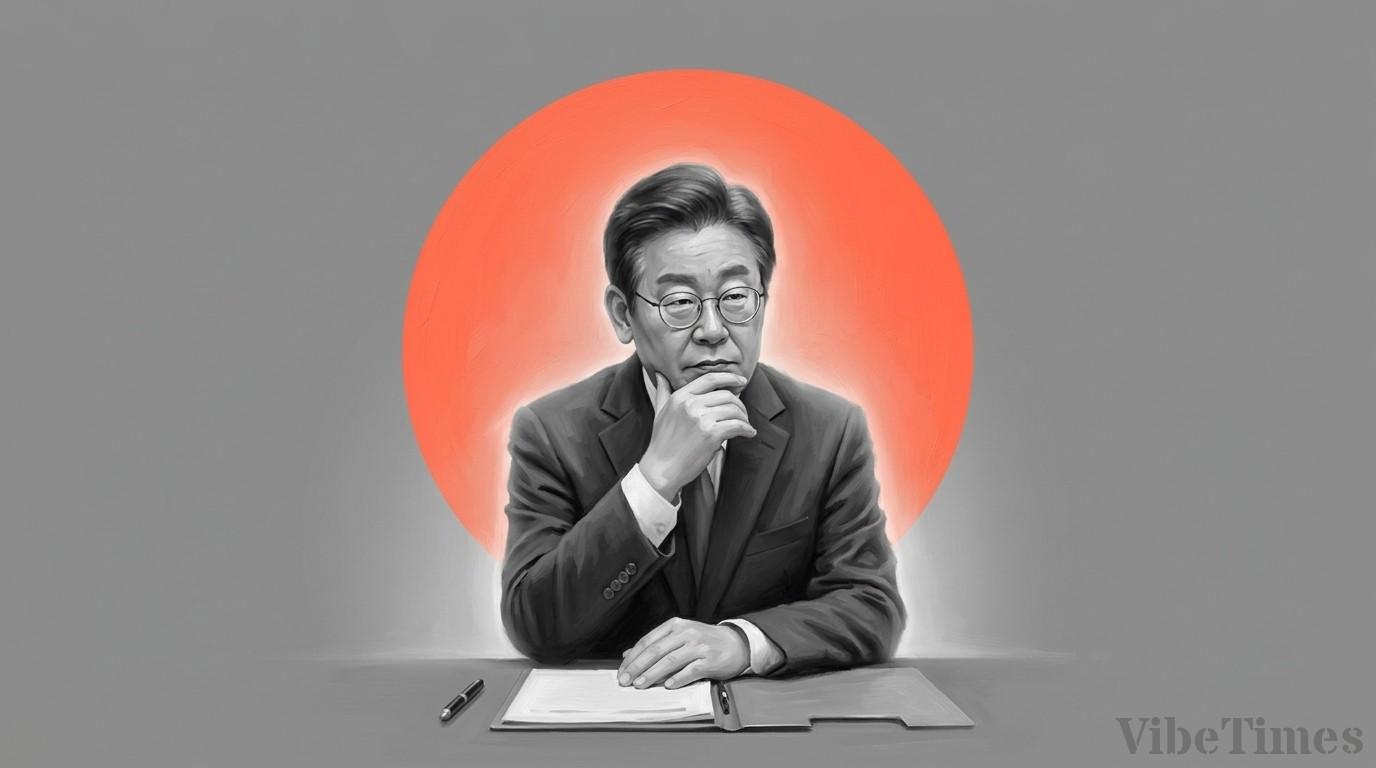
A 33.8% approval rating has caught up with President Lee Jae-myung.
In a Realmeter survey, the president's approval rating fell 3.6 percentage points to 33.8%, confirming yet another post-inauguration low. Support for the ruling party has also declined for two consecutive months. Lee will hold his seventh press conference since taking office at 10 a.m. on the 18th in the Yeongbinwan guesthouse at the presidential office. He is expected to state his positions on pending issues such as constitutional reform, appointment controversies, and the troop deployment to the Strait of Hormuz. The presidential office is busy preparing for the event, and is reportedly agonizing most over how to respond to questions about the withdrawal of prosecution appeals in cases involving the president himself.
Prosecutorial Withdrawal of Appeals Divided Even Among His Supporters
The core issue is the design of a system that would allow a special prosecutor to withdraw appeals in cases related to President Lee. The opposition views it as effectively an immunity mechanism for closing cases. Concern is also considerable within the ruling camp. Among respondents who said they had newly come to support President Lee in opinion polls, only 34% backed the withdrawal of appeals—meaning more than half opposed it or were undecided. Some analysts say disappointment and defections are notably pronounced among People Power Party supporters outside Yeongnam and outside the capital region. As Michael Kinsley quipped that when a politician tells the truth, it's called a mistake, the key may lie not in whether to support or oppose the withdrawal of appeals, but in how candidly its purpose is explained.
Justice Minister nominee Kim Seung-won stated during his confirmation process that he opposed granting a special prosecutor the authority to withdraw appeals. President Lee, for his part, ordered revisions and refinements to the proposal for establishing the prosecution appeal body, and instructed additional vetting of Kim Ji-yong, nominee to head the metropolitan serious crime investigation unit. In other words, the government itself is signaling that it is fine-tuning the system. Accordingly, which weight the press conference gives to 'principle' versus 'political calculation' is expected to shape the direction of public opinion going forward.
From Troop Deployment to Constitutional Reform: Issues Piled Up in One Place
The deployment of troops to the Strait of Hormuz is also unavoidable. President Lee recently remarked that "a Middle East crisis would hinder the transition to an energy system centered on renewables," read as an acknowledgment of the energy security risks underlying the deployment debate. Yet deployment is a matter requiring careful judgment, involving citizens' lives and the commitment of troops. The president is also expected to state his position on constitutional reform and the cabinet appointment controversy at the press conference. In fact, 18 of the 25 confirmation hearings held for cabinet nominees of the Lee Jae-myung government proceeded with zero witnesses—a line of attack the opposition keeps pressing relentlessly.
The Equation Behind the Falling Approval Rating
Democratic Party lawmaker Lee Kwang-jae described the slide in approval ratings as "an orange light just before the red." The remark lays bare the sense of crisis within the ruling party. President Lee raised expectations of rational reform by citing the 2.5 million won monthly income threshold in the basic pension overhaul, and continued gestures toward unity, appointing former Legislation Minister Lee Seok-yeon, a conservative figure, as chairman of the National Integration Committee. Conversely, in the scandal over allegations involving former Police Commissioner Cho Sung-eo's use of an official vehicle, he ordered swift internal inspection and strict accountability after seeing media reports, emphasizing self-correction.
The problem is that such individual responses cannot offset the weight of structural issues like the withdrawal of appeals and the troop deployment. The People Power Party is pushing back, claiming the president opened the door to the possibility of a second term, while the ruling party's stance is to respond firmly to fabricated suspicions on the fronts of judicial reform and confirmation hearings. The press conference on the 18th will mark the first occasion for the president to attempt a direct breakthrough in this confrontational phase. How specifically he answers questions unfavorable to himself is expected to determine whether the downward trend in his approval rating can be reversed.