President Lee Jae-myung asked that the special prosecutor bill's provision for dropping indictments be removed

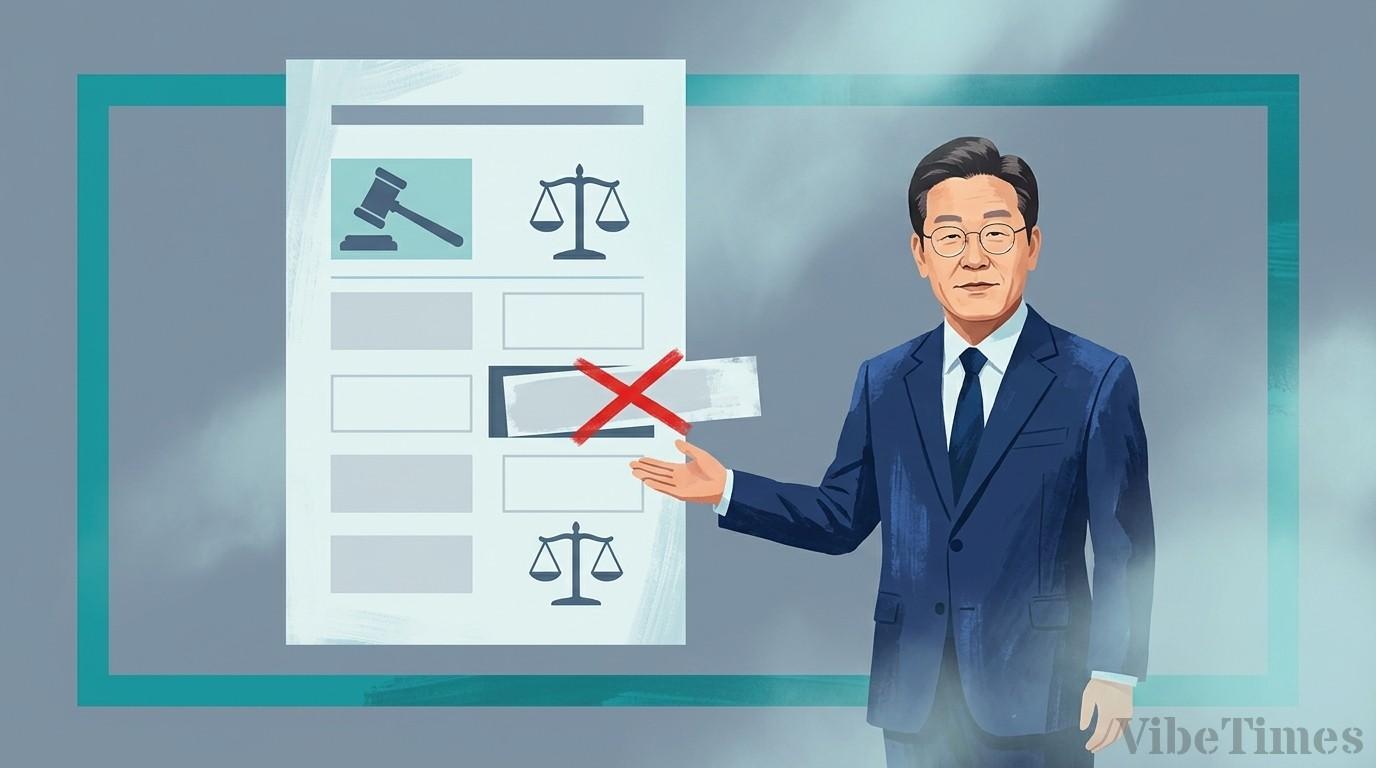
President Lee Jae-myung has directly asked the National Assembly to remove the indictment-withdrawal provision from the special prosecutor bill on fabricated prosecutions. The request came at a press conference held at the Yeongbin Hall of the presidential office on the 18th, in an unusual scene of a sitting president publicly calling for changes to a provision in a special prosecutor law concerning himself.
The controversy was rooted in the bill itself. The opposition has strongly objected, arguing that the law was intended to use a special prosecutor to withdraw existing indictments against the president. "Among the special prosecutor's powers that are causing controversy, please delete the provisions concerning the transfer or disposal of previously indicted cases," Lee said on the day. The intent is to focus the special prosecutor's role on uncovering the truth. He explained that a special prosecutor investigation was preferable because an inquiry by an agency under the president's command could give rise to misunderstandings.
He also drew a line on the constitutional amendment-for-reelection debate
At the same press conference, Lee made clear: "I have no intention whatsoever of seeking a second term through a constitutional amendment." It was a formal repudiation of the reelection-amendment theory raised by some. The opposition's response, however, was cold. Chung Jong-seok, the floor leader of the People Power Party, retorted, "Can we believe something he said only because he was pushed into it?" He went on to point to a series of policy reversals: "He said he wouldn't control real estate with taxes," and "He said he would give up his immunity from arrest." The opposition's point is that the president never gave a definitive answer about ultimately facing trial.
The bill's core and who it applies to
The fabricated-prosecution special prosecutor bill is structured so that an independent special counsel investigates whether the prosecution brought politically motivated indictments. The contentious provision allowed previously indicted cases to be transferred to the special prosecutor for disposal. If retained, the provision could be interpreted as allowing the special prosecutor to take over the president's ongoing trials and withdraw the indictments. The opposition has in fact framed the entire bill negatively, saying it "aimed to withdraw indictments through a special prosecutor." If the deletion request is accepted, the special prosecutor's mandate would be limited to uncovering whether the past investigation and indictment process was fabricated.
Why another ruling-opposition clash is inevitable
The president's request for deletion does not automatically mean the National Assembly will agree. The power to lead the bill's revision rests with the legislature. For the ruling party, deleting the provision could be a practical solution that removes an obstacle to the bill's passage — since the president would be voluntarily stripping out a clause favorable to himself. The People Power Party, however, is highly likely to challenge the bill's fundamental premise, arguing that the very premise of "fabricated prosecution" is a stigma against the prosecution. Floor Leader Chung's criticism — "They are reaching a conclusion of fabricated prosecution and then creating a special prosecutor" — reflects this.
Legislative process and outlook
Still, the legislative conditions favor the ruling party. The National Assembly recently passed 70 prosecution-reform follow-up bills in a ruling-party-led plenary session, ahead of the abolition of the Prosecutors' Office and the launch of the Major Crimes Investigation Office and the Public Prosecution Office. Considering the Major Crimes Investigation Office's launch on December 2, discussions on restructuring investigative and prosecutorial powers are set to continue in succession. The fabricated-prosecution special prosecutor bill is expected to be reintroduced in a revised form with the indictment-withdrawal provision deleted, or put to a vote after review by the National Assembly's Legislation and Judiciary Committee.
The key is speed. The crossroads is whether the deletion request will defuse opposition resistance or delay the bill's passage itself. If the opposition continues to oppose the revised bill, revision talks could drag on from the committee stage. Conversely, if the deletion removes the biggest sticking point between the two sides, the bill could pass relatively quickly. Whether the president's judgment was the product of accumulated lessons from past misjudgments is unknowable, but given that victory lies not in argument but in uncovering the truth, the weight of this request is far from small.