Korean Chipmakers' Net Cash to Hit 300 Trillion Won Next Year, Double This Year's Level

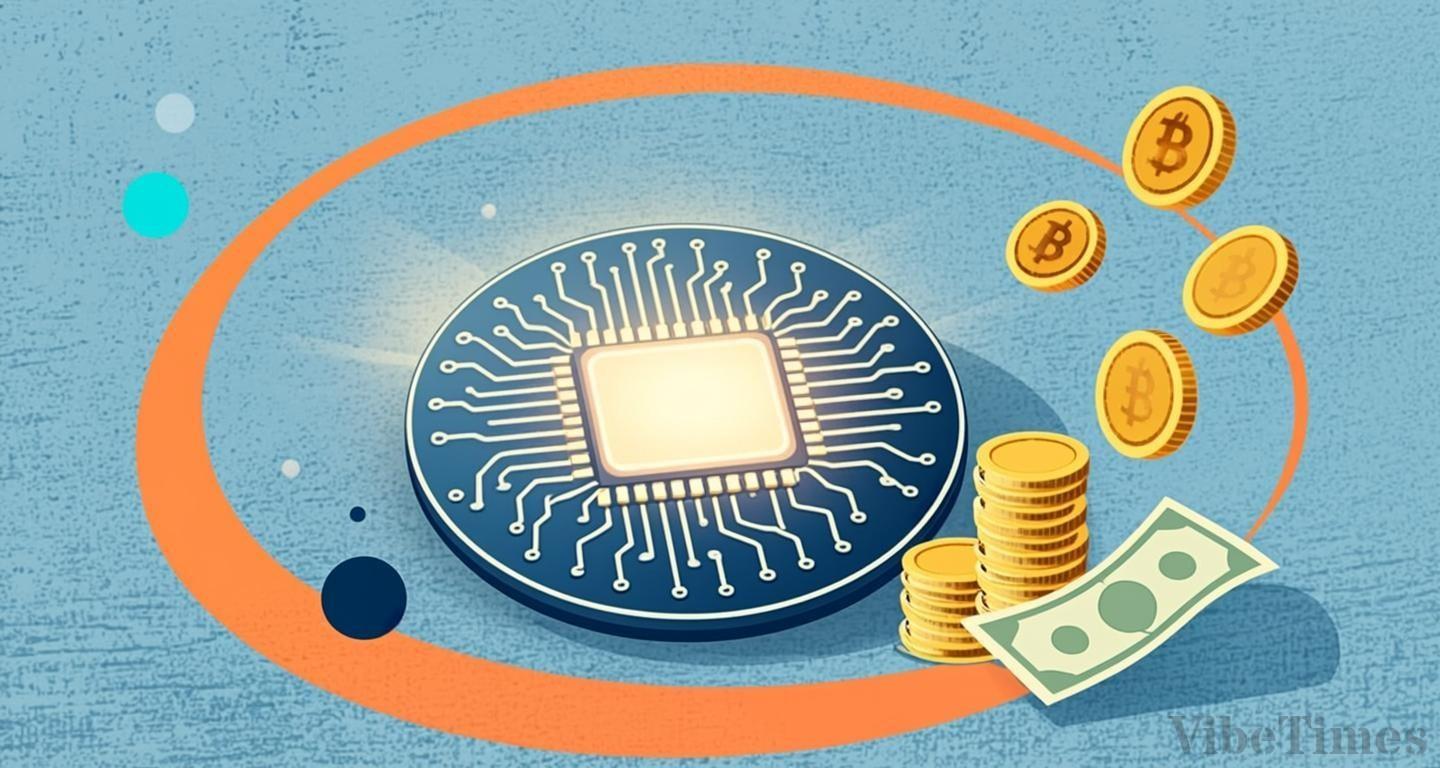
Net cash flow generated by South Korean semiconductor companies is projected to exceed 300 trillion won next year, reaching 9.3 percent of gross domestic product (GDP). According to a report published by global investment bank Goldman Sachs on June 20 (local time), the net cash flow of Korean chipmakers this year will amount to about 150 trillion won, or roughly 4.9 percent of nominal GDP. Net cash flow refers to the actual cash a company newly generates in a given year after business operations and investments. Goldman Sachs also analyzed that wages and dividends paid by semiconductor companies will reach 5.2 percent of GDP next year, an all-time high.
Goldman Sachs' analysis is that demand for high-bandwidth memory (HBM) and server DRAM, driven by expanded AI data center investment, is lifting the memory market. As a result, corporate profits will grow alongside the resources available for investment, compensation, and shareholder returns, the bank said.
At the center of this outlook are Samsung Electronics and SK hynix. The two companies are major suppliers in the global DRAM and NAND markets while also competing with each other in the HBM market for AI servers. Goldman Sachs analyzed that if the rise in memory prices and shipments continues, improved earnings will translate into greater cash-generating power. Both companies are continuing large-scale investments in expanding HBM and advanced DRAM production capacity, transitioning to next-generation processes, and building advanced packaging and new manufacturing facilities. Goldman Sachs said increased net cash will allow the companies to carry out capital expenditures while reducing reliance on external financing, and to expand shareholder returns such as dividends and share buybacks and cancellations.
However, the figure of over 300 trillion won cited by Goldman Sachs does not represent the cash the two companies will hold or a confirmed scale of shareholder returns. Actual capital allocation will inevitably vary depending on capital expenditures, research and development, overseas investment, mergers and acquisitions (M&A), and working capital.
The analysis also examines how much of the money earned from the semiconductor boom will flow into Korea's domestic financial markets. According to Goldman Sachs, Korean companies have historically repatriated about 60 percent of profits generated at overseas subsidiaries through dividends and other means. Meanwhile, the balance of domestic money market funds (MMFs) rose 12.7 percent year-on-year, an increase of roughly 30 trillion won, with corporate funds accounting for more than 90 percent of the increase. The contribution of non-financial companies to growth in broad money (M2) was also tallied at about 80 percent, the highest level since October 2003.
In other words, the AI-driven memory boom is broadening its impact beyond Samsung Electronics' and SK hynix's earnings to capital expenditures, shareholder returns, and domestic capital flows. Still, since the 300 trillion won and 9.3 percent of GDP projections for next year are Goldman Sachs forecasts, cash generation levels could change depending on future memory prices, AI investment, and the actual scale of capital expenditure (CAPEX).