Heavy Sentences for Generals Involved in Martial Law… Only Chosun Ilbo Warns of 'Military Fallout'

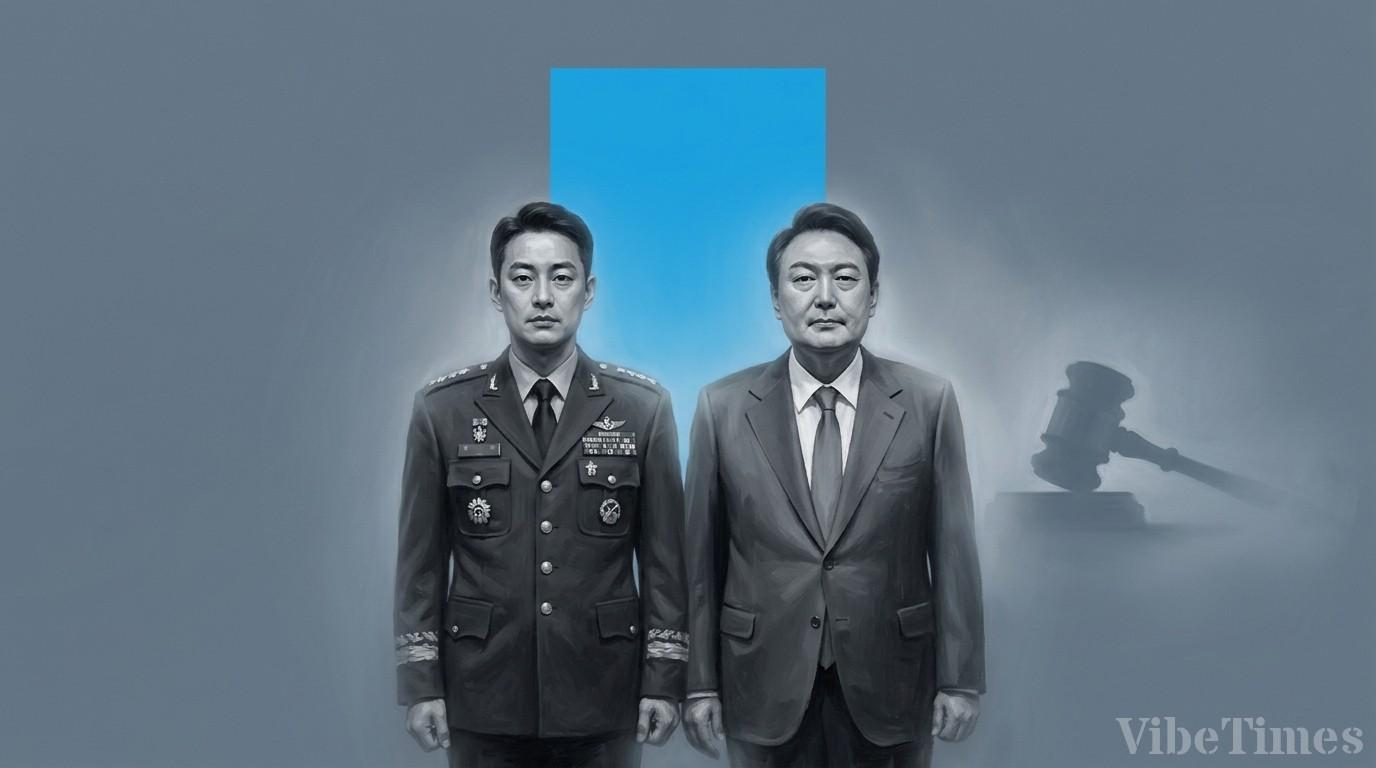
On the 21st, the Seoul Central District Court handed down heavy first-trial sentences to the generals involved in the December 3 martial law declaration (the emergency martial law proclaimed by the president on December 3 last year), sentencing former Defense Counterintelligence Commander Yeo In-hyung to 18 years in prison. The same day, the court sentenced former Capital Defense Commander Lee Jin-woo to 15 years, former Defense Intelligence Commander Moon Sang-ho to 12 years, former Army Chief of Staff Park An-su to 10 years, and former Army Special Warfare Commander Kwak Jong-geun to 9 years. The court found that they had abandoned the fundamental principle of the military's political neutrality—the notion that the armed forces must not side with any particular political force—and used the military in service of a specific faction.
While major media outlets emphasized the need for strict punishment of political soldiers, the Chosun Ilbo alone put forward the line that the ruling would leave lasting fallout (negative effects) within the military organization.
Regarding this, the Hankook Ilbo pointed to the responsibility of the senior generals in its editorial on the 22nd, noting that it is an unforgivable crime for soldiers tasked with defending the nation and protecting its people to join an attempt to subvert the state. "It is shameful," the paper said, "that among these men—the most senior Army officers and key commanders—not one refused, or even seriously questioned, the illegal orders of the president and the defense minister." By contrast, it praised field-grade commanders who refused or evaded orders to enter the National Assembly, as well as junior officers and non-commissioned officers who avoided direct confrontation on the ground, as the heroes who averted the worst tragedy. Even when the president ordered them to "get in, even if you have to shoot," it was thanks to frontline soldiers making reasonable judgments amid the chaos, the paper argued.
The Kyunghyang Shinmun reached a similar conclusion regarding the generals' responsibility, pointing out that they went beyond simply following instructions from former President Yoon Suk-yeol and former Defense Minister Kim Yong-hyun. "Had those holding key military posts drawn a firm line, the insurrection could never have been plotted," the paper charged, criticizing that "far from checking Yoon's delusions, they acted as his personal troops—just as the Hanahoe faction did during the December 12 military mutiny—and actively aided the insurrection." The Dong-A Ilbo noted, "No one, including the commander-in-chief of the military, may reign above the Constitution of the Republic of Korea, and refusing illegal and unjust orders is not insubordination."
Against this backdrop, the Chosun Ilbo published an editorial of a different tenor, acknowledging the need for punishment while placing weight on the verdict's impact on the military organization. "Even though the martial law declaration lacked constitutional legitimacy," the paper wrote, "some argue that the level of punishment should be set with consideration for the special reality of soldiers who must obey their superiors' orders," adding that "exceptionally harsh punishment of the military leadership at the time cannot help but leave deep fallout within the military." It also urged that "the government must not neglect efforts to raise the military's fallen standing, capability, morale, and honor." This stands in contrast to the emphasis by most major media outlets on bringing political soldiers to justice.