Young People Who Survived a Month With an Empty Bank Account Ask for Help at the Edge of the Cliff

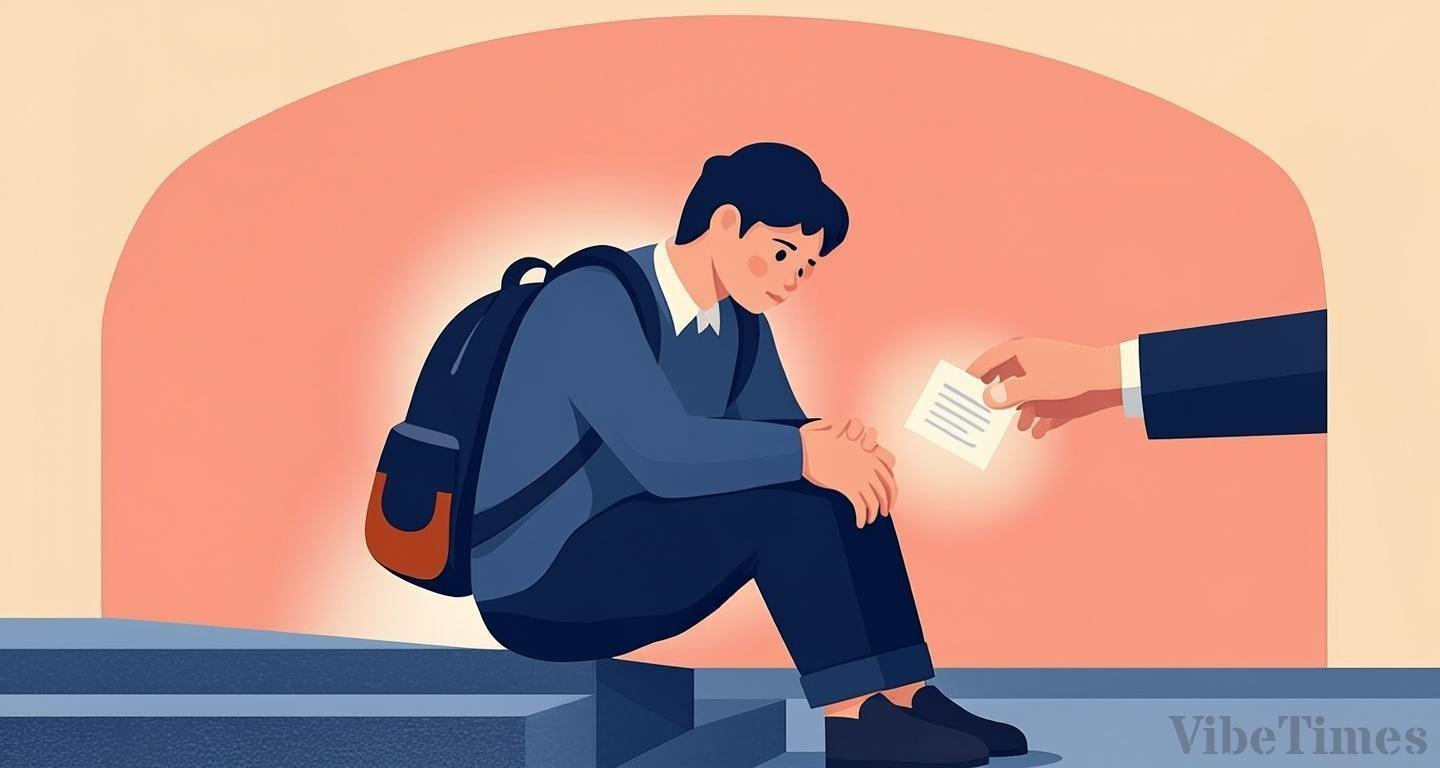
There was a young person who actually survived a month without a single won in their bank account. Social worker Kim Young-ho, 46, met with reporters at the Yeongdeungpo-gu Youth Housing Support Center in Seoul on the 22nd and described the reality of young people facing homelessness. Kim has specialized in youth welfare since 2014. "I thought absolute poverty no longer existed in Korea, but it still does," he said.
In a survey commissioned by the Beautiful Foundation and conducted by a research team led by Professor Song Ah-young of Yonsei University's Department of Social Welfare, 73% of 187 young people aged 18 to 34 facing homelessness said their monthly income was 1 million won or less. They spent most of their money on food (37.4%) and housing (36.4%).
Kim Young-ho's organization, the nonprofit Hope Value, together with the Beautiful Foundation, has for three years been running a program that covers three months of rent in a gosiwon (budget boarding house) for young people drifting between PC bangs, saunas, and cafes. Kim admitted he was skeptical before taking on the program. But after counseling some 70 homeless young people over three years, his thinking changed. "Some friends tried to get by on part-time work, and when even that failed, they sold their mobile phones," he said. "They lose any means of proving their identity and wander around government offices where they can use computers for free, looking for odd jobs."
Even earning around 100,000 won a day in day labor does not improve matters much. Costs arising from having no home — coin laundries, shared storage lockers, daily necessities — consume most of their money beyond food.
Kim pointed to the absence of a family safety net as a key factor pushing young people into poverty and homelessness. The paths by which young people fall into poverty tend to be similar. "Individual economic failure piles on top of family problems like domestic violence," Kim explained. "If someone staying in a gosiwon falls ill or becomes unable to work, it becomes hard even to borrow money from acquaintances, ties get cut, and they are driven to the brink of homelessness." When divorced parents each start new families, some young people end up belonging nowhere; some parents unilaterally cut ties. In the worst cases, parents have taken out loans in their children's names, economically exploiting them. "These young people hate the holidays," Kim said. "They struggle with being asked, 'What are you doing with your life?' or 'Do you have a job?'"
Under current law, an unmarried person under 30 who lives apart from their parents must prove concrete grounds such as domestic violence with documentation to be recognized as a separate household. Even when the parents are at fault for the breakdown of the family relationship, it remains difficult for them to qualify for welfare benefits such as livelihood support. "There must be a system that keeps people from falling into the abyss even without family help," Kim stressed.
A short three months of rent support can become a turning point that changes a life. According to Kim, once their housing is settled, some young people work two or three part-time and day jobs at once, sleeping less than four hours a night to save up for a deposit. "When all you can think about is finding shelter from rain, wind and heat, solving that problem opens up your horizons," he said.
Recently, at public forums and discussions, he has often encountered indignant reactions along the lines of "Things were harder in my day." In response, he noted, "We observe cases where even the money they earn gets swindled away from them." "If we turn our backs and these young people fail to return to society, it costs society more," he said. His point: their plight is not a personal failing but a problem of circumstance.