A Solo-Living Meal Prep Guide: A Week's Worth of Side Dishes in One Day

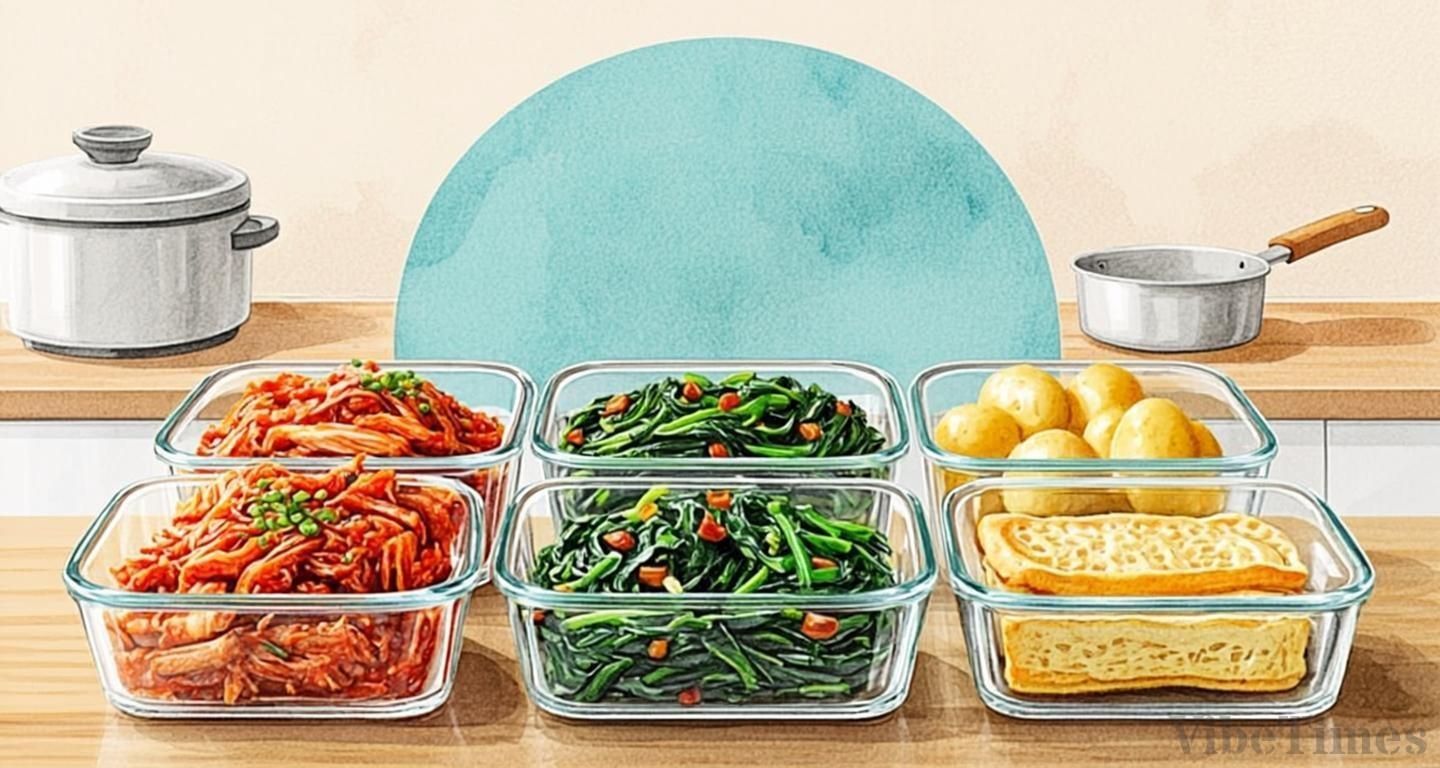
Daily Cooking That Eats Away at a Solo Dweller's Time and Money
7.5 Million Households Eat Alone
According to Statistics Korea, single-person households numbered around 7.5 million in 2023, accounting for 35% of all households. A large share of them rely on dining out and delivery, spending 300,000 to 500,000 won a month on food. Too exhausted to cook after work, they open the delivery app again and again, and ingredients bought in advance end up discarded in the back of the fridge — a vicious cycle.
The obstacles to cooking alone are clear: the hassle of cooking every day, leftover ingredients going to waste, and the burden of dishes. Meal prep tackles all three at once. Shopping and cooking in one go means ingredients get fully used up, reducing waste, and since everything is made with just one pot and one pan, the dishes are minimized too.
The Benefits of Meal Prep, in Numbers
A comparative analysis speaks for itself. Monthly food costs come to 250,000–350,000 won with meal prep, lower than daily home cooking (300,000–400,000 won), meal kits (400,000–600,000 won), or delivery and dining out (500,000–700,000 won). Time-wise, two hours on the weekend plus five minutes a day on weekdays is enough — a stark contrast to the 40-plus minutes daily cooking requires.
A weekly grocery budget of 20,000–40,000 won suffices: 10 eggs, 500g of chicken breast or pork, a block of tofu, one fish, plus onions, zucchini, carrots, mushrooms, and leafy greens for wraps. Basic seasonings like soy sauce, sesame oil, and chili powder need only be purchased once, so the initial cost burden is not heavy either.
Four Ways Beginners Fail in Their First Week
Taking on Five Dishes at Once, Then Burning Out
Greed is meal prep's greatest enemy. Making five side dishes in the first week causes cooking time to balloon, and by the next week you won't even want to start. For the first two to three weeks, limit yourself to two homemade side dishes and buy kimchi and salted seafood to fill the gaps — that's the path to keeping the routine.
Storage failures are also common. When a dish left in the fridge for more than five days gets watery and loses its flavor, people start doubting meal prep itself. Under Ministry of Food and Drug Safety guidelines, cooked food should be eaten within 3–5 days when refrigerated. Nutritionists advise that anything you plan to keep beyond five days must be frozen.
Getting Bored of the Same Dishes and Going Back to Delivery
Monotony arrives surprisingly fast. By varying the cooking method — the same cut of beef becomes a stir-fry on Monday, bulgogi on Wednesday, and a rice bowl on the weekend — you can buy ingredients in bulk while keeping the menu varied. Recipe sharing is so active that 'side dishes' and 'cooking' emerged as keywords in an analysis of solo-dining communities, so there is no shortage of reference material.
A Two-Hour Sunday Afternoon, Step by Step
Step 1: Meal Plan and Grocery Shopping — 30 Minutes
Assign refrigerator-keepable menus to Monday through Wednesday, and menus pulled from the freezer to Thursday and beyond. Place vegetables that keep at room temperature, along with beef and pork, in the first half of the week, and freeze-friendly ingredients like chicken breast and seafood in the latter half. Combining online subscriptions with supermarket trips cuts shopping time as well.
Step 2: Cooking in Parallel to Halve the Time
Sequence is key. Wash the rice and start the rice cooker, then begin with soup or stew. While the soup simmers, work on stir-fries and braised dishes in the pan, and if you have an oven or air fryer, roast chicken and vegetables alongside. A setup of one pot and one pan, starting with the soup dish, also keeps dishwashing to a minimum.
One cutting board is enough, but cut vegetables first and handle meat afterward. The Ministry of Food and Drug Safety recommends separate knives and cutting boards for raw and cooked foods — a basic rule for preventing food poisoning from cross-contamination.
Step 3: Portioning and Fridge vs. Freezer
Divide portions into what you'll eat within four days (refrigerator) and after five days (freezer). Glass containers cost 3,000–6,000 won each, don't absorb odors, and are microwave-safe. For freezing soup or stir-fries, pour them flat into ziplock bags for quick thawing. Label each container with the date and menu, and you can grab one in the morning without a second thought.
Storage and Thawing Know-How to Preserve Taste and Safety
Why food gets watery and spoils: moisture and temperature
Sealing hot food right away traps condensation and speeds up spoilage. Don't leave cooked food at room temperature for more than two hours; cool it thoroughly before sealing. Keep the fridge at 5°C or below and the freezer at -18°C or below, and when reheating, heat food to a core temperature of at least 75°C. Refreezing once-thawed dishes invites both food poisoning risk and flavor loss — an absolute no.
For frozen meat, move it to the fridge the day before and thaw slowly to preserve the taste. In a hurry, use the microwave's defrost mode; soup or stew servings recover in 3–5 minutes in the microwave. Namul (seasoned vegetables) and leafy greens wilt easily, so wash them just before eating.
What to Make vs. What to Buy
Dishes that hold up well to freezing and reheating are meal prep's mainstays: braised tofu, beef bulgogi, steamed or rolled eggs, and chicken breast stir-fry are typical. For braised tofu, quarter the tofu, pan-fry until golden, then simmer in a sauce of 3 parts soy sauce, 4 parts water, 1 part sugar, and a bit of minced garlic. For bulgogi, marinate 300g of beef in a ratio of 4 parts soy sauce, 2 parts sugar, and 1 part sesame oil for 30 minutes, then stir-fry. Meanwhile, dishes whose freshness is everything — like fresh-tossed kimchi (geotjeori) — are better bought or made the same day.
Designing a Routine That Gets You Past Week Three
Start with just 3–4 days' worth in week one
Experts recommend starting small. Making only 3–4 days' worth in the first week, with a 30-minute top-up cook on Wednesday, is the easy way to build the habit. Keeping up the combo of two homemade dishes plus store-bought ones for three weeks makes it second nature, after which you can naturally expand to three side dishes.
Weekday use takes just five minutes. Rice with two refrigerated side dishes makes a basic meal; add an egg to a frozen dish and it becomes fried rice. Add vegetables to pre-seasoned meat and a 10-minute stir-fry is done. Since recording and sharing your progress online is itself a driving force for persistence, to twist the saying that there is no elevator to success: meal prep also only sticks if you climb the stairs, week after week.