Inflation-Linked Basic Pension Increase to Be Paid Retroactively in Q1 Next Year

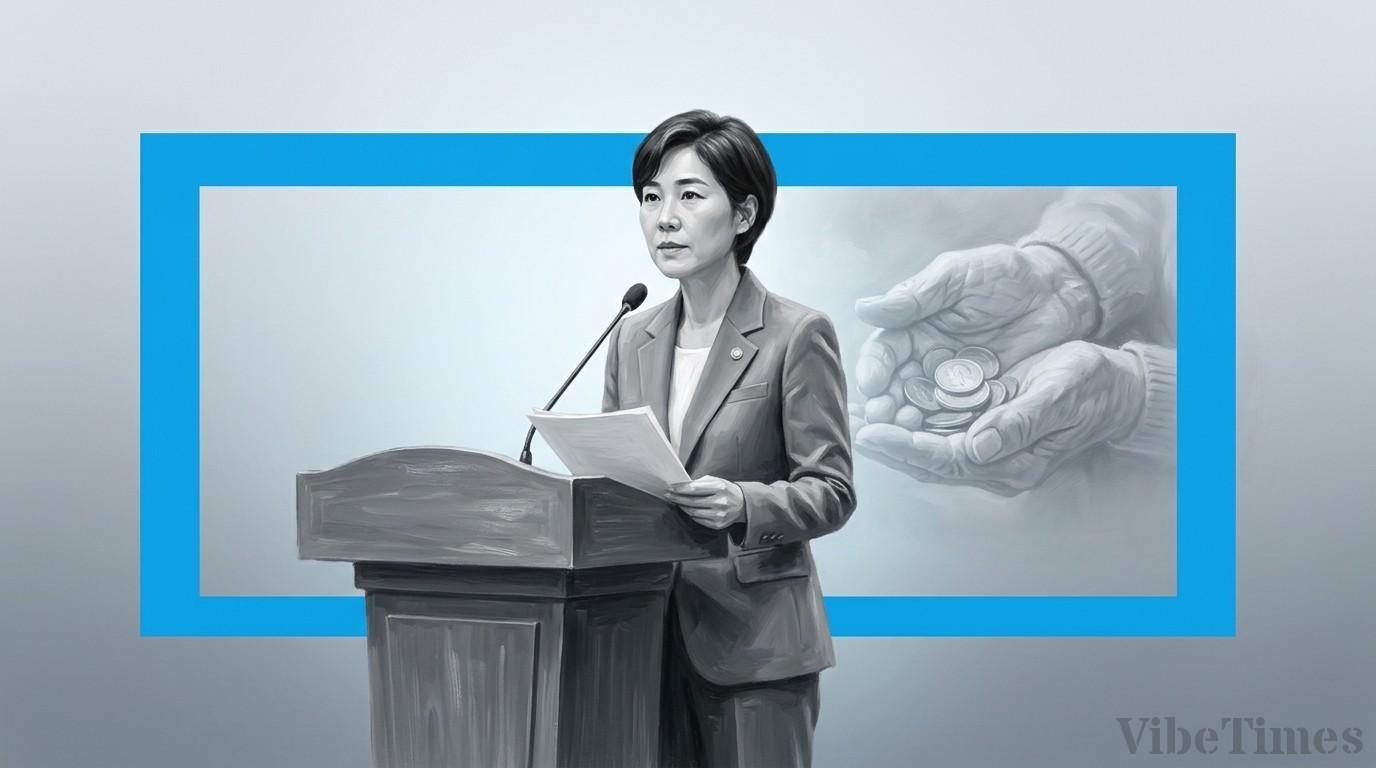
Health and Welfare Minister Jeong Eun-kyung said on the 7th that the inflation-linked increase in the basic pension will be paid retroactively in the first quarter of next year to seniors in the bottom 45% of income earners. In a social media post, Minister Jeong wrote, "I will do my utmost to ensure that the retroactive budget for the inflation-linked increase for seniors in the bottom 45% of income earners is reflected without a hitch during the National Assembly's budget and legislative review process." She explained that the government's budget plan had been drafted to maintain this year's base pension amount (350,000 won) for all recipients until March next year in order to set up the system and revise subordinate legislation for tiered pension payments, but that it had not covered the retroactive payment of the inflation-linked increase.
The ministry announced a reform plan to pay the basic pension in tiers according to income brackets starting in April next year. Citing the need to set up the system and revise subordinate legislation, it decided to maintain this year's base pension amount of 350,000 won for all recipients from January to March next year. Under the reform plan, seniors in the bottom 30% of income earners will receive a monthly basic pension of 380,000 won next year, up 30,000 won from the current level. Seniors in the bottom 30-45% income bracket will receive 359,000 won per month, linked to inflation, while those above that bracket will receive 350,000 won per month with no increase. According to the ministry, the number of recipients by bracket is roughly 3.48 million for the bottom 30%, 1.74 million for the 30-45% bracket, and 2.9 million for the 45-70% bracket. Next year's basic pension budget is 25.7 trillion won, an increase of 2.6 trillion won (11%) from this year.
The same day, at the National Assembly Health and Welfare Committee audit in Yeouido, Seoul, People Power Party lawmaker Baek Jong-heon pointed out, "The government said it would reform the basic pension to give more to lower-income recipients and less to higher-income ones, but it has dropped the 'less for higher-income' part that would reduce the number of recipients, keeping the bottom 70% income structure intact." Minister Jeong replied, "Next year the difference will be around 9,000 won, but if the freeze continues, the gap between higher and lower income recipients will widen further," adding, "There are limits to achieving the redistribution within one year."
Minister Jeong also said, "On the spousal benefit reduction, the cut for the bottom 45% will be lowered from 20% to 10%, which would increase benefits by around 120,000 won for spousal households and require about 1 trillion won in additional budget." The relaxation of the spousal reduction will apply to roughly 2.34 million people in the bottom 45% of income earners. The tiered payments and spousal reduction relief require an amendment to the Basic Pension Act, and the ministry plans to complete legislation within the year and implement the reform in April next year.