What Does Egypt's State Visit to Korea Signify?

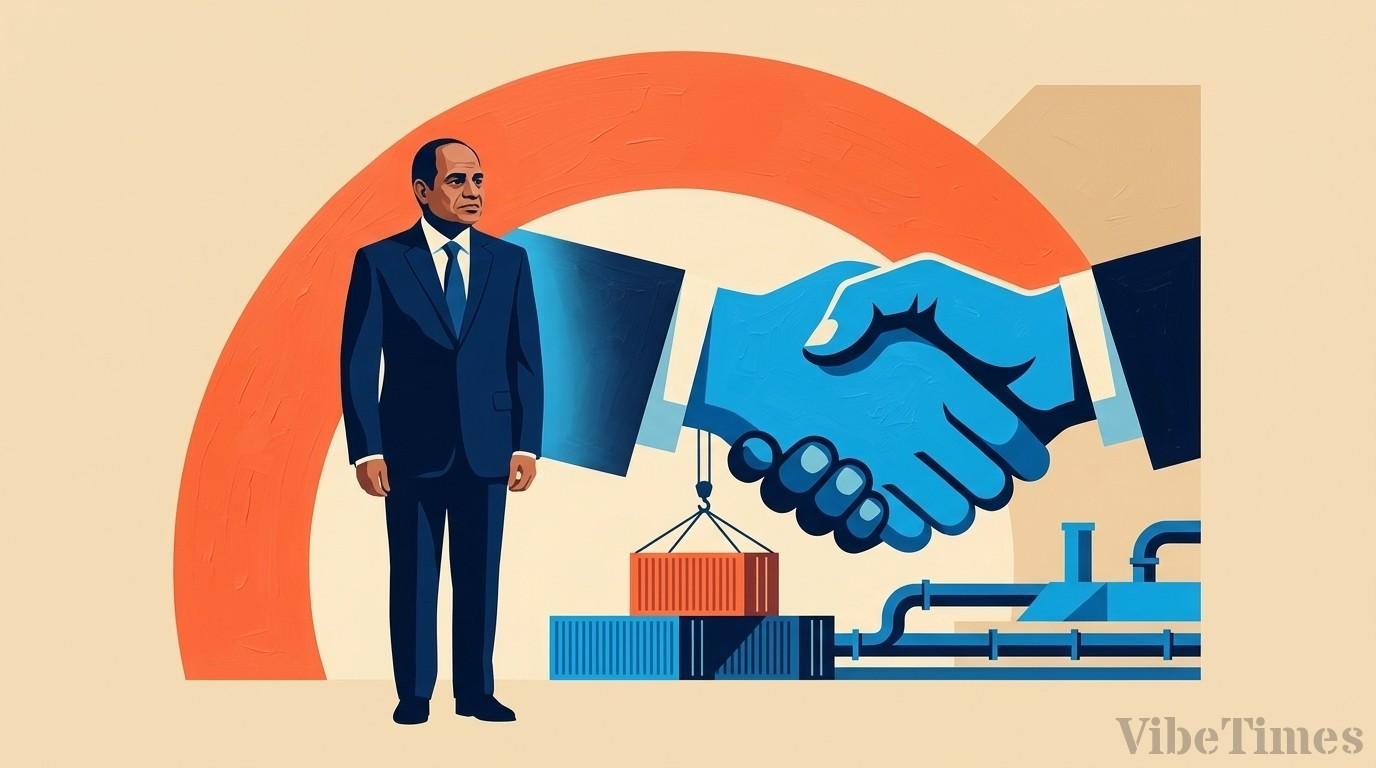
The Meaning and Background of a State Visit
A state visit is the highest tier of diplomatic protocol. The Egyptian president choosing this format to visit Korea signals that bilateral relations are moving beyond individual areas of cooperation toward a strategic partnership. Egypt sits at the heart of global logistics through the Suez Canal and occupies a geopolitical crossroads linking North Africa and the Arabian Peninsula. As the region's largest consumer market with a population exceeding 100 million, it holds appeal for Korean companies that is hard to pass up.
The backdrop involves structural changes in the trade environment. As global supply chains fragment into blocs, Korea faces the task of diversifying away from its traditional trade structure concentrated in certain countries. Egypt is connected to the European Union, the African continent, and Middle Eastern markets through free trade agreements and preferential tariffs, giving it considerable value as a production base for entering third-country markets. At a time when discussions of a Middle East-driven reshaping of energy supply chains are gaining momentum, Egypt's geographic standing carries even greater weight.
The Substance of Economic Cooperation on the Table
The core of this visit centers on two pillars: economic cooperation and people-to-people exchange. In economic cooperation, infrastructure, energy, and defense are seen as the most likely points of convergence. Egypt has been pursuing major national projects such as the construction of the New Administrative Capital, opening ample room for synergy with the contract-winning experience accumulated by Korean construction and plant companies. There is precedent for active consortium formation between companies of both countries in infrastructure sectors such as power, desalination, and railways.
Energy points toward a more future-oriented agenda. Egypt, leveraging abundant sunshine, has been expanding solar power generation — a natural meeting point with the 'Green Transition' policy framework Korea has championed. President Lee Jae-myung has stated that "the Korean-style Green Transition is an essential prerequisite for the success of the three mega projects," and overseas renewable energy cooperation lies on a natural extension of this logic. Discussions of hydrogen production and export bases, which Egypt is pursuing toward the Middle East and Europe, also present potential common ground.
People-to-people exchange draws less attention but is highly substantive. Egypt is a young country, with roughly half its population of working age, creating strong demand for skilled labor and educational cooperation. The country with the world's highest number of Test of Proficiency in Korean (TOPIK) applicants is none other than Egypt. This indicates that a local talent pool for Korean companies entering Egypt already exists. If worker mobility through the Employment Permit System and vocational training cooperation expand, a mutually beneficial structure takes shape.
Analyzing the Economic Ripple Effects
In terms of trade volume alone, Egypt is not yet among Korea's top 20 trading partners — which means there is considerable room for growth. As a new market for Korea's flagship industries such as shipbuilding, automobiles, and secondary battery components, entry could bring rapid initial expansion. Notably, the Egyptian government has been proactive in attracting foreign direct investment and has continued stabilization efforts since its currency crisis, so if this improving investment climate aligns with the timing of Korean capital's entry, synergy can be expected.
The potential in the defense sector is also noteworthy. Egypt has traditionally diversified its arms procurement and has shown interest in Korean weapons systems such as the K-9 self-propelled howitzer. The stage of mutual trust provided by a state visit serves as a lubricant that reduces the diplomatic friction typically involved before major contracts are concluded.
Challenges and Outlook
Optimism alone is not enough. Egypt's exchange rate volatility and foreign exchange liquidity pressures pose payment risks for Korean companies. With past cases where large-scale infrastructure contracts turned into fiscal burdens for the state, risk-sharing mechanisms must be built into contract structure design. Without institutional safeguards covering local partnerships and dispute resolution procedures, the substance of cooperation cannot be guaranteed.
Even so, the direction looks promising. At a time when trade diversification has emerged as the task of the era, and given that trust is being built through summit diplomacy with a comparatively untapped market, this state visit deserves evaluation not as a one-off event but as foundational work for medium- to long-term economic diplomacy. If concrete agreements and investment protection mechanisms are agreed as outcomes of the summit, then even if it takes time for results to show up in the numbers, Korea's strategic map for the Middle East and Africa is expected to be redrawn — one step further — starting from this visit.