Amendments to Medical Law Prevent Prosecution of Doctors Even When Patients Die — Grim Outlook

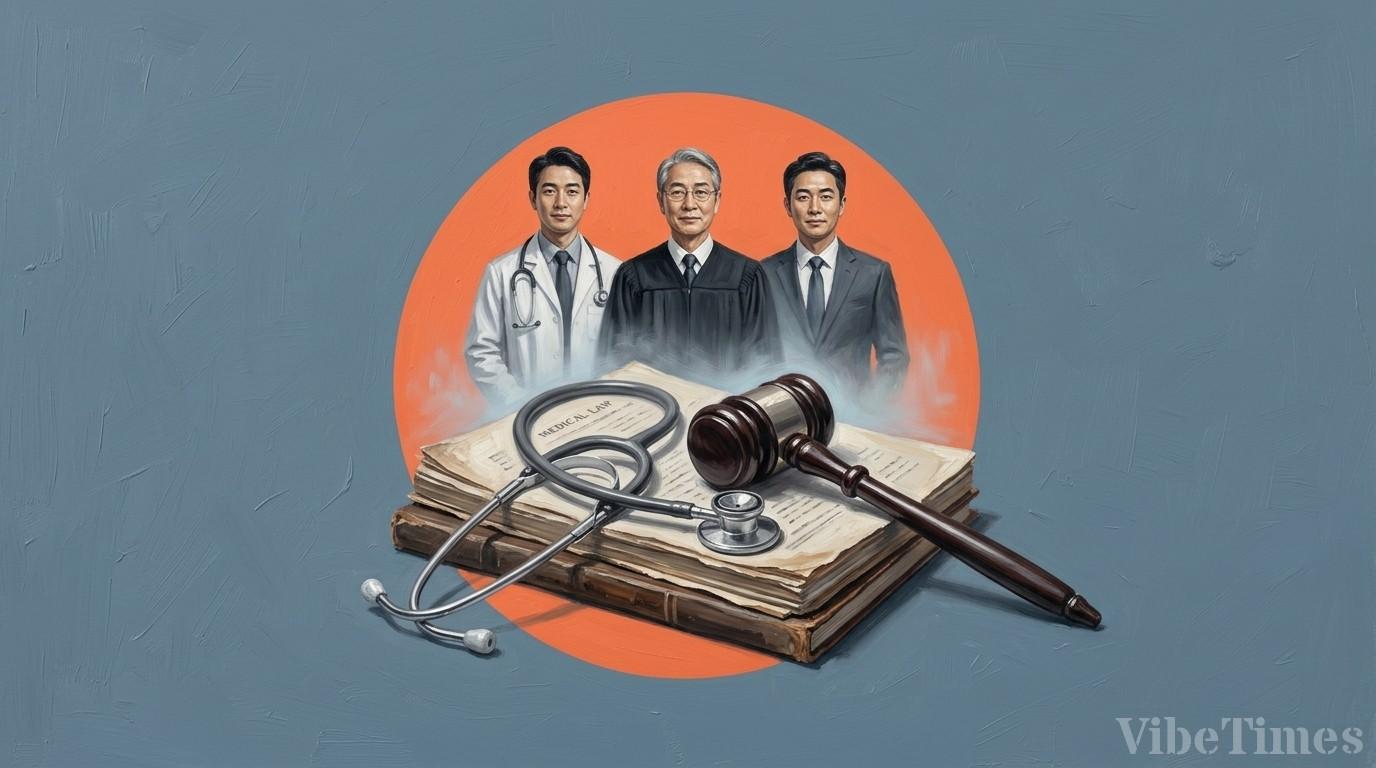
A law that prevents the criminal punishment of doctors even when patients die will take effect on May 27 next year. Civil society is calling for the law to be revised again, arguing that patient rights protection could be weakened. Citizens' Coalition for Economic Justice, some legal professionals, and People Power Party lawmaker Lee So-hee have urged a review and re-amendment of the Act on Relief for Medical Accident Victims and Mediation of Medical Disputes (Medical Accident Dispute Mediation Act), amended in April this year. The reason: it infringes on citizens' fundamental rights, including the right to a trial.
The amended law contains a special provision barring prosecution if a medical accident occurs during essential medical care and the doctor or hospital pays damages to the victim. The victim's criminal complaint, police investigation, prosecution, and court trial are all restricted. The scope of essential medical care is to be defined by presidential decree as medical procedures where serious harm to citizens' lives and bodies may occur, such as critical care, pediatrics, emergency medicine, childbirth, and trauma. A Medical Accident Deliberation Committee under the Ministry of Health and Welfare will determine what constitutes essential medical care and whether negligence was gross, allowing doctors' sentences to be reduced or waived, while the advance payment system for damages has been abolished.
Song Ki-min, chair of CCEJ's health and medical committee (professor at Hanyang University), said, "Civil damages and criminal liability differ in purpose and function. If prosecution is limited even for fatal or serious-injury medical accidents on the grounds that insurance or damages were paid, there is a serious risk of excessively restricting the procedural rights of victims and bereaved families." The Constitutional Court has ruled unconstitutional a provision limiting prosecution in serious-injury traffic accident cases on the grounds of comprehensive insurance coverage, citing violations of victims' right to be heard in trial proceedings and their right to equality.
Since medical institutions hold most medical records and clinical information, patients cannot prove doctor negligence without investigation and trial. Song said, "If doctors' criminal liability is eased while patients' burden of proof remains unchanged, the balance of the system will inevitably collapse."
The structure leaves the concrete scope of high-risk essential medical procedures and gross negligence — the core criteria for sentence reduction and prosecution limits — largely to presidential decree and committee judgment. Park Ho-kyung, a lawyer at Hippocrates Law Firm, said, "If the National Assembly does not define core matters in statute but broadly delegates them to subordinate legislation, the executive branch could in effect determine the scope of criminal exceptions. This poses significant risks of violating the principle of clarity in the rule of law (nullum crimen sine lege) and the prohibition of blanket delegation."
A 2020 report by the Korean Medical Association claimed that from 2013 to 2018, there were an average of 754 prosecutions per year for doctors' professional negligence causing death or injury. However, according to a 2024 government research report by the Ministry of Health and Welfare, from 2019 to 2023, only an average of 34 cases per year resulted in first-instance verdicts after doctors were prosecuted over medical accidents. The government research found that prosecuted doctors were more often in non-essential specialties than essential ones, with orthopedics accounting for 30 of the 190 defendants.
The bill passed the National Assembly just four months after President Lee Jae-myung, in a briefing on the Health and Welfare Ministry's work, said a special law was needed to exempt from criminal punishment cases where settlements are reached over medical accidents. It takes effect on May 27, 2026.
At a National Assembly audit of the ministry on the 7th, Rep. Lee So-hee revealed that a co-author of the Medical Association's report was Lee Jin-kook, former presidential secretary for judicial affairs. The former secretary served as the first judicial affairs secretary in the Lee Jae-myung administration until leaving office in February this year, and was appointed an audit commissioner at the Board of Audit and Inspection in June, after the law's amendment. Health and Welfare Minister Jung Eun-kyung, asked whether the former secretary had been involved in reviewing or pushing the criminal exception, replied, "He was not involved." Rep. Lee said, "This was legislation begun with 'fake news' directly involving a presidential secretary, and rushed through without even procedures to gather input from the medical community and patient groups."