October 11 Legislative Report: Daebang Construction Chairman Skips Testimony

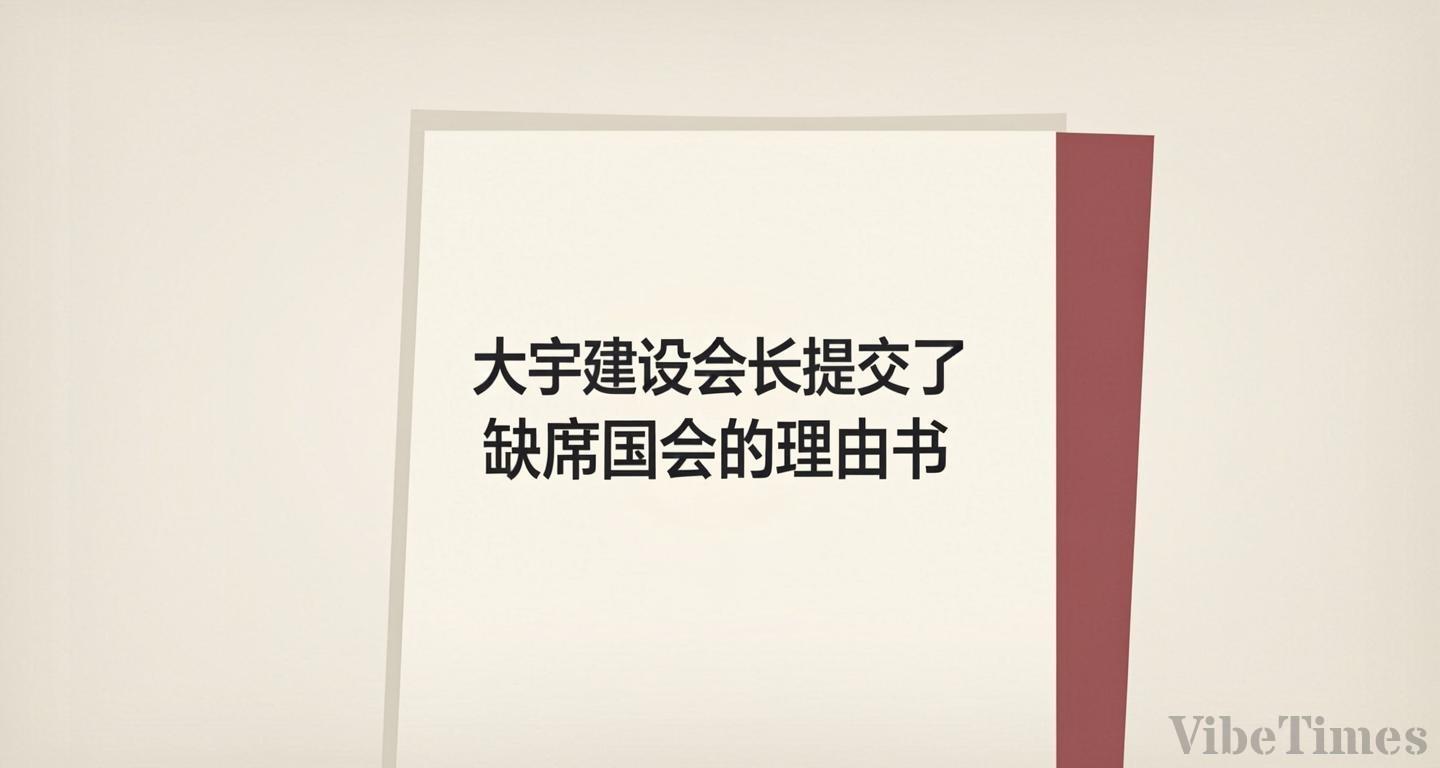
Daebang Construction Chairman Koo Kyo-woon submitted a written explanation for his absence instead of appearing as a witness at a National Assembly audit.
It was confirmed that Reform Party lawmaker Lee Jun-seok had requested Chairman Koo as a witness during the National Assembly audit of the Ministry of Economy and Finance and other agencies, but rather than appearing at the scheduled session, Koo submitted his reasons for non-attendance in writing. It is unusual in itself for a major conglomerate chief to be summoned as a witness to a National Assembly audit, so the fallout from his decision not to appear is expected to be considerable.
Background of the Witness Request and the Meaning of His Absence
Lawmaker Lee Jun-seok's request to summon Chairman Koo as a witness stems from the need to scrutinize issues surrounding Daebang Construction's management governance and financial structure. Witnesses at National Assembly audits are selected with the consent of members of the relevant standing committee, and in the case of business executives, matters such as related business operations, taxes, and fund flows often become points of contention. While failing to appear and submitting only a written explanation is not legally prohibited, it plants seeds of controversy because discussions could be concluded without substantive answers, undermining the Assembly's audit authority.
There have been multiple past instances where witness no-shows at audits led to accusations of violating the National Assembly Audit Act and criticism of 'disrespecting the National Assembly.' If this absence is repeated, calls for follow-up measures at the parliamentary level cannot be ruled out.
A 'Full Survey of 1.05 Million Items' at the Same Audit
During the same audit season, lawmaker Lee Jun-seok announced the results of a full price survey of roughly 1.05 million items registered on Nara Market (the government procurement platform), claiming that at least 500 billion won is leaking from procurement budgets. He pinpointed structural loopholes in the Public Procurement Service's system by examining cases where public procurement prices were set higher than market prices. Nara Market is the online procurement system through which public agencies purchase goods and services, and with annual transaction volumes reaching tens of trillions of won, some interpret that the 500 billion won leakage could grow far larger when the full scope of potential improvements is calculated.
Lawmaker Lee also pointed out, during the audit of the Future Fund, the funding approach centered on graphics processing unit (GPU) purchases, to which the government explained it would use Korea Development Bank contributions and direct investments in artificial intelligence (AI) companies. In that this audit scrutinizes where and how the government spends its AI budget, the session is proving to be not a mere formality but a stage for shaping the direction of fiscal management.
First Week of Audits: The Legislation Committee as a Battleground
The hottest battleground of the first National Assembly audits of the second year of the Lee Jae-myung government proved to be the Legislation and Judiciary Committee. The committee held the first National Police Agency audit since the revision of the Criminal Procedure Act, making it a venue to examine both the achievements and limits of investigation and institutional reform. Seo Young-kyo of the Democratic Party, who leads the committee, expressed her commitment to legislation protecting educators from malicious, unfounded complaints, while some 20,000 teachers gathered in front of the National Assembly to urge revisions to the Child Abuse Punishment Act, carrying legislative demands into the streets.
Floor votes also saw defections within parties. Sixteen Democratic Party members voted against the revision to the Rural Structure Improvement Special Account Act, while 40 People Power Party members broke with their party's position by opposing the same bill. In an alternative vote on the Emergency Medical Services Act, 10 People Power Party members broke ranks to vote in favor, revealing cracks in internal party discipline on both sides.
The Witness No-Show: How Far Will It Go?
The key question going forward is whether Chairman Koo Kyo-woon's absence will end as a one-off or lead to a second summons. Under the National Assembly Audit Act, the Assembly can consider referring a witness who fails to appear for prosecution, so if lawmaker Lee Jun-seok's side takes follow-up action, the burden of explanation on Daebang Construction's side is expected to grow. Furthermore, if the findings of the 500 billion won procurement price leakage are linked to budget deliberations, discussions on improving the procurement system are expected to proceed in parallel with next year's budget negotiations.
The empty witness seat of a corporate chief raises the hand of the questioner, but leaves the questions of the market and public opinion, which watched from the sidelines, unanswered. The essence of this matter will be who takes responsibility for the answers that remain even after the audit ends.