A Castle Built on Debt Is Ultimately a Ticking Time Bomb

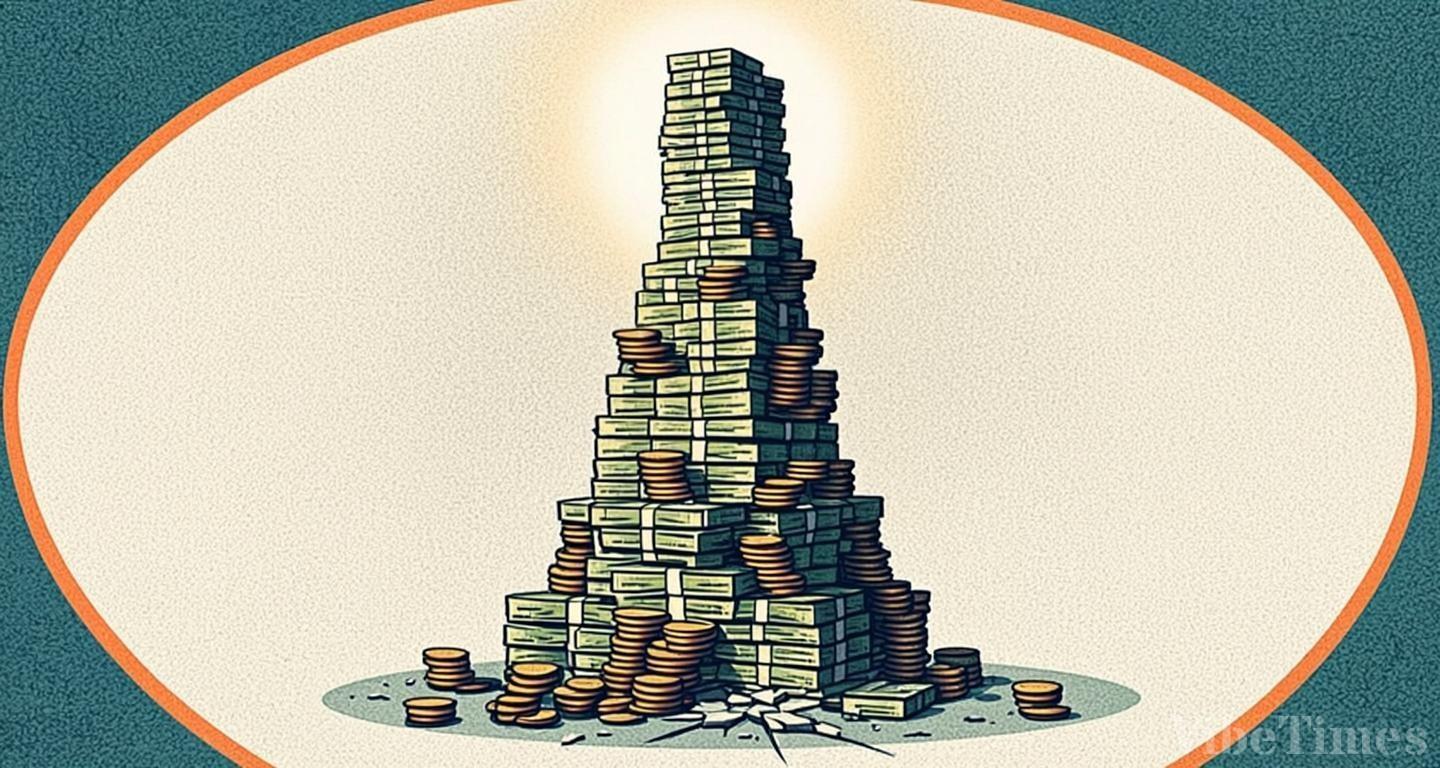
With household debt surpassing 2,000 trillion won, a diagnosis has emerged that the Korean economy has reached a point where it can barely bear the weight of debt. Dr. Kwon Eui-jong and Dr. Lee Wang-ro analyzed that household debt (the total amount borrowed by households from banks and other institutions) is functioning as a risk factor shaking the entire national economy. They argue that during the era of low interest rates and rising home prices, a bubble structure of "borrowing to buy up assets" inflated households' debt burden. Unlike major advanced economies, which went through debt reduction after the financial crisis, Korea has continued to expand household debt, leaving its household debt-to-GDP ratio (nominal GDP) among the highest in the world by Bank for International Settlements (BIS) standards.
As debt grew faster than asset values, household financial health deteriorated significantly. The number of households whose debt service ratio (DSR) — the share of income consumed by principal and interest payments — reached dangerous levels has surged, and the ranks of the "asset-poor" who spend more than half their income on debt repayments have grown rapidly. With real income growth stagnant while debt kept piling up, the economy harbors liquidity risk that could collapse the entire system in the event of an external shock or interest rate fluctuation.
Most household lending has been found to be excessively concentrated in the real estate market — mortgage loans and jeonse (key money) rental loans — rather than flowing into productive corporate investment or technological innovation. Analysts point out that asset prices inflated by debt, divorced from the strength of the real economy, are structured so that even a small shock could cause cracks.
The most direct side effect of growing household debt is the contraction of private consumption. As a substantial portion of disposable income drains away each month to debt service, households have less capacity to spend in the market. A "debt trap" has been completed, in which debt repayments offset even rising incomes. Households have cut back on discretionary spending first — dining out, leisure, clothing, and home appliances — leading to declining sales for self-employed individuals and small business owners. The consumption slump is worsening corporate earnings, creating a vicious cycle of hiring cuts and wage stagnation.
In Korea's household lending structure, where floating-rate loans dominate, interest rate hikes feed into household burdens without any time lag. Delinquency rates have begun rising among marginal borrowers — multi-debt holders, low-income and low-credit consumers, and young "yongbul" borrowers who stretch themselves to the limit to buy homes. Rising delinquencies that began in the first-tier banking sector are cascading into the second-tier financial sector — savings banks, installment financing companies, and community credit unions — fueling instability across the entire financial ecosystem. Distressed real estate project financing (PF) and household loan delinquencies have been flagged as factors that could affect the nation's entire financial system. When financial institutions raise lending standards to manage risk, a credit crunch emerges in which cash-strapped ordinary citizens and small business owners are pushed toward illegal private lending.
The arrival of the 2,000 trillion won era is not merely a statistic — it reveals the depth of the structural risks weighing on the economy. Dr. Kwon Eui-jong and Dr. Lee Wang-ro called for comprehensive measures: maintaining precise DSR regulations for a soft landing, restructuring household loans, and implementing tailored debt adjustment programs for marginal borrowers. They warned that unless growth built on debt is dismantled and the real economy's foundations are reinforced, the economy may be unable to sustain its debt burden and suffer a steep decline.