October 13 Legislative Report: Rebuilding Korea Party Fields Full Strength on Education Committee

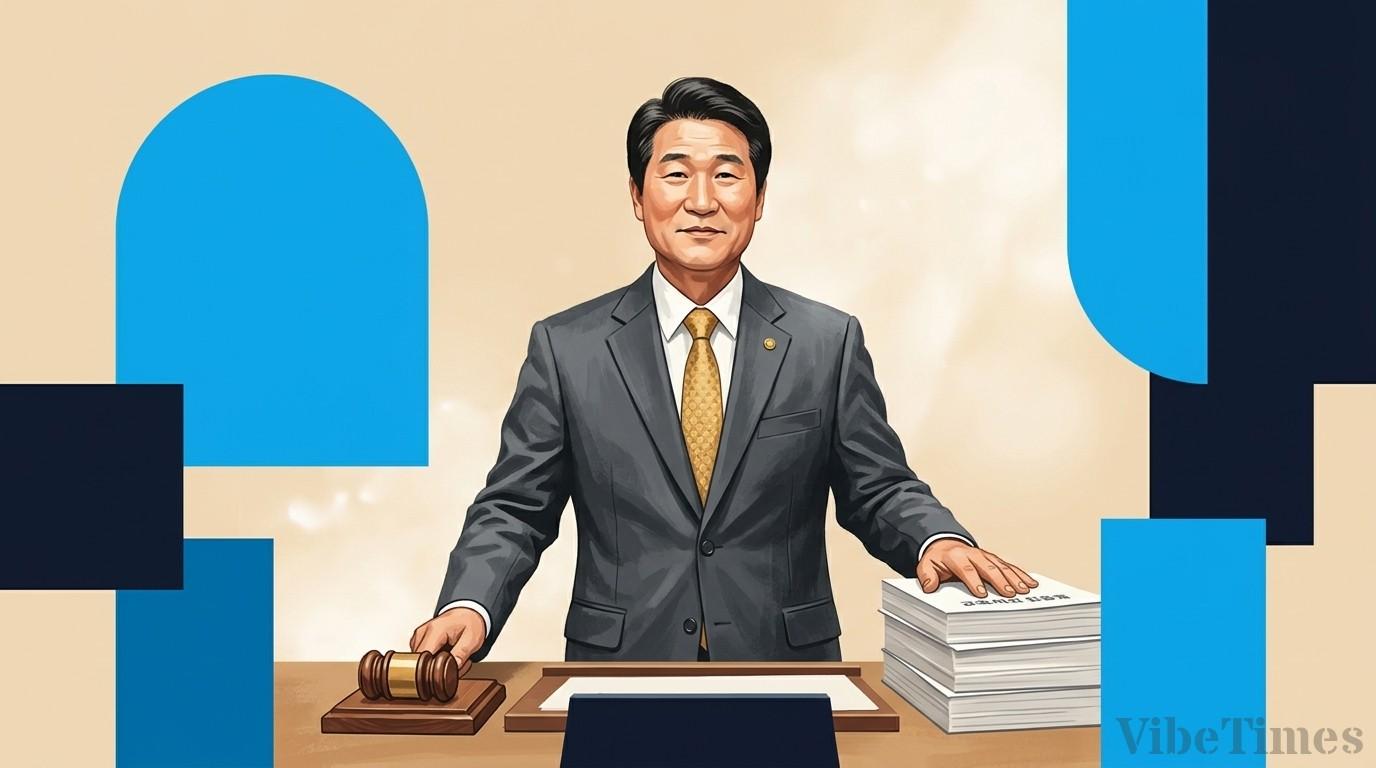
Rep. Kim Jung-hoon of the Rebuilding Korea Party has taken the legislative stage at the Education Committee of the 22nd National Assembly.
According to National Assembly records made public through the public data portal, Rep. Kim serves on both the Education Committee and the Special Committee on Budget and Accounts. Holding positions that allow him to handle both education-related budgets and legislation, he wields two key levers — legislation and budget — a rare arrangement for a lawmaker from a minor party without negotiating-group status. The Rebuilding Korea Party has also assigned Reps. Lee Chun-man, Yeo Jong-sang, Na Hwa-jin, Chung Il-yong, Lee Jin-hee, Yu Yong-ha, and Oh Jung-se to the same committee, committing concentrated resources to the education sector.
The Education Committee Becomes a Legislative Battleground for the Minority Party
The defining feature of this National Assembly's Education Committee is the scale of the Rebuilding Korea Party's deployment. A significant number of its members hold seats on both the Education Committee and the Budget Committee. Rep. Kim Jung-hoon, too, sits on both. This arrangement reads less as routine staffing than as strategy. Education bills are rife with disputes between the ruling and opposition parties, requiring negotiating leverage — and by also serving on the Budget Committee, lawmakers secure bargaining cards during budget deliberations. In fact, there are records showing that during the government budget review at the Special Committee on Budget and Accounts, Rep. Kim Hyuk of the Rebuilding Korea Party and others took part in the process and made their presence felt.
On the ruling People Power Party side, Rep. Park Hyun-woo likewise sits on both the Education Committee and the Budget Committee, suggesting that both camps intend to link the education budget to legislative negotiations. The committee composition itself can be interpreted as a point of balance of power.
October Plenary Sessions See a String of Cross-Party Votes
Party-line breaches stood out as education- and agriculture-related bills passed through the plenary session. In the vote on the partial amendment to the Special Accounts Act for Rural Development held October 1, 16 members of the Democratic Party of Korea cast opposing votes. Reps. Chung Chung-rae, Cho Seung-rae, Chung Il-young, Kim Hyun, Moon Dae-rim, Park Jung-hyun, Lee Ki-heon, and Jin Sung-joon, among others, were recorded in the opposition camp. While the 16 dissenting votes from the ruling party did not affect the bill's passage, the fact that internal disagreement was openly exposed carries significant weight.
The same day, on the Special Accounts Act for Rural Development, the People Power Party recorded 40 votes against and 4 in favor. Reps. Kim Yong-tae, Kwon Young-se, Lee Man-hee, and Lee Sang-hwi voted in favor, against the party line. In the alternative-bill vote on the partial amendment to the Emergency Medical Services Act, 10 People Power Party members defected amid a split of 14 in favor and 10 against. On the alternative bill for the Eco-Friendly Agriculture Promotion Act, Reps. Lee Jin-sook, Song Eon-seok, and Han Ki-ho sided with the opposition, and on the Broadcasting Act amendment, Reps. Lee Jin-sook, Kim Min-jeon, and Choi Soo-jin did likewise.
Between Party Lines and Minority Views: The Direction of Legislation
Taken together, the vote results confirm a tendency for intra-party defections to widen the more a bill touches everyday livelihoods. On measures like rural development and emergency medical care, where regional and class interests are deeply entangled, party unity breaks down easily. By contrast, on bills such as the Eco-Friendly Agriculture Promotion Act and the Broadcasting Act, where defections stayed around three members, party discipline held relatively firm. Rep. Lee Jin-sook's opposition votes on both bills illustrate an individual lawmaker's consistent legislative line.
Returning to the Education Committee stage, the terrain facing Rep. Kim Jung-hoon is similar. Education reform bills are a field where the sentiments of parents, teachers, and local communities intersect, and internal dissent frequently erupts even within the two major parties. Membership on the committee alone does not guarantee legislative success. Still, if the Rebuilding Korea Party's dual deployment on the Education and Budget Committees functions as negotiating leverage, there is room for a minority-party lawmaker's vote to act as the casting ballot.
Scott Turow called public education a pillar that sustains democracy. Raising that pillar now comes down to the outcome of each roll-call vote on bills at the committee table. The records of 16 and 10 defections show that the process is never smooth, while also revealing a snapshot of a legislative arena where individual lawmakers' judgments are alive and in motion. As Education Committee bill reviews move into full swing, Rep. Kim Jung-hoon's choices, too, are expected to face the same test.
