US Embassy Issues Second Clarification in Three Days Over 'Anti-Subservience' Declaration

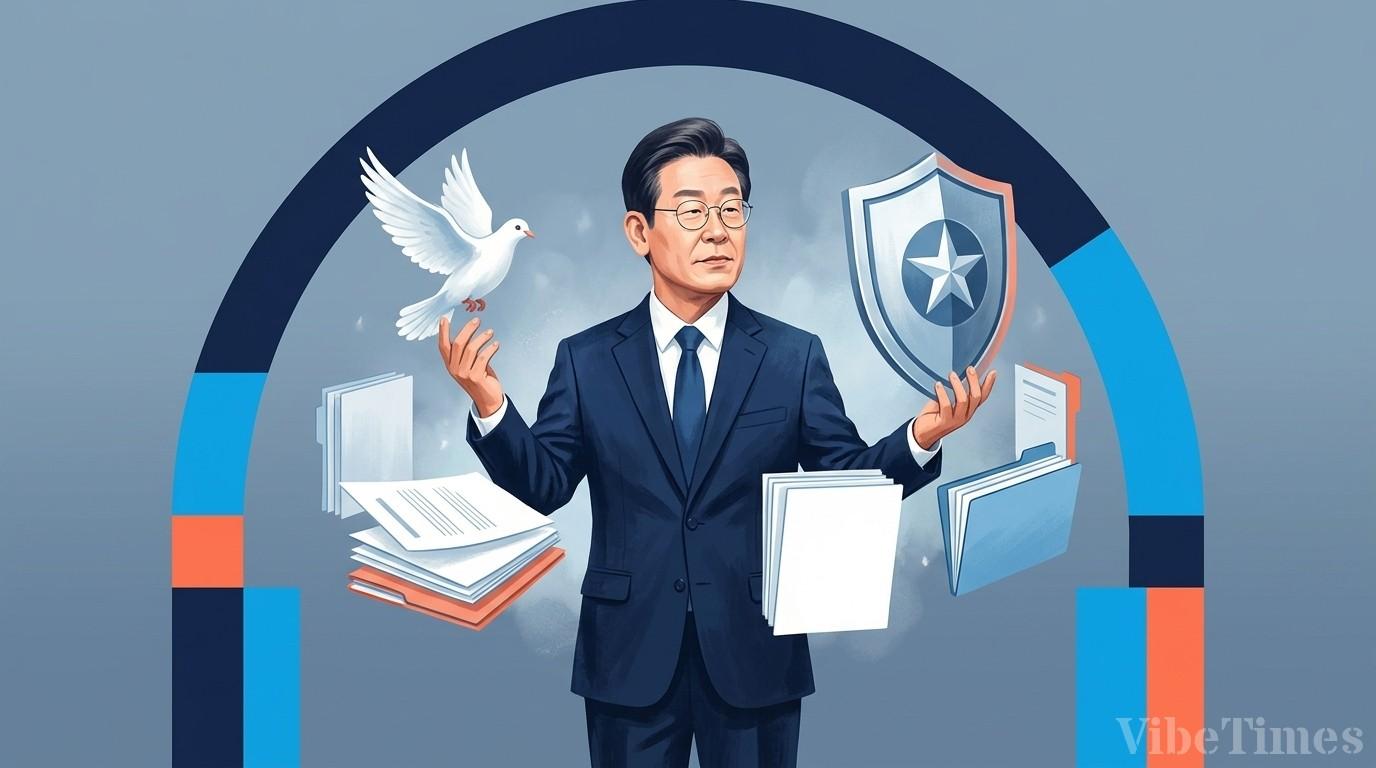
A single phrase — "we will eschew subservience and toadyism" — has redrawn the coordinates of the Lee Jae-myung government's diplomacy.
President Lee Jae-myung recently rebutted claims that the South Korea-US alliance is exceptional, declaring that his diplomacy would reject subservient and deferential attitudes. The message was that while the importance of the alliance would be upheld, Seoul would also manage relations with neighboring powers. Taken together with explanations from presidential office officials, this was less a declaration of weakening the alliance than a reaffirmation of balanced diplomacy. But because the wording itself was so sharp, divergent interpretations surfaced within and around the Foreign Ministry.
Sparring Over Kang Kyung-wha's Remarks, Embassy Steps In
The spark came from former Foreign Minister Kang Kyung-wha's remark that the alliance controversy was "no accident." Some interpreted her comment as a rebuttal aimed at President Lee's autonomous diplomacy line. The Korean Embassy in Washington promptly issued a statement drawing a clear line: "It was not a rebuttal of the president." In the end, one of the president's value-laden statements overlapped with a remark made on personal diplomatic conviction, escalating into an unnecessary war of clarification — forcing the government to explain itself twice in three days.
A diplomatic signal wobbling this fast carries multiple meanings. First, it testifies to how sensitive domestic and foreign audiences are to the Lee government's diplomatic language. Second, the fact that even remarks by Kang Kyung-wha, a senior Foreign Ministry elder stateswoman, drew suspicion of being a rebuttal shows that differences over the government's course exist within the ruling camp itself. It reads as an ongoing process of calibrating the temperature of its language over the priorities of autonomy versus alliance, even inside the government.
The Pragmatic Diplomacy Axis Extending to the Arctic Route and Russia
Another notable development in the same vein is the Arctic shipping route. On the 13th, President Lee attended a welcome ceremony at HMM headquarters in Busan for a demonstration voyage on the Arctic route, stressing that "the Arctic route is a core national interest task" and that "relations with Russia are also important." By visiting the Panstar Ace in person after its 50-day round trip, he reaffirmed his commitment to supporting the project. The Arctic route, which can sharply cut logistics costs and transit times compared with the existing route through the Suez Canal, is also a venture that cannot materialize without normalizing relations with Russia.
Placing the president's "anti-subservience" remarks alongside his support for the Arctic route makes the picture clearer. The framework is pragmatic: maintain the US alliance as the basic axis while restoring and expanding economic ties with neighboring powers, including Russia. Add reports that a round of golf with President Trump and others is being prepared for the G20 summit in Miami in December, and the intent to manage the alliance while building personal trust between leaders becomes legible. It can be assessed as diplomacy of calibrated distance — neither subservience nor turning one's back.
Finding the Way With the Language of 'Balance,' Not Security
Like the old adage that "peace is founded on the love of peace, not the fear of war," this government's diplomacy is moving on the calculus of national interest rather than fear of the alliance.
Challenges remain, of course. Language like "eschewing subservience" may be consumed domestically as a restoration of autonomy, but in Washington it can read differently. As the Kang Kyung-wha clarification episode showed, every diplomatic remark by a domestic figure will for now be scrutinized for whether it clashes with the government's line. The government will therefore need to work harder on calibrating the tone and timing of its statements.
With the December G20 approaching, President Lee's diplomatic moves are on a test bench, rolling simultaneously on two axles: relations with the US and balanced diplomacy. How quickly the Arctic route translates into tangible economic benefit, and when substantive results emerge from negotiations with Washington, are expected to be the variables that decide the success of this course. How precisely the gap between autonomy and alliance is measured will determine the ultimate verdict on Lee Jae-myung's diplomacy.