BOK Governor Shin Says Taming Inflation Is the Answer to K-Shaped Polarization

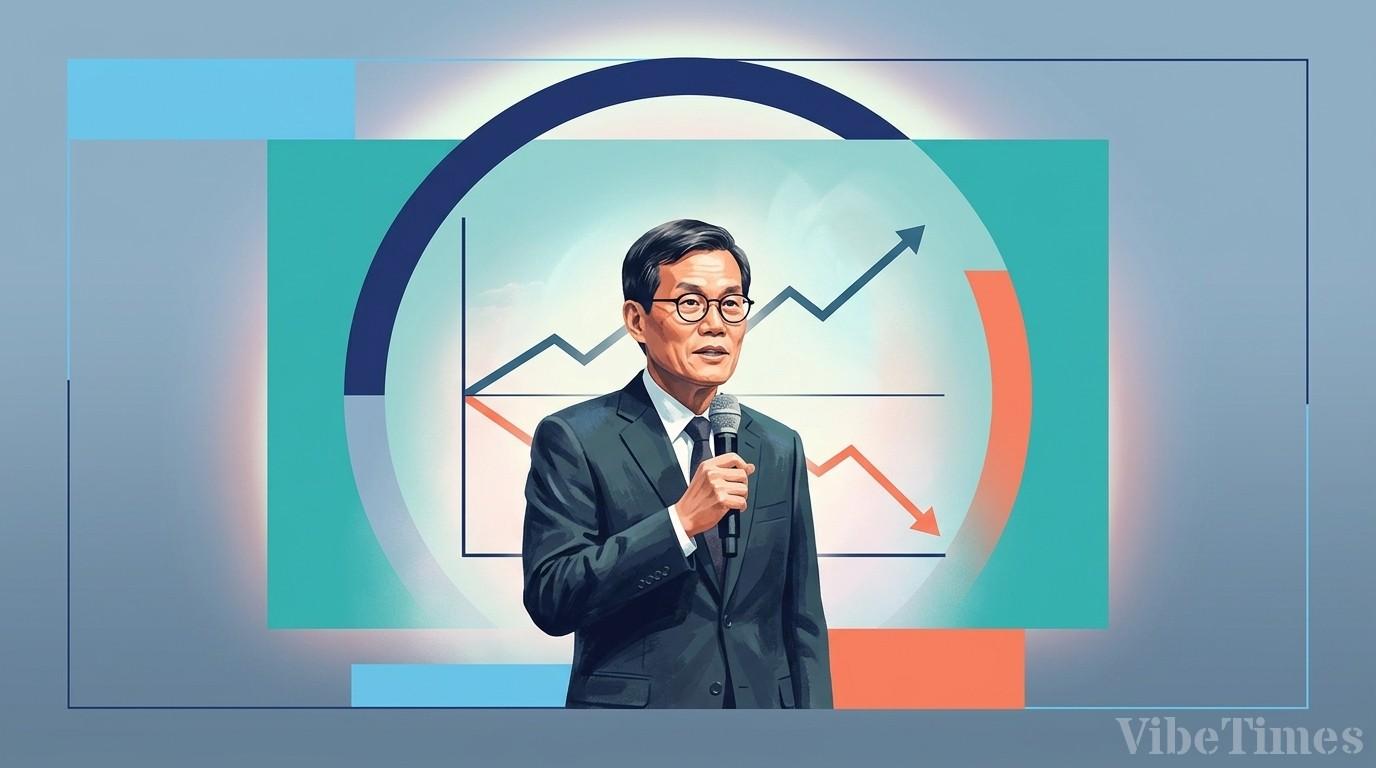
Amid the 'K-shaped polarization' of the Korean economy — a split between recovering and struggling sectors — price stability that eases the burden on low-income households is emerging as a key task. At a CNN panel discussion held in Bangkok, Thailand, on Tuesday (local time) on the sidelines of the International Monetary Fund (IMF)-World Bank Annual Meetings, Bank of Korea Governor Shin Hyun-song emphasized that "rising prices hit low-income households the hardest," and that central banks must properly implement monetary policy (money management policies such as adjusting the base rate) to stabilize prices. Central bank governors from around the world attended the event to exchange views on prices, growth, and financial stability.
As for external conditions surrounding the Korean economy, he cited large-scale investment in artificial intelligence (AI) and the Middle East war, diagnosing that Korea sits at the crossroads of both trends. While the AI investment boom works positively for growth and the Middle East war constrains the economy, he assessed that, for now, the AI tailwind outweighs the war's negative effects. However, he noted that both factors are adding upward pressure on prices.
Asked whether the Korean economy could face downside risks despite strong exports, Governor Shin replied that the key is how long the massive AI investment will continue. He said AI investment, expected to continue for years to come, will support global trade and have a positive impact on the Korean economy as well.
On financial stability, he stressed the need to respond before excessive borrowing and risk-taking expand. The experience of the late-1990s financial crisis, which Asian countries such as Korea and Thailand endured, is deeply embedded in policymakers' judgment on macroeconomics and financial stability, he said. He added that leveraging and risk-taking must be managed so they do not grow beyond manageable levels, warning that responding only after significant financial imbalances have accumulated could trigger a bubble collapse.
He noted that the Financial Vulnerability Index (FVI), which reflects domestic financial conditions, stands at around 46, near its long-term average. As safeguarding financial stability is a core mandate of the Bank of Korea, he explained that related indicators are monitored at all times. He closed by reaffirming the 2% consumer inflation target and vowing to consistently adhere to it.