Automatic Transfers Beat Splitting Your Bank Accounts

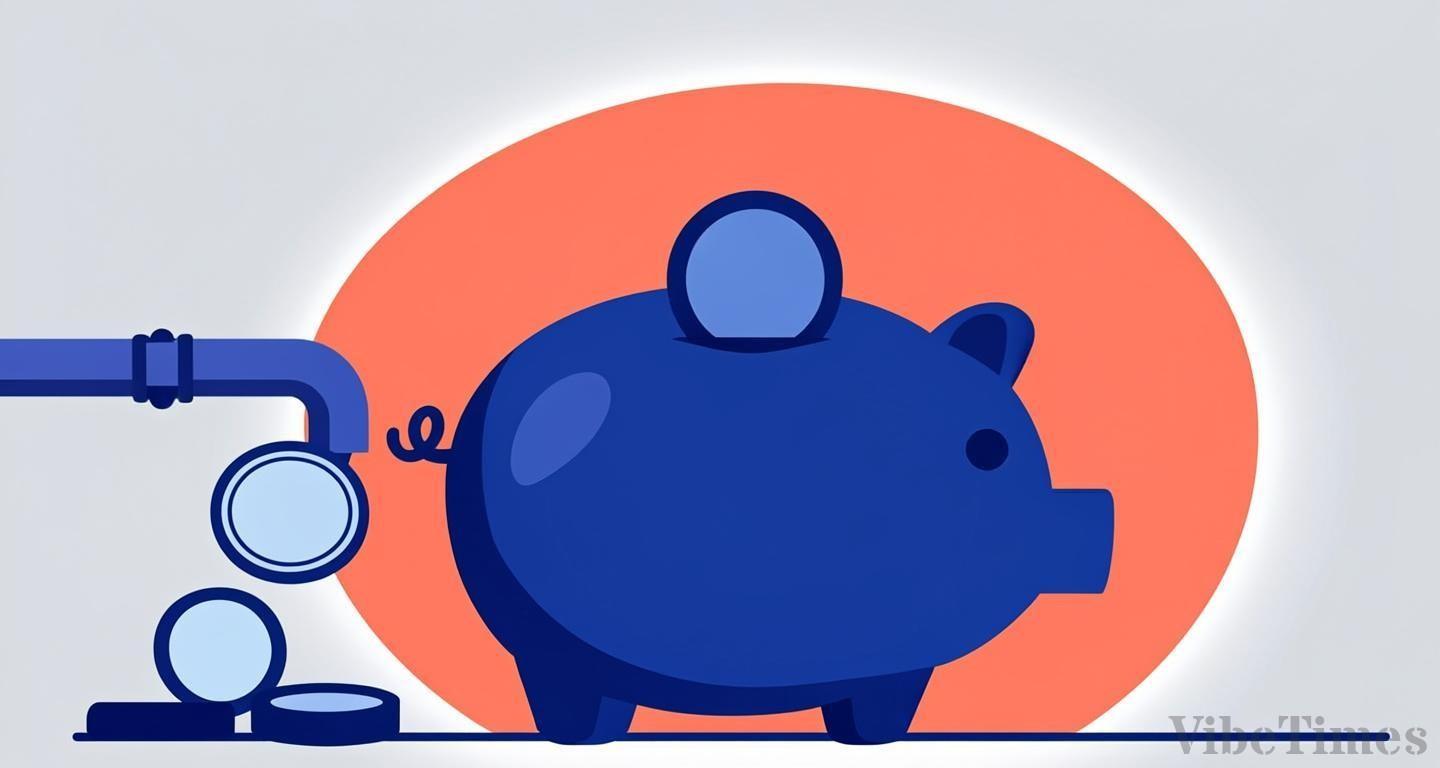
The difference between people who save money and people who don't is not the number of bank accounts they have, but a single transfer setting.
Splitting your bank accounts is a management technique for controlling spending; automatic transfer savings is an enforcement mechanism that forces savings without willpower. According to Bank of Korea and Financial Services Commission statistics, Korean households' net savings rate has remained at 1–5% for years, far below the OECD average of around 10%. The power that closes this gap—managing money while failing to save—comes not from splitting accounts but from automatic transfers. That said, the two approaches are not rivals: the consensus in financial planning practice is that the combined strategy—securing savings first through automatic transfers, then managing what remains by splitting accounts—has the lowest failure rate.
The Two Approaches Differ in Purpose from the Start
Splitting Bank Accounts — A Psychological Device That Makes Money Visible
Splitting bank accounts is a technique of pre-allocating your salary the moment it arrives into purpose-based accounts: a salary account, living expenses, fixed costs, leisure, and so on. It became known as a 'salary management method' in the mid-2010s and has since spread as fintech apps like Toss and BankSalad added automation. The core principle is pre-spending control and balance visualization. Because the remaining money in each account is visible, the psychological pressure of "this account only has this much" curbs overspending.
However, this method is essentially just an act of making money visible by dividing it. There is no enforcement mechanism that actually moves money out to a savings account, so structurally, the possibility of simply spending what remains remains intact. Behavioral economics explains this principle as mental accounting—the effect of dividing money's uses into mental ledgers.
Automatic Transfer Savings — An Enforcement Mechanism That Eliminates the Decision Itself
Automatic transfer savings is a method of scheduling transfers to a savings account on payday. It creates a structure where you save first and live on what's left, and most financial planners recommend it as a baseline strategy. It leverages behavioral economics' default effect: it removes the willpower drain of deciding every month whether or not to save.
It is also worth noting that most new installment savings products at commercial banks offer preferential rates conditional on automatic transfers. The reward structure designed by financial institutions itself favors automatic-transfer savings. Even depositing the same amount, you earn a higher rate if you meet the automatic transfer condition.
Comparing Effectiveness: Which One Actually Builds Savings
The Weakness of Splitting — Money That Gets Divided and Then Stalls
Splitting is effective at controlling spending by category, but the boundary between savings and living-expense accounts is weak. Lump sums left in the living-expense account easily leak into consumption, and the hassle of manually moving money each month drags down follow-through. Practitioners commonly note that stretching beyond five accounts causes management fatigue and a sharp spike in failure probability. Three to four accounts is the sweet spot.
The Strength of Automatic Transfers — Cutting Off Spending Before It Starts on Payday
When the savings portion leaves immediately after your paycheck arrives, only spendable money remains in the living-expense account. The pre-spending control that splitting aims for is achieved automatically, while savings are secured at the same time. Unlike the approach of resisting by checking your balance, you simply don't know the money exists, so the temptation to spend never arises.
The drawbacks are clear too. If the transfer amount is set too high, living expenses fall short and the risk of early withdrawal grows. With automatic-transfer installment savings, a single failed transfer or closure can cost you the preferential rate, so you should secure an emergency fund covering 3–6 months of living expenses before starting.
Which Approach Fits Whom
If Execution Is the Problem, Use Automatic Transfers; If Control Is the Problem, Split Accounts
Financial planners' common advice is clear. For young professionals just starting out or anyone with no savings at all, automatic transfers come first; for those who save but leak money, splitting accounts is effective. Those with variable income benefit from splitting, which is easier to adjust monthly. Remember: changing methods without diagnosing the cause only repeats the same failure.
Practical Design: A Two-Step Combined Strategy
Step 1 — Lock in Savings with Automatic Transfers the Day After Payday
Set the transfer date right after payday. A transfer on payday itself can fail due to deposit delays, so the next day is safer. The recommended approach is to start with a savings rate of 10% of income and raise it gradually to 20–30%. Choosing a product with a preferential rate tied to automatic transfers lets you capture the rate benefit as well.
Step 2 — Manage Only What Remains with Split Accounts
Divide the remaining amount after savings into fixed costs 50%, living expenses 30%, and the rest for discretionary spending, keeping 3–4 accounts. At this point, splitting functions not as a savings device but as a spending-control tool. Using the automation features of fintech apps can greatly reduce the effort of distribution.
Checkpoints — Condition Checks and Regular Reviews
Preferential rate requirements, interbank transfer fees, and account management conditions change frequently. Compare the latest terms before signing up through sources like the Financial Products Integrated Comparison Disclosure or BankSalad, and even after subscribing, review rate changes every 6 to 12 months and consider switching products.
In the end, order is everything. The combination of pulling savings out first through automatic transfers, then managing the rest by splitting accounts, is the realistic answer to raising your savings rate without relying on willpower.