US Navy's First-Ever Unmanned Ship 'Seahawk' Joins Carrier Strike Group

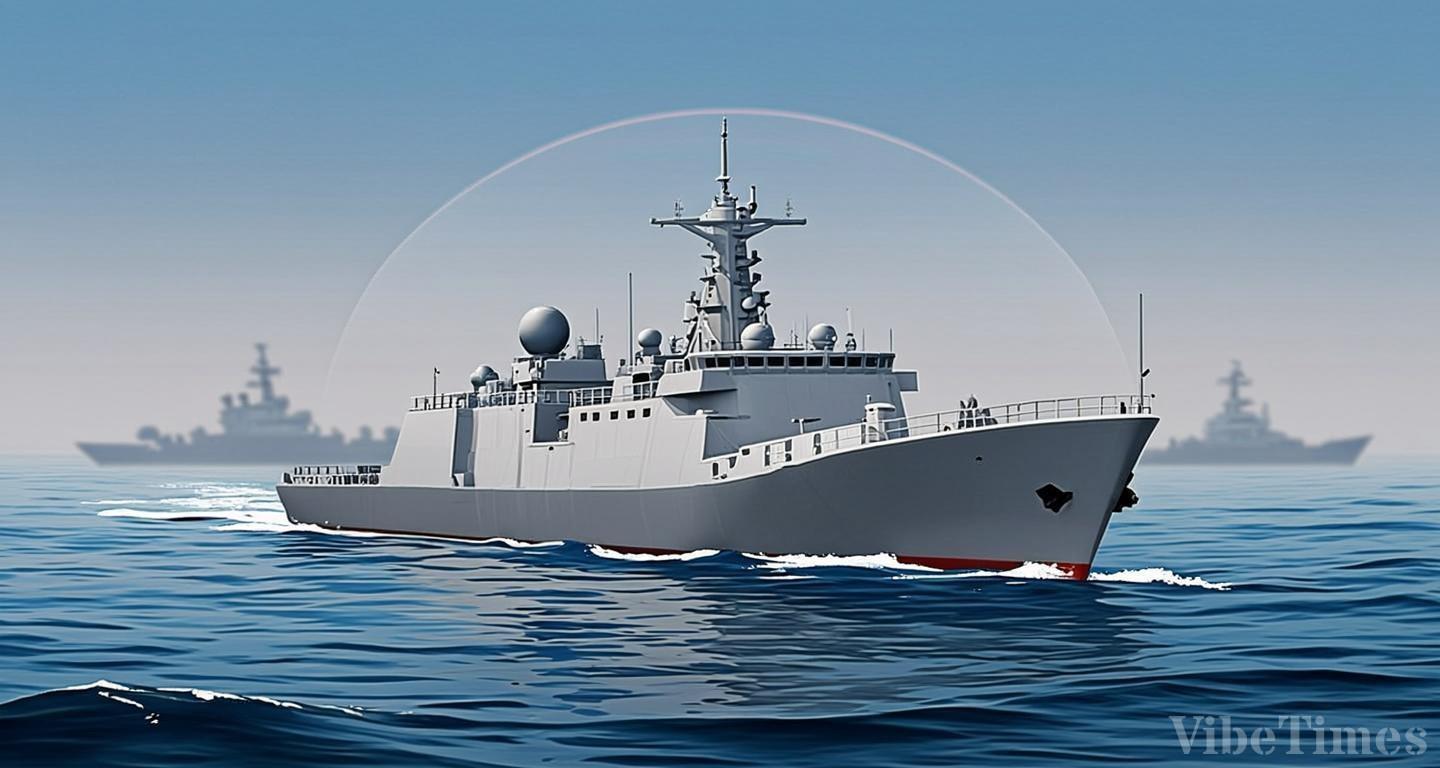
The Seahawk, a 42-meter unmanned surface vessel that navigates on its own without a crew, has for the first time in US Navy history joined a carrier strike group (a fleet centered on an aircraft carrier) as an official operational asset. The entry of an unmanned ship—performing missions without any crewed escort—into the Navy's premier combat unit underscores how the way wars are fought is changing.
The Seahawk departed Naval Base San Diego, California, on the 27th of last month alongside the aircraft carrier USS Theodore Roosevelt. The Roosevelt is expected to arrive in the Middle East at the end of this month. Acting US Navy Secretary Hung Cao said at an Association of the United States Army event in Washington, DC, on the 14th that this deployment marked 'the first carrier strike group to deploy with an unmanned surface vessel.'
Developed by US defense contractor Leidos, the Seahawk is a trimaran-hulled unmanned vessel with a full-load displacement of approximately 147 tons. Powered by two diesel engines for open-ocean voyages, each vessel costs around $35 million (about 47 billion won).
The Seahawk's defining feature is its autonomous navigation capability. Using artificial intelligence (AI), radar, and various sensors, it detects nearby vessels and obstacles to avoid collisions, and can follow its designated route even when GPS is unavailable.
The Seahawk's core mission is to monitor surface and underwater targets ahead of the carrier strike group and relay information to crewed warships. During the 2022 Rim of the Pacific (RIMPAC) exercise, it was equipped with a towed sonar array to test its anti-submarine warfare support capabilities.
Through this operational deployment, the US Navy plans to assess how well an unmanned vessel can keep pace with a carrier strike group's operational tempo and logistics systems. It has also laid out a plan to deploy more than 30 medium unmanned surface vessels in the Indo-Pacific region by 2030.
