November 9 Legislative Report: Yoon Chang-ryeol Holds Seats on Both the Standing Committee and Budget Committee

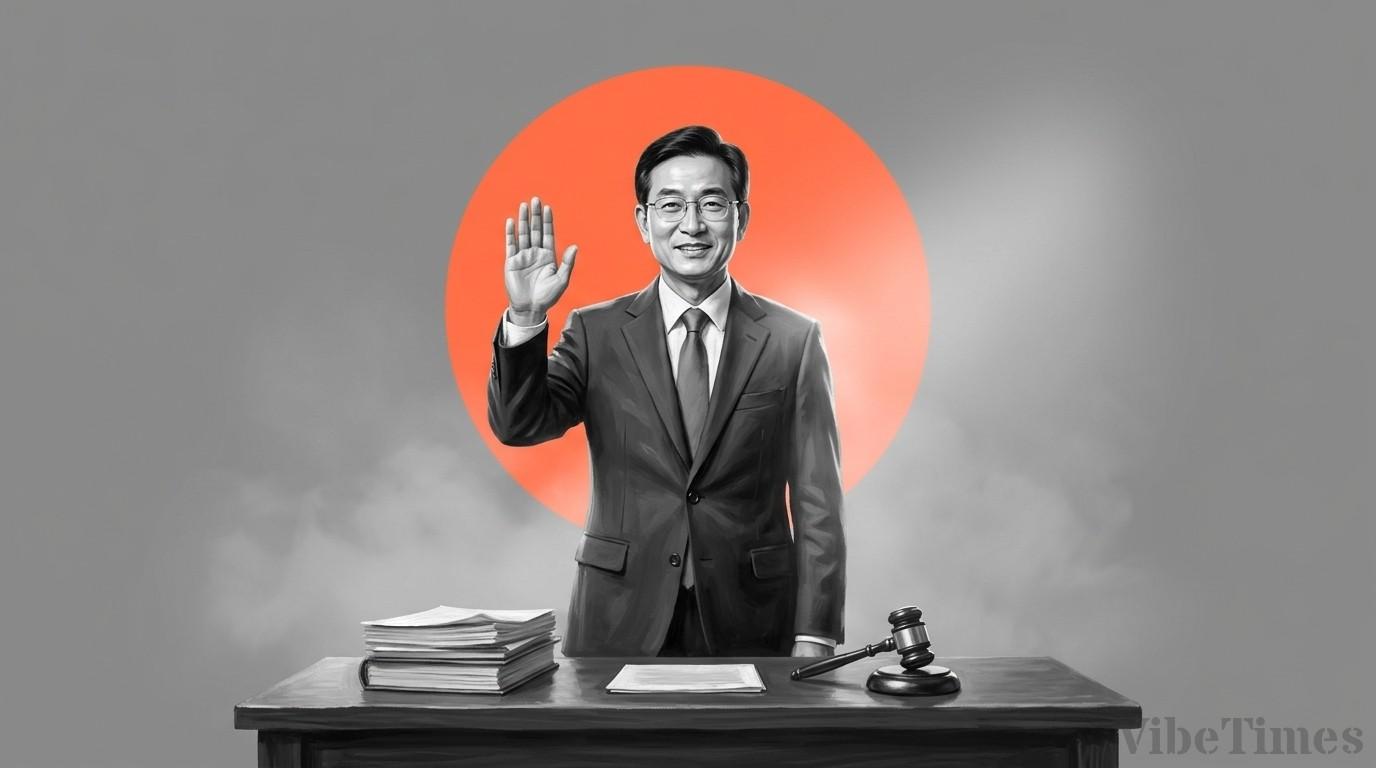
Rebuilding Korea Party's Yoon Chang-ryeol Works Both Legislative and Budget Fronts in the 22nd National Assembly
Rebuilding Korea Party lawmaker Yoon Chang-ryeol is broadening his legislative scope in the 22nd National Assembly, tackling contentious cross-party issues such as the Kim Keon-hee special prosecutor act as well as budget review. According to National Assembly public records, Yoon serves on both the Education Committee and the Special Committee on Budget and Accounts. It is uncommon for a single lawmaker to hold seats on a standing committee and a special committee simultaneously, which is read as evidence of the substantial role his party has assigned him.
Yoon's activities fall broadly into two strands. The first involves the partisan flashpoints that surfaced soon after the Assembly opened. In the course of handling the Kim Keon-hee special prosecutor act, the Rebuilding Korea Party chose a path of pan-opposition cooperation under the stated goal of guaranteeing the possibility of prosecution. Yoon likewise moved in line with the party's stance, lending momentum to the bill's passage. At the time, the party's choice went beyond a simple opposition vote, tying directly into a voting dynamic that measured the relative strength of each negotiating bloc against total seats. Observers note it was a case of a minor party demonstrating the actual weight of its votes.
From Nomination Reform Legislation to Political Reform: An Expanding Portfolio
The second strand is institutional reform. Yoon took part in nomination-related legislation alongside fellow Rebuilding Korea Party lawmakers. Nomination-related bills are intended to regulate parties' internal power structures through national institutions, in line with the party's embrace of political reform as its core identity following the 'Cho Kuk incident' that gave rise to its founding. He is also confirmed to have co-sponsored bills on judicial system reform and the prevention of prosecutorial overreach. This legislative record, pursued with fellow lawmakers including Lee Tae-hyung, represents the party's effort to concretize its championed prosecutorial reform agenda within the National Assembly.
The Rebuilding Korea Party's presence on the Education Committee is notable. In addition to Yoon, lawmakers Bang Si-hyuk, Lee Tae-hyung, and Jung Ji-eun also sit on both the Education Committee and the Budget Committee. A negotiating bloc with a small number of seats concentrating personnel on particular committees is interpreted as a strategy to maximize review capacity. The Budget Committee in particular is the front line where the review of the second budget bill of the Lee Jae-myung government, worth 820.9 trillion won, is underway. With the controversy over the 162.3 trillion won Future Response Fund's spending adjustment cap — allowing changes of up to 30% without National Assembly consent — running hot, the voting behavior of the party's Budget Committee members could become a variable that determines the budget's final size.
More Defections in Assembly Votes, Greater Influence for Minor Parties
Recent plenary voting patterns reveal fractures within both major parties. On the revised Rural Structure Improvement Special Accounts Act passed on October 1, 16 Democratic Party lawmakers, including Kim Jung-ho, Kim Joon-hwan, and Uh Kee-koo, broke ranks to vote against it. The People Power Party was no different: on an alternative vote under the Emergency Medical Services Act, 10 lawmakers including Yoon Young-seok, Park Soo-young, and Park Chung-kwon switched to the affirmative, and on the same day the Rural Structure Improvement Special Accounts Act drew yes votes from 4 lawmakers including Lee Man-hee and Kwon Young-se against the party line. Three members each also defected on the Eco-Friendly Agriculture Promotion Act and the Broadcasting Act.
Against this backdrop, the Rebuilding Korea Party's position shifts. When both major parties produce around 10 defection votes, a unified voting bloc from the third-largest party becomes the key to forming a working majority. This is borne out by the passage of the Fabricated Indictments Special Prosecutor Act on the 6th with 167 affirmative votes, where the People Power Party abstained and pan-opposition seats alone supplied the momentum. Yoon's track record of voting with his party must be read accurately within this arithmetic structure.
What to Watch
The focus going forward is the budget bill. As subcommittee reviews wrap up in December, how to handle up to 13.6 trillion won of the 162.3 trillion won Future Response Fund that could fall outside Assembly oversight has emerged as the top sticking point. With even some members of both major parties calling for stronger Assembly control, the stance of the Rebuilding Korea Party's Budget Committee members is likely to function as a bargaining chip. Also worth watching is whether follow-up political reform legislation after the Kim Keon-hee special prosecutor act, as well as nomination system reform bills, can clear the standing committee threshold. At a time when a single minor-party lawmaker's vote can reshape the plenary landscape, Yoon's legislative record is set to serve as a barometer for reading the Rebuilding Korea Party's overall strategy.
