President Lee Jae Myung to Meet Trump and Takaichi Within a Month

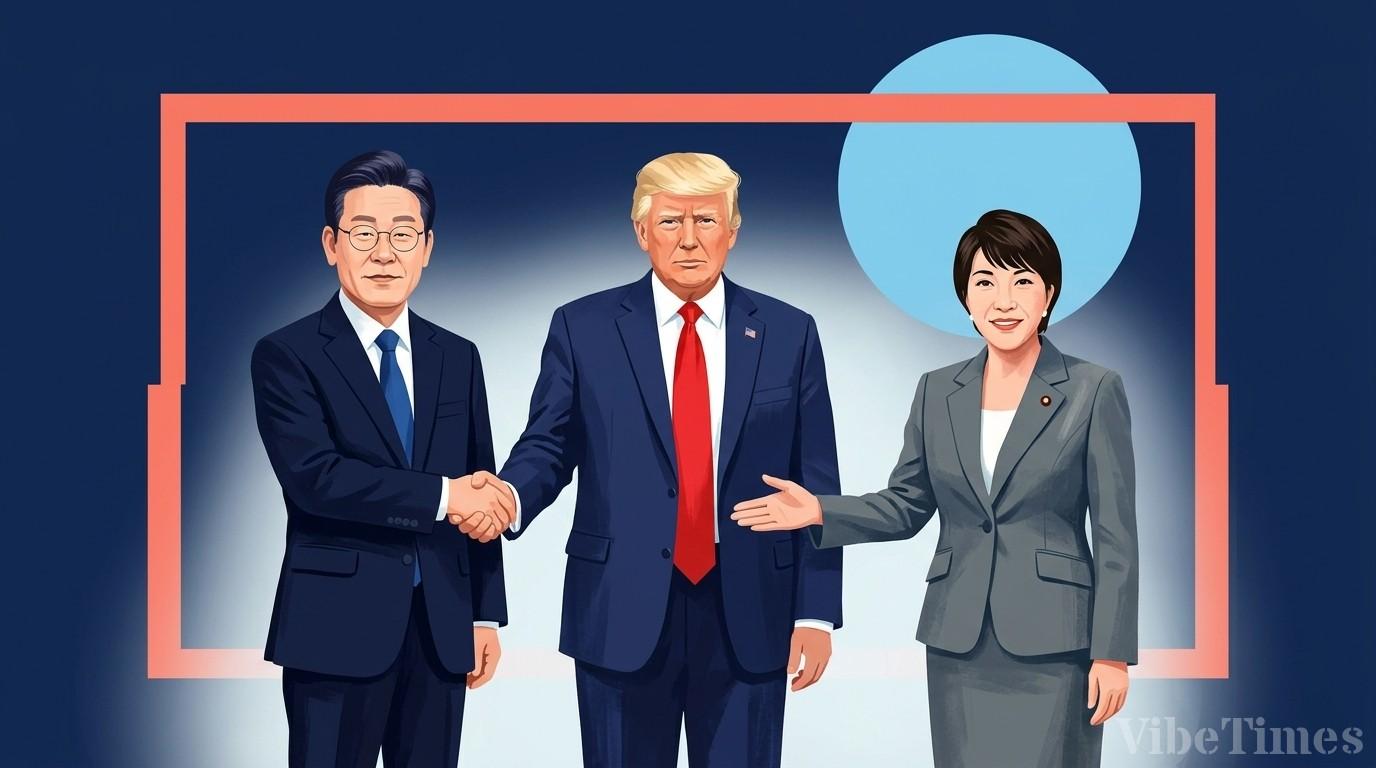
President Lee Jae Myung will hold back-to-back summits with U.S. President Donald Trump in December and Japanese Prime Minister Sanae Takaichi in January.
The schedule places him face to face with the two leaders roughly a month apart. This diplomatic itinerary, formally announced by the presidential office on the 22nd, follows up on the President's visit to the Philippines for the ASEAN summit, where he engaged with Trump, Xi Jinping, and Putin. With opposition criticism mounting over his frequent overseas trips since taking office, the administration is betting that tangible results from summit diplomacy will set the direction going forward.
A Direct Answer to Criticism of His Travel
Responding to the People Power Party's recent attacks on his frequent overseas travel, President Lee has pushed back, saying, "For those who see these trips as opportunities for tourism and luxury shopping, the President's travels can only look like vacations." Presidential communications chief Sung Ki-hong underscored the legitimacy of the foreign itinerary, citing the global trend of summit diplomacy and the outcomes of the ASEAN and APEC trips. The December Korea-U.S. summit and January Korea-Japan summit will serve as the stage to settle this debate once and for all. That is because counterarguments will only lose steam if concrete results on trade, security, and investment follow.
What stands out is the weight of his counterparts. With the Trump administration, tariff and trade issues remain outstanding; with the Takaichi cabinet, managing the temperature of Korea-Japan relations is the task at hand. During APEC, President Lee engaged with the U.S., Chinese, and Russian leaders alike, laying the groundwork for balanced diplomacy. These upcoming summits represent the phase of converting that groundwork into concrete agreements and investment deals.
Expanding Pragmatic Diplomacy and Its Domestic Political Significance
The diplomatic push also carries a strategy for navigating domestic politics. People Power Party floor leader Jang Je-won warned that "Black Monday" could arrive in 2026 with the collapse of the "Lee Jae Myung bubble," urging the government to prepare, while the ruling and opposition parties remain locked in sharp confrontations over the impeachment push against Chief Justice Jo Hee-de and the handling of the special prosecutor bill on fabricated indictments. The deeper the domestic political standoff, the more diplomatic achievements become an asset that boosts the government's presence. For President Lee—who has personally addressed the Daejang-dong controversy by saying, "A mayor colluding with a businessman could not have done what I did"—the diplomatic stage is not a place to come under fire, but a place to reclaim the initiative.
His habit of linking past and present, as when he invoked the New Village Movement launched under President Park Chung-hee, also reflects his diplomatic tone. The December and January schedules can be read as an extension of so-called pragmatic diplomacy, which prioritizes results and practical gains over ideological camp politics. Meeting the United States and Japan—his economic and security partners—back to back is also an expression of priorities.
Outlook and Challenges
Success will ultimately be judged by the numbers. The extent of tariff relief, the scale of investment secured, and whether concrete agreements on advanced industry cooperation are reached will be the yardstick for evaluation immediately after the summits. President Lee has made AI infrastructure investment a pillar of his economic revival efforts, visiting the construction site of the SK artificial intelligence data center in Ulsan, among other moves. AI and advanced technology cooperation with the U.S. and Japan is likely to be on the summit agenda, and if the framework for investment funding and technology cooperation takes shape there, it could yield results directly tied to domestic economic policy.
Risks remain. At home, the battle over the judiciary continues, with Seoul Mayor Oh Se-hun criticizing the impeachment push against Chief Justice Jo as "an attempt to take over the judiciary to eliminate President Lee's trial." No matter how packed the diplomatic schedule, growing domestic political discord will inevitably dim the luster of any achievements. Whether the principle the President himself stated—"reckless extremism, whether from the left or the right, must be guarded against"—is actually upheld in running the country will be the condition for protecting his diplomatic gains.
President Lee's choice ahead of the two summits is clear: to build the government's report card on signed agreements between leaders rather than on the noise of domestic squabbling. The two meetings in December and January will be the test.