Shakeup of Diplomatic and Security Line Seeks Breakthrough in ROK-US Friction

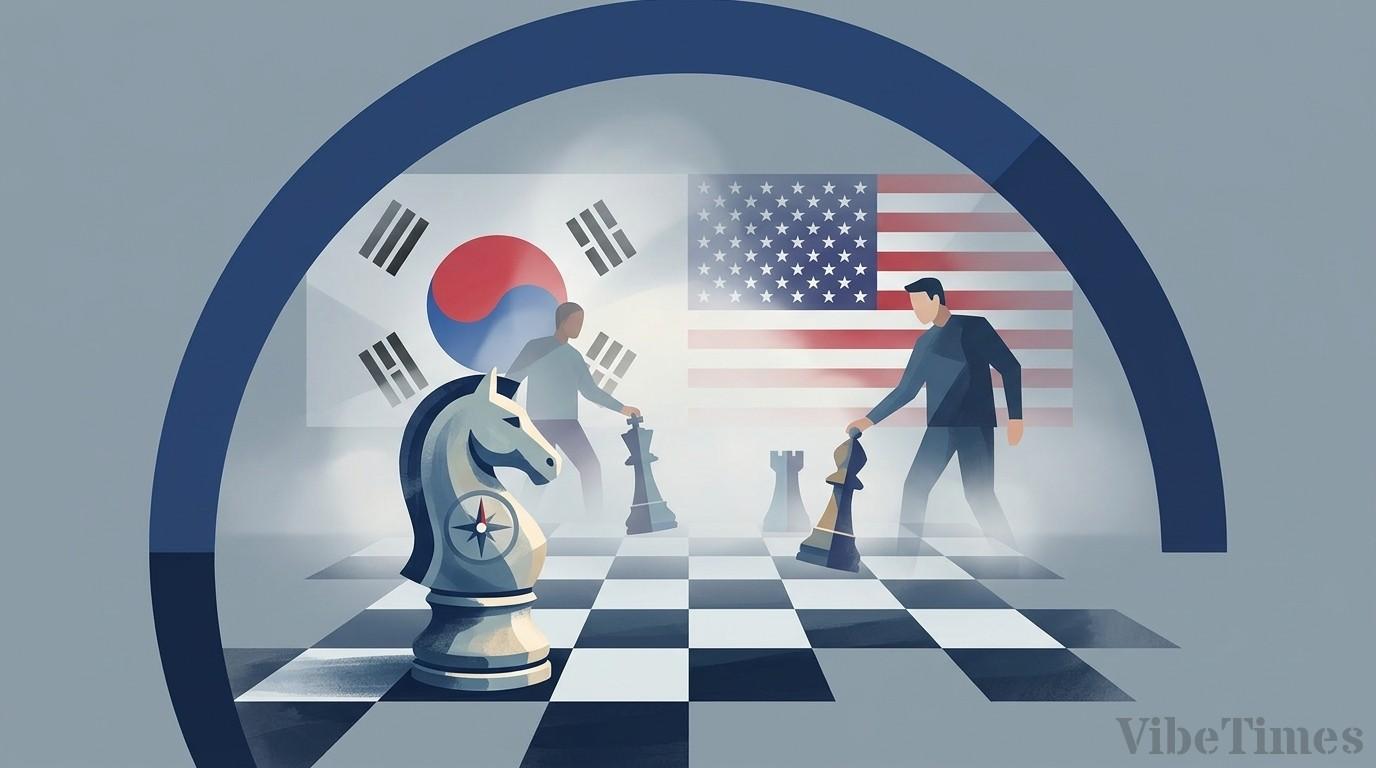
President Lee Jae-myung overhauled his diplomatic and security lineup on the 23rd, replacing the National Intelligence Service (NIS) director and the foreign and unification ministers in one sweep, while keeping National Security Adviser Wi Sung-lac in place. Presidential Chief of Staff Im Kwang-hyun, briefing reporters after the announcement, said the reshuffle was intended "to respond to rapidly shifting international dynamics with new leadership and maximize national interest," adding that it reflected "a resolve to protect the national interest across a range of fields, from diplomacy and security to trade, energy, and artificial intelligence (AI)." Following the September replacement of the defense minister, the move completes the Lee Jae-myung administration's new diplomatic and security line.
The wholesale replacement of the diplomatic and security team—Wi Sung-lac aside—appears to have been driven by friction with the United States and the internal discord that surfaced in the process. After Unification Minister Jeong Dong-young publicly named Kusong, North Pyongan Province, as the site of a North Korean uranium enrichment facility in a National Assembly speech last March, Washington restricted some sharing of North Korea-related satellite intelligence with Seoul, a measure that has lasted more than six months. In June, the NIS was reportedly excluded at Washington's request from a working-group meeting of South Korea, the US, and Japan on responding to North Korean cyber threats.
Against this backdrop, Foreign Minister Cho Hyun and Unification Minister Jeong Dong-young exposed the so-called 'sovereignty-first vs. alliance-first' rift over the priorities of diplomatic and security policy. When Jeong floated a vision of Korean Peninsula peace through four-party talks involving the two Koreas, the US, and China last August, Cho pushed back, saying, "He made an idealistic statement, and I hope it will be discounted." President Lee replaced both NIS Director Lee Jong-seok—a key sovereignty-first figure—and Minister Jeong, along with Minister Cho, an alliance-first figure, with individuals seen as 'ideologically muted,' in what is viewed as an attempt to turn the page.
The stalled inter-Korean relationship is also cited as a reason for the shakeup. Since taking office, President Lee has sought to improve inter-Korean ties through better US-North Korea relations, but relations soured after a landmine explosion in the Demilitarized Zone (DMZ), and the US-North Korea summit that had been discussed ahead of the recent APEC summit in Shenzhen, China, also fell through.
Wi Sung-lac's One-Top System: Foreign Minister nominee Lim Woong-sun has extensive North America-related experience, including postings as minister for political affairs at the Korean Embassy in Washington and as ambassador to Canada. NIS director nominee Kang Geum-sil, named to succeed Lee Jong-seok, is a former judge who served as justice minister under the Roh Moo-hyun administration; her diplomatic and security credentials are limited to stints as ambassador for women's rights and ambassador for global climate and environment at the Foreign Ministry.
Follow-up personnel procedures remain, including parliamentary confirmation hearings for NIS nominee Kang Geum-sil, who has been assessed as lacking diplomatic and security experience. Whether the new diplomatic and security line can deliver tangible results in easing the accumulated friction with Washington is the task that remains to be proven.