Dozens of Skeletons Unearthed at Demolition Site in Jongno, Seoul

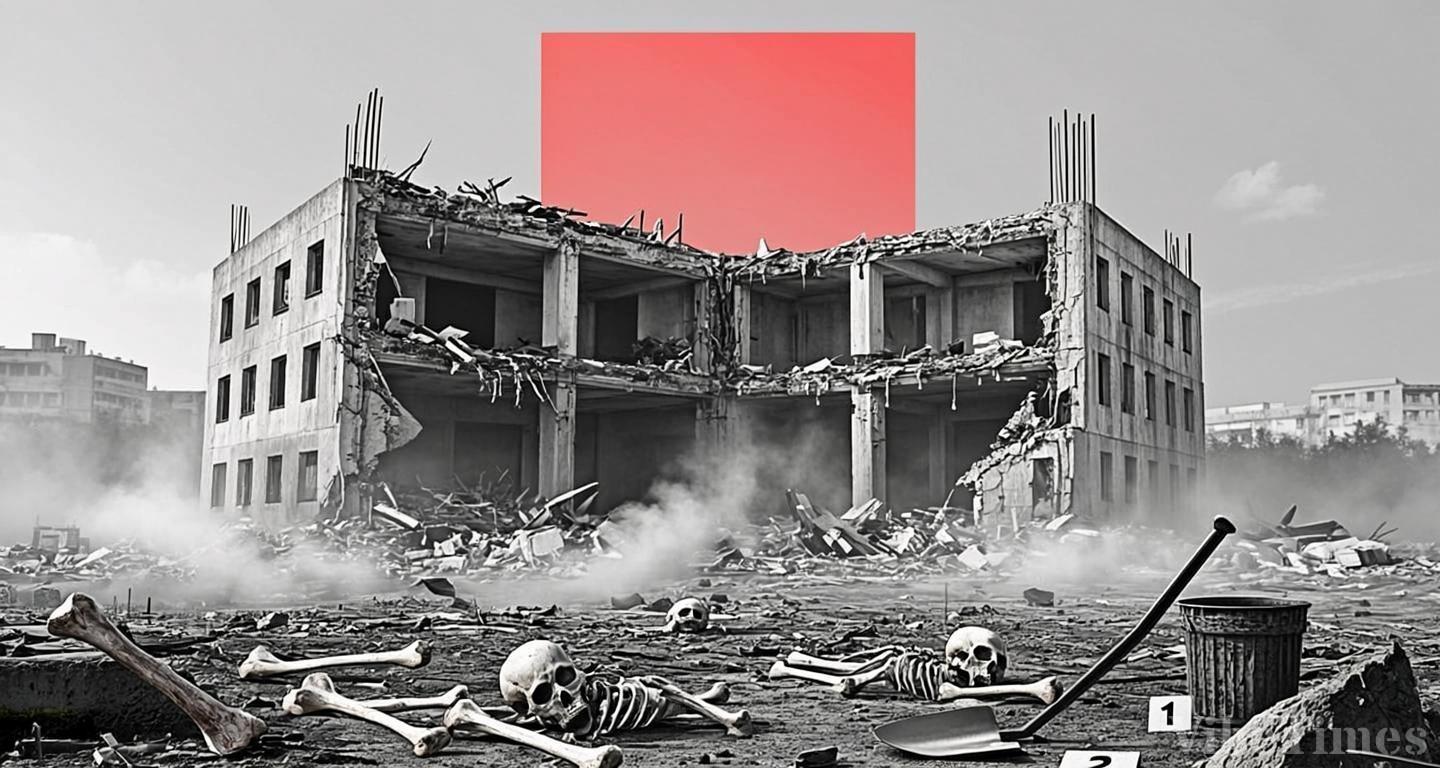
On November 28, 2008, dozens of skeletons believed to be human remains were discovered at the demolition site of the former main building of the Korea International Cooperation Agency (KOICA) in Yeonji-dong, Jongno-gu, Seoul. The site had once been home to the Seoul National University College of Medicine hospital. The remains were found in an underground space believed to be a dugout-style air-raid shelter beneath the building. Attention focused on whether it would ever be determined whose bones they were and why they had been buried there.
Among the remains were three young children estimated to be 1-2 years old and 11 believed to be women or middle-aged to older adults. Animal bones and a small bottle were also found alongside the remains. Some of the skulls bore marks that appeared to have been cut with a sharp instrument. However, no signs of homicide, such as gunshot wounds, were found. Police said at the time, "The remains at the excavation site are estimated to be at least 30 years old, and no evidence of foul play was found. We have requested an examination by the National Forensic Service to determine their sex and other precise identifying details." According to police, the number of remains, initially reported as 14, was confirmed through additional verification to total 28.
Based on the absence of signs of foul play, police judged that the remains were unlikely to be linked to the crimes of serial killers, and the Ministry of National Defense stated that the remains were unrelated to the military.
After roughly four months of detailed forensic examination, the National Forensic Service concluded that the remains were most likely bodies that had been used for anatomy training at the medical school of Keijo Imperial University during the Japanese colonial period and later discarded. The key evidence was the saw-like cut surfaces on some of the skulls, which indicated dissection practice. An official from the Ministry of National Defense's Remains Excavation and Identification Team explained, "Although none of the skulls were recovered intact, the discovery of artificially cut marks on some of the remains suggests they may have been used for anatomical purposes."
However, whose remains they were and how they came to be buried there was never determined. Police concluded their inquiry based on the National Forensic Service's findings and handed the remains over to the district office with jurisdiction. According to the SBS program "While You Were Suspicious," which aired in 2021, all 28 recovered skeletons were cremated and disposed of after their storage period expired.