After Han Duck-soo's Impeachment Dismissal, Four Issues Will Decide Cho Hee-dae's Fate

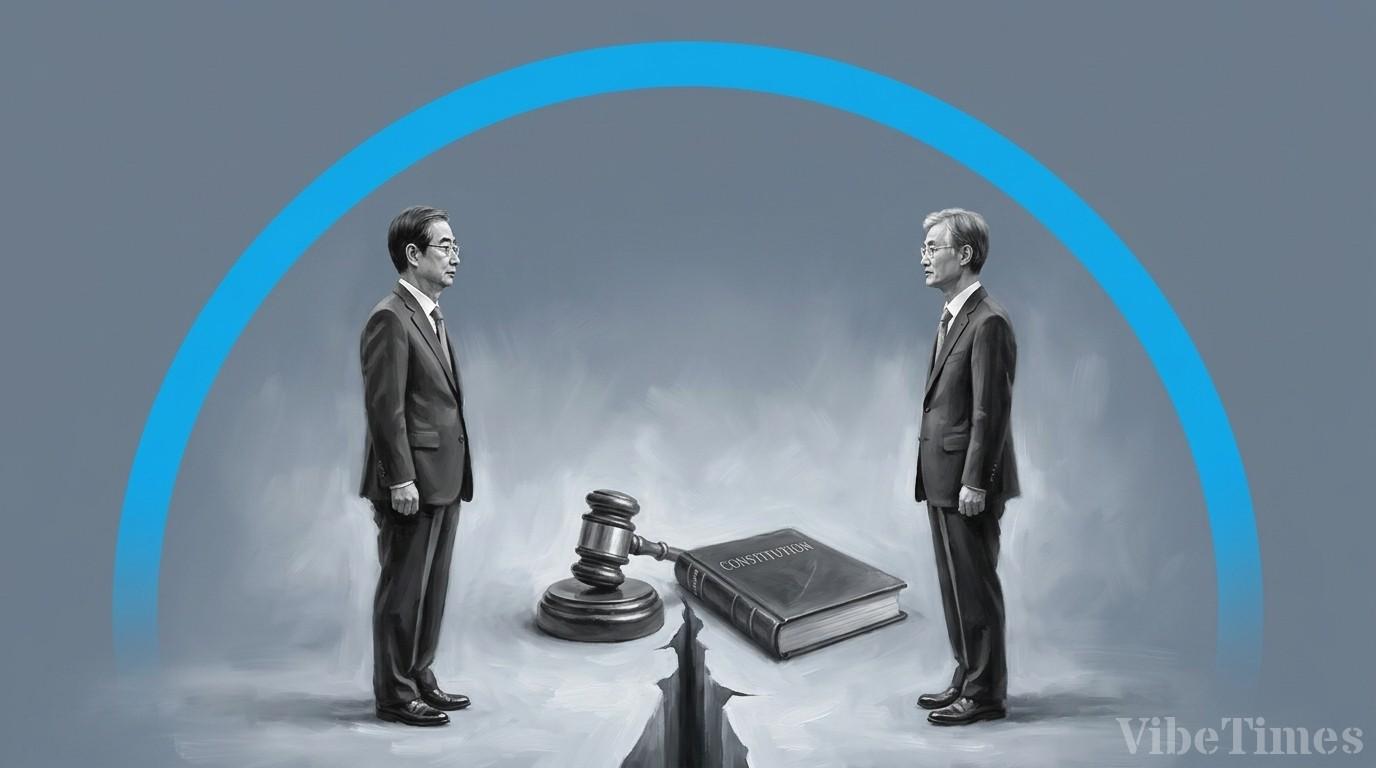
The issues that will determine the success or failure of the push to impeach Chief Justice Cho Hee-dae are being identified one by one within the ruling camp. On the 25th, Democratic Party of Korea leader Kim Min-seok formally proposed a "pan-ruling bloc alliance," urging all five ruling parties to move together to expedite the impeachment review. The impeachment task force formed within the Democratic Party has also stated it will complete drafting the impeachment motion (the formal document by which the National Assembly requests an impeachment trial) within this week. Task force head Yang Boo-nam said on Democratic Party TV on the 24th that after completing the motion, the schedule for referring it to the National Assembly plenary session would be coordinated, and on News Factory on the 25th he projected that it would be processed within December after coordinating the floor schedule.
Opinions within the ruling bloc clearly differ on the timing of the motion. Cho Kuk Innovation Party leader Shin Jang-sik argued for filing it on December 2 and passing it the next day, citing the symbolic significance of December 3 as the second anniversary of the insurrection. The Democratic Party has expressed reluctance about filing it simultaneously, noting that the statutory deadline for processing next year's budget bill falls on the same day, December 2. Its position is to reach an agreement on the budget bill first, then swiftly handle the impeachment.
A temperature gap within the judiciary is also emerging ahead of the nationwide judges' representatives meeting scheduled for the 30th. On CourtNet, the judiciary's bulletin board, arguments that impeaching judges over their rulings constitutes a violation of judicial independence are clashing with arguments that self-reflection should come first over rulings and conduct suspected of political bias that have invited public distrust. When Kang Dong-won, presiding judge of the Seoul Family Court and chair of the nationwide judges' representatives meeting, urged collective action on CourtNet on the 22nd, writing, "If the impeachment motion is ultimately passed, shouldn't we too take action?" posts of agreement followed. Meanwhile, Presiding Judge Seung-yong Song of the Seoul Central District Court demanded, as chair, that fairness and neutrality be maintained, while Presiding Judges Lee Bong-soo of the Changwon District Court and Baek Joo-yeon of the Suwon District Court voiced concern that hasty signals of collective action could undermine trust in the judiciary. Presiding Judge Jeong Wook-do of the Seoul Northern District Court emphasized that judges are not organization members serving a superior and must not be seen as defending the Chief Justice.
The core argument put forward by the impeachment opposition is interference with judicial independence. The Changwon District Court convened a full judges' council and stated, "Pushing to impeach a judge over a ruling undermines the constitutional values of judicial independence and separation of powers." The People Power Party has also placed this logic front and center as its grounds for opposition. It is true that this perception has spread partly because the Democratic Party launched the impeachment push after the Supreme Court's partial acquittal of former Prime Minister Han Duck-soo. Attorney Kang Soo-young pointed out on a broadcast on the 24th that if an impeachment had been intended, it should have been pursued back when the nomination of justices was being delayed, saying such perceptions are unavoidable.
However, the Democratic Party has already decided not to include the content of the ruling itself as grounds for impeachment. Task force head Yang Boo-nam stated, "We also respect the principle of judicial independence and the appellate court system, so we are not including the ruling's content." What the task force takes issue with is not the ruling's content but procedural flaws in the course of the trial. Its logic is that if a trial's fairness was undermined by violating procedures that should apply universally to everyone, that constitutes grounds for impeachment regardless of the free evaluation of evidence. The task force argues that the Supreme Court's trial of former Prime Minister Han was riddled with such procedural defects. Vice task force head Lee Kun-tae said on a broadcast on the 23rd, "Citizens lay down in front of armored vehicles to protect judicial independence, and lawmakers went to the National Assembly and voted, but the head of the judiciary remained silent," calling it self-contradictory for such a person to now speak of judicial independence.
Head Yang Boo-nam also stated, "The National Assembly is the only institution that can hold Chief Justice Cho Hee-dae accountable for his wrongdoing," saying the validity of the motion is a matter for the Constitutional Court to decide, and that the courts should show the right posture and attitude rather than collective action. He made clear that the impeachment push would not be halted by judges' collective action.