Budget Deal Deadlocked Over Future Response Fund With D-4 Deadline Looming

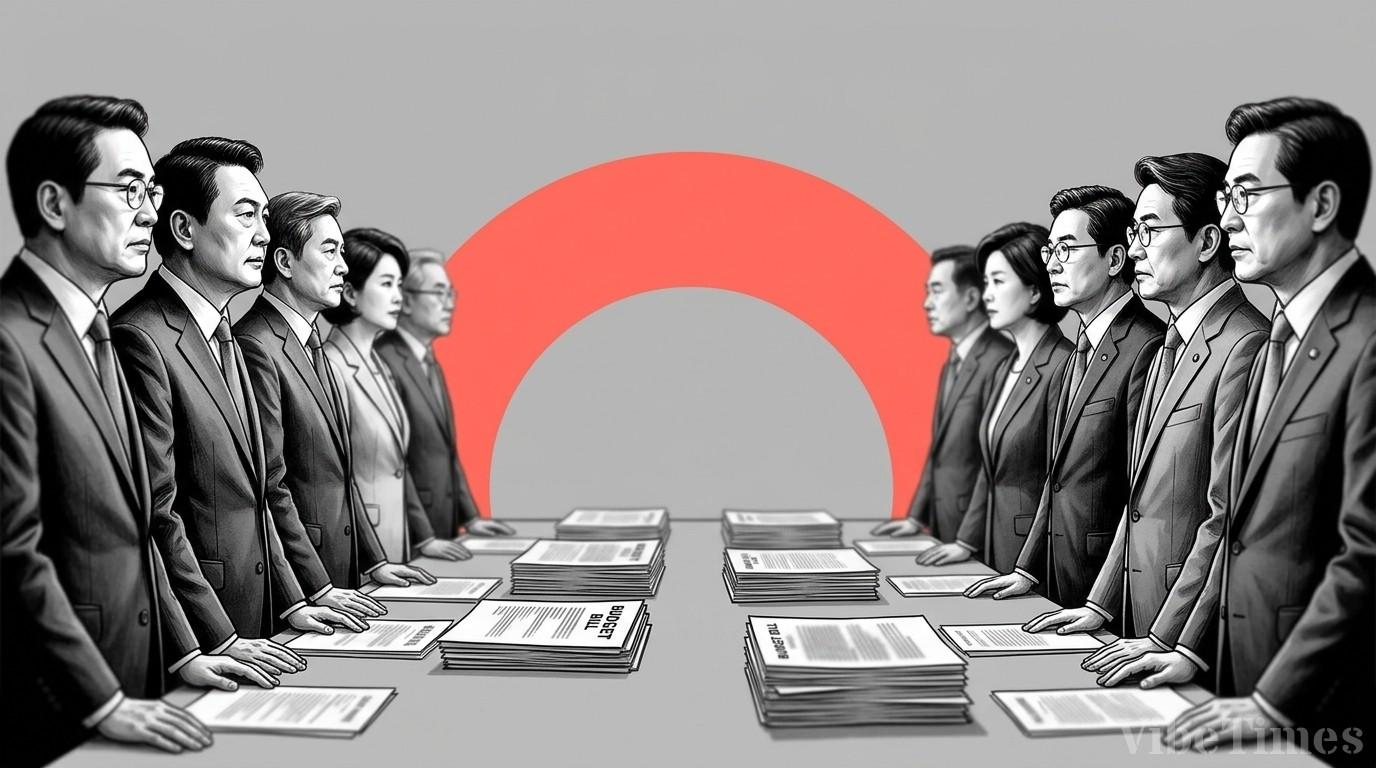
With just four days left until the statutory deadline (December 2) for passing next year's budget bill, the ruling and opposition parties remained deadlocked on the 28th, failing to narrow their differences over the Future Response Fund projects. Although the National Assembly Special Committee on Budget and Accounts' budget subcommittee wrapped up its 12-day review the previous day (the 27th), all projects related to the Future Response Fund were left undecided. The committee plans to continue discussions on the contested budget through a smaller working-group subcommittee attended by only a few members, including the parties' floor negotiators.
Jeon Eun-su, chief spokesperson for the Democratic Party of Korea, argued in a written briefing that day that the Future Response Fund is not debt but rather "a breakwater preparing for the coming wave" and "watering the seeds of a solid growth foundation." She insisted that the 104 trillion won accumulating in the fund is not money that disappears but a financial asset held by the state. Jeon dismissed claims by the People Power Party and others labeling the budget bill and the creation of the fund as "fiscal addiction" or "debt addiction" as mere "political attacks that turn a blind eye to the truth," urging that the budget be passed within the deadline.
Park Sung-hoon, senior spokesperson for the People Power Party, said in a statement on the 28th that "the semiconductor boom is temporary, but national debt lasts for generations," criticizing as "contrary to common sense" the very idea of stockpiling 104.4 trillion won in excess tax revenue in a separate fund while issuing 100 trillion won in deficit-financing bonds, and called for a fundamental review of the Future Response Fund.