President Lee Jae-myung personally lays out criteria for special prosecutor in fabricated-indictment case

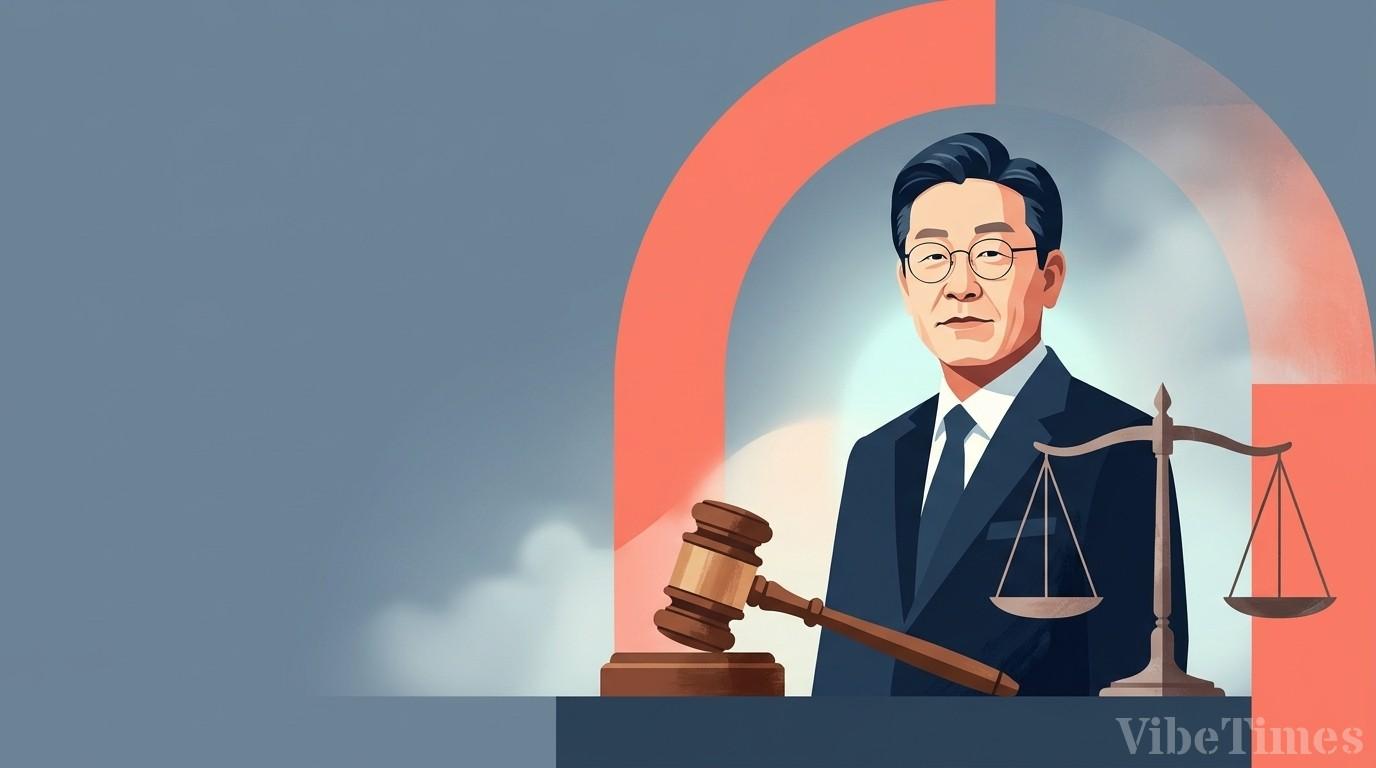
"It must be judged comprehensively." As President Lee Jae-myung speaks out directly on the criteria for appointing a special prosecutor in the fabricated-indictment case, a political battle over the selection of the candidate is unfolding alongside the political calendar.
The appointing authority lays out his own criteria
At a meeting with reporters covering the presidential office on the 29th, President Lee responded to a question about the appointment criteria by indicating that the decision cannot be made on a single standard. He said he would exercise his authority to appoint the special prosecutor and bear the responsibility that comes with it. This is interpreted as a message that he will reach his own conclusion without causing political turmoil after the candidate is recommended.
The crux of the issue is the track record of the candidate recommended by the Democratic Party. The party recommended attorney Lee Im-sung (Judicial Research and Training Institute, class of 21) as its candidate. He previously served as counsel for President Lee during the investigation into the wiretapping incident when Lee was Gyeonggi Province governor. He has also expressed support for the impeachment of Chief Justice Cho Hee-de and opposed the complete reform of the prosecution's investigative powers, making his potential appointment a catalyst for political interpretation.
Opposition-ruling party standoff and legislative dispute
The People Power Party is escalating its resistance, calling the special prosecution itself the "Lee Jae-myung Jailbreak Act." Senior spokesperson Park Sung-hoon criticized the Democratic Party's recommendation of a candidate and the unilateral handling of the confirmation report for Justice Minister nominee Lee Yong-chul on the 28th, saying, "The ruling power may be able to erase indictments, but it cannot erase historical responsibility or the judgment of the people." The opposition contends the move is a preemptive maneuver by the ruling party to neutralize indictments against the president.
The People Power Party is expanding its outdoor protests with regional rallies. It held a "Rally to Denounce the 100% Unconstitutional Lee Jae-myung Jailbreak Act" in Daejeon on the 28th, followed by a rally in Mungyeong, North Gyeongsang Province, covering Sangju and Mungyeong, on the 29th. The party is appealing to regional public opinion by highlighting the possibility of constitutional challenge and the bill's constitutionality concerns. Meanwhile, the Democratic Party and its camp maintain that the special prosecutor is an institutional mechanism to reaffirm the legitimacy of the investigative process that led to the fabricated indictments, and see securing the prosecutor's independence as the key issue.
Where the appointment decision is headed and its political fallout
Under the legally established procedure, the National Assembly holds the power to recommend candidates, while the president holds the power to appoint. Within this structure, the president's stated "comprehensive judgment" inevitably becomes a process of weighing the candidate's career, demands for neutrality in the special prosecutor's investigation, and political burdens. With the candidate's history of defending suspects fueling a debate over appointment suitability, if the appointment is made, opposition resistance is likely to continue even after the special investigation begins.
A variable to watch is the timeline. The spread of People Power Party rallies to Daejeon and Mungyeong is read as an attempt to steer the debate back toward repeal or revision of the special prosecutor act. On the other hand, as seen in the case of the National Election Commission special prosecutor, such investigations easily face practical constraints like deadline extensions and securing custody of suspects, so securing investigative momentum after appointment is expected to emerge as the real challenge for the fabricated-indictment special prosecutor as well.
Outlook: The real test comes after the appointment
If President Lee proceeds with the appointment, responsibility becomes clear, increasing the presidential office's burden of explaining the investigation's outcome to the public. Conversely, if he withholds the appointment or demands a new recommendation, a new cost arises in the form of friction with the ruling party. The president's own remark that whoever exercises the power must take responsibility will remain the yardstick that defines the weight of the decision, whichever way it goes.
In the upcoming legislative phase, discussions on revising the special prosecutor act, the confirmation process for the justice minister nominee, and calls to introduce a permanent special prosecutor system are likely to intertwine and expand into a broader debate over redesigning the special prosecutor system itself. As a philosopher's adage emphasizing legal limits on the power of special prosecutors suggests, how far the boundaries of legally granted power will be respected will ultimately determine the verdict on this issue.