President Lee Jae-myung says there is no single criterion for appointing the special prosecutor

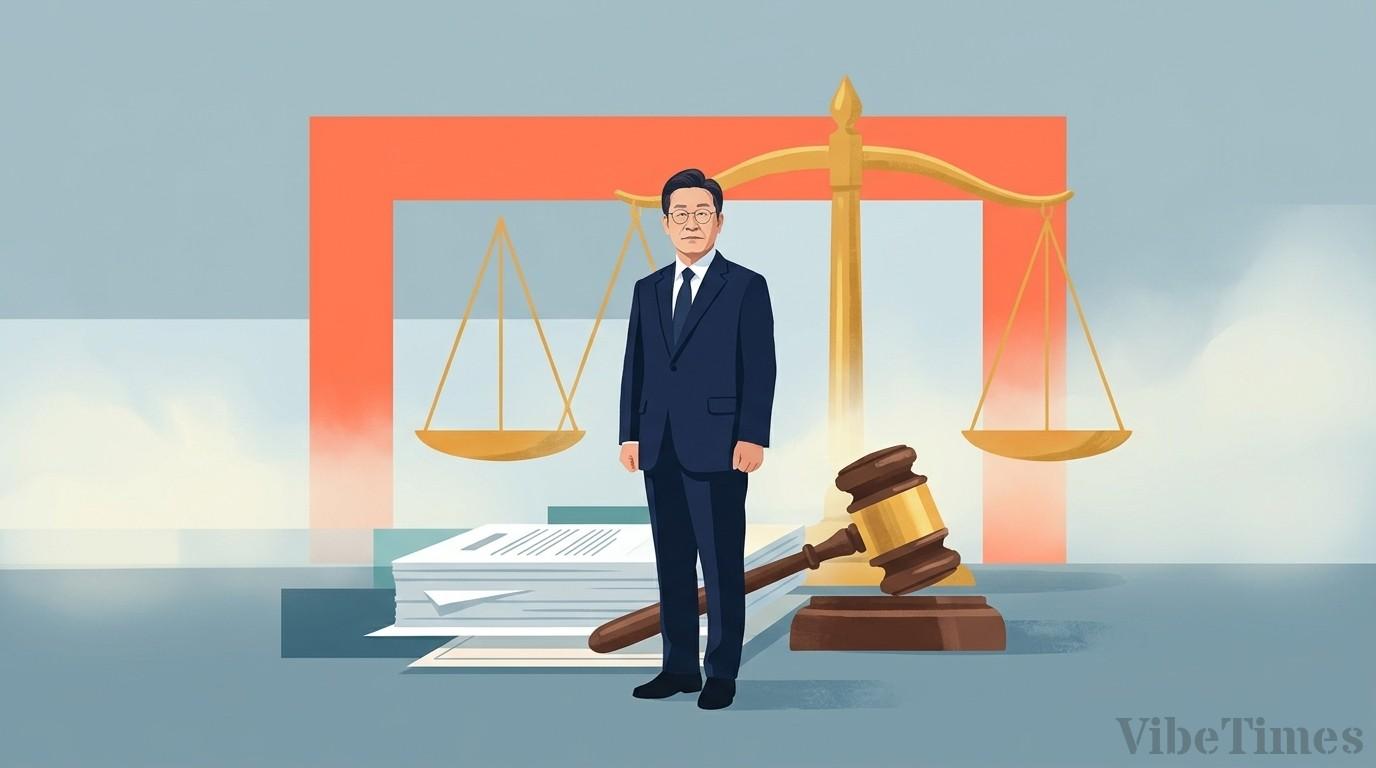
President Lee Jae-myung has himself denied the existence of a single criterion for appointing a special prosecutor to investigate fabricated indictments. At a meeting with reporters covering the presidential office on the 29th, he said, "This has to be looked at comprehensively. It is not something that can be done by a single standard." With each candidate carrying a different track record and political stance, a single appointment decision has come to hinge on the direction of judicial reform.
What the President's Remarks Mean
According to Yonhap News Agency, President Lee was asked about the appointment criteria during a press gathering at the presidential office's Chunchuwan after finishing a hike that day. "Deliberate fabrication and distortion must be held accountable," he added, saying that "if information was distorted in a way that distorted the judgment of the sovereign, it is something that carries enormous responsibility and deserves criticism." This effectively confirmed that the special prosecutor's mandate would cover not only abuses of prosecutorial indictment authority but also the distortion of information during the election process. The problem is the spectrum of candidates. Lawyer Lee Im-sung, recommended by the Democratic Party, opposed the impeachment of Chief Justice Cho Hee-de and has a record of tepid support for prosecutorial reform legislation. Behind the President's sweeping answer of "comprehensive judgment" lies the fact that even within the ruling party there are differing views on the candidate's suitability.
President Lee also took the position that exercising the power to appoint the special prosecutor is "normal." On the other hand, he distanced himself from the impeachment of Chief Justice Cho Hee-de, saying he had "no opinion." This is interpreted as a signal that he intends to keep judicial restructuring discussions and the special prosecutor appointment on separate tracks. Yet given how substantively intertwined the two matters are, each candidate's record on the impeachment and related legislation cannot but function as a variable in the appointment.
The Battleground of Issues Revealed by Partisan Clashes
The response from the People Power Party was immediate. Chief Spokesperson Park Sung-hoon criticized the ruling party's recommendation of lawyer Lee Im-sung as candidate on the 28th, saying, "You may be able to erase indictments with power, but you cannot erase historic accountability or the judgment of the people." He went further, citing the personnel hearing report of Justice Minister nominee Lee Yong-chul and its unilateral processing, arguing that the Justice Ministry and the special prosecutor follow a single trajectory with the phrase "a jailbreak special prosecutor and a bulletproof justice minister." On the 29th, the party even held a rally in Mungyeong, North Gyeongsang Province, denouncing the special prosecutor law and branding the bill itself "a 100 percent unconstitutional Lee Jae-myung jailbreak act."
The People Power Party's argument is that this law is tailor-made legislation designed to void a specific individual's indictment. Members of the Cho Kuk Innovation Party, including lawmaker Choi Sang-yeop, have consistently voiced support for checking prosecutorial overreach and backing judicial reform, setting up a direct collision with the opposition's view that the bill's purpose is to curb the prosecution's monopoly on indictment. Over the same bill, one side reads a tool for extinguishing indictments by those in power, the other an institutional check on prosecutorial abuse. Legislation with so wide a gap in interpretation is rare, and that gap is the bill's essential point of contention.
The Market and Political Shockwaves the Appointment Will Create
The subject of the fabricated-indictment special prosecutor's investigation is the prosecution's exercise of indictment authority as a whole. If investigators examine what information the prosecution relied on when indicting specific individuals at specific moments, the findings will directly affect ongoing trials and future indictment practices. If the "distortion of information" the President spoke of is confirmed, the fallout could escalate beyond punishing those responsible into discussions of restructuring the prosecution itself. Conversely, if no fabrication is proven, the law itself will face criticism that it was political overreach. Either way, the appointee's disposition and how the scope of investigation is defined will heavily shape the direction of the outcome.
It is also noteworthy that conflict has already surfaced over the specific candidate of lawyer Lee Im-sung. His record of opposing the impeachment of Chief Justice Cho Hee-de and opposing the prosecutorial reform bill could become a political cost of the appointment as the ruling party seeks to engage its base. President Lee's leaving room for "comprehensive judgment" can also be read as a signal that he does not intend to close off the possibility of replacing the candidate.
Remaining Steps and Outlook
There are two things to watch going forward. The first is the timing of the appointment. With the special prosecutor law already passed, any delay in the appointment itself is becoming ammunition for the opposition, so the President's decision could well come sooner rather than later. The other is the substantive outcome of the investigation. As the case of the National Election Commission special prosecutor—still investigating the ballot shortage in the June 3 local elections and 84 days in with only one person taken into custody—demonstrates, special prosecutors face structural limits on their investigative capacity. The fabricated-indictment special prosecutor likewise confronts the high barrier of proving involvement at the top of the prosecution, meaning that the substantive conclusion is expected to take considerable time and turmoil, in contrast to the drama of the appointment itself.
The law's social impact will ultimately depend on the investigation's findings. If fabricated indictments are confirmed, prosecutorial reform legislation will gain momentum; if not, the ruling party will have to defend the law's legitimacy all over again. Given that there is little disagreement between the ruling and opposition parties over the President's core concern about "distorting the judgment of the sovereign," the weight of the final judgment appears likely to rest on the individual special prosecutor's investigation and conclusions.