Two Years After Martial Law: Continuing Political Turmoil and the Judiciary's Verdict

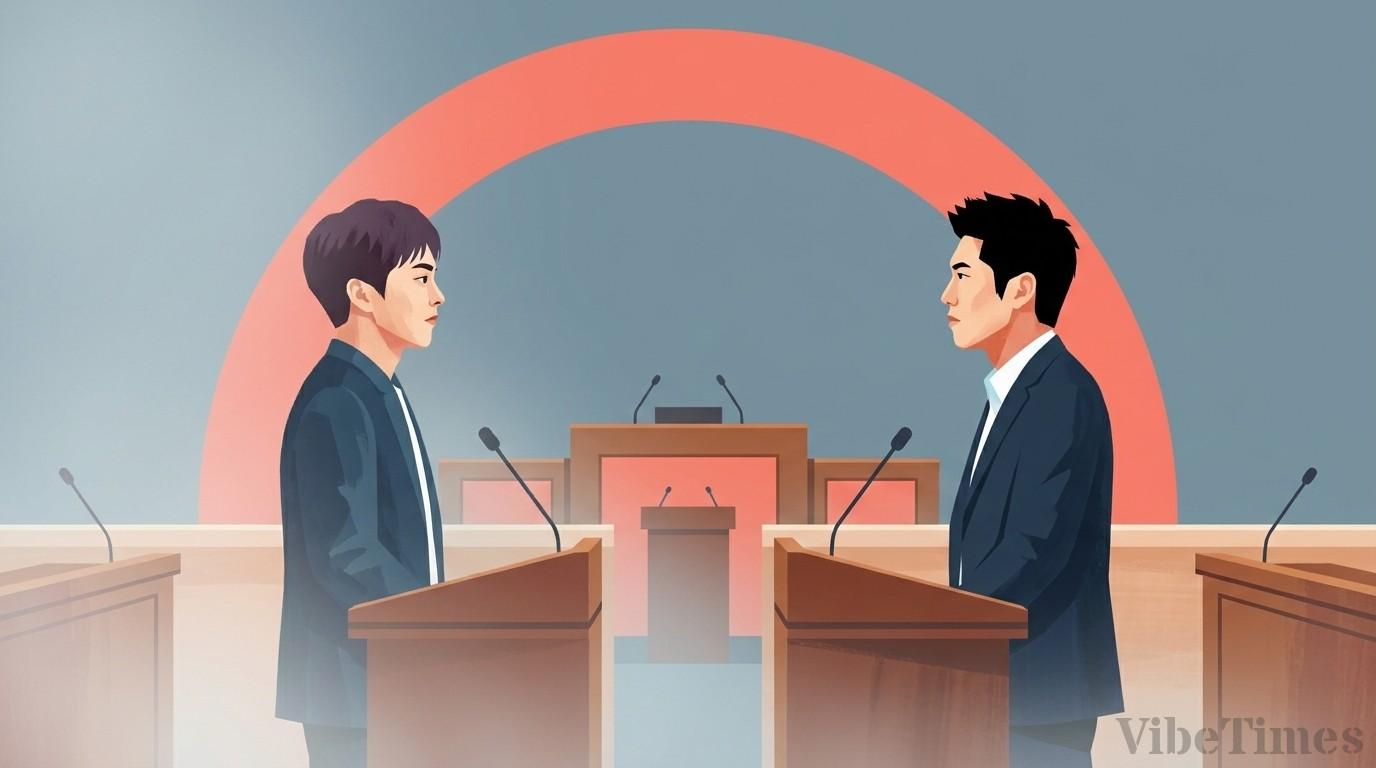
As the Dec. 3 emergency martial law crisis marks its second anniversary next month, its political aftermath persists amid investigations, trials, and partisan standoffs, while conflict between political camps over judicial rulings is intensifying. On the 19th, the Supreme Court overturned and remanded the case of former Prime Minister Han Duck-soo, who was charged with performing key duties in an insurrection, acquitting him on some counts. The Democratic Party, pushing back against the ruling, has moved to impeach Chief Justice Cho Hee-de. The People Power Party hailed the verdict as a check on attempts to brand everything as insurrection and has gone on the offensive against the Democrats.
Public perception of the martial law declaration as an insurrection is trending downward. According to a Gallup Korea survey of 1,000 voters nationwide conducted from the 24th to the 26th, 57% said the Dec. 3 emergency martial law amounted to an 'insurrection,' while 31% said it did not. The share saying 'insurrection' has fallen from 71% in December 2024, immediately after the declaration, to 64% in February this year and 57% in the latest survey. Those saying it was not an insurrection rose from 23% to 24% and 31% over the same period. The survey was conducted by telephone using randomly sampled mobile phone virtual numbers provided by the three mobile carriers, with a margin of error of ±3.1 percentage points at the 95% confidence level.
Camp politics targeting hardcore supporters; internal strife hampers both parties. The Democratic Party is also embroiled in turmoil after its ethics tribunal handed Supreme Council member Choi Min-hee a heavy penalty of a two-year suspension of party membership. Choi has requested a retrial, former leader Jung Chung-rae protested on social media asking, "If Choi Min-hee deserves a heavy penalty, what does Kim Min-seok's three-party secret alliance call for?" and some members held a rally outside the National Assembly demanding leader Kim Min-seok's resignation. The People Power Party faces its own infighting over suspicions that leader Jang Dong-hyuk intervened to 'manipulate disciplinary action' regarding the expulsion of Rep. Han Dong-hoon, pitting the party leadership against the pro-Han faction. Floor leader Jeong Jeom-sik convened a caucus meeting next month on the 2nd to hear explanations on the matter, but Jang suggested on a YouTube broadcast that he would not attend.
Prolonged confrontation is rooted in camp politics that cater to hardcore supporters. Shin Yul, a professor of political science and diplomacy at Myongji University, said, "Impeachment greatly amplifies the voices of hardliners," adding that "for both progressives and conservatives, hardcore supporters' cohesion grows stronger, fostering a culture of viewing the other side not as a partner for compromise but as an enemy." Yoo Joon-sang, vice chairman of the Korean Association for Constitutional Politics, pointed out, "Politics fundamentally requires communication, but with unilateralism, invective, and pursuit of private interests repeated, politics has gone missing and the situation resembles a war," calling it "the collective responsibility of all political leaders."
Former National Assembly Vice Speaker Lee Seok-hyun said, "The progressive camp cannot unify internally, while the conservative camp is consumed by power struggles, so national unity remains out of reach," adding, "I hope both parties govern with the people in mind—the ones who braved danger and rushed out at night during the martial law episode." He stressed restoring a culture of dialogue and compromise. Vice Chairman Yoo noted the need for institutional improvements, such as dispersing power concentrated in the presidency, and attention is turning to whether the debate will lead to political reform through constitutional revision.