Nanoparticles Emerge as the Key to Material Performance

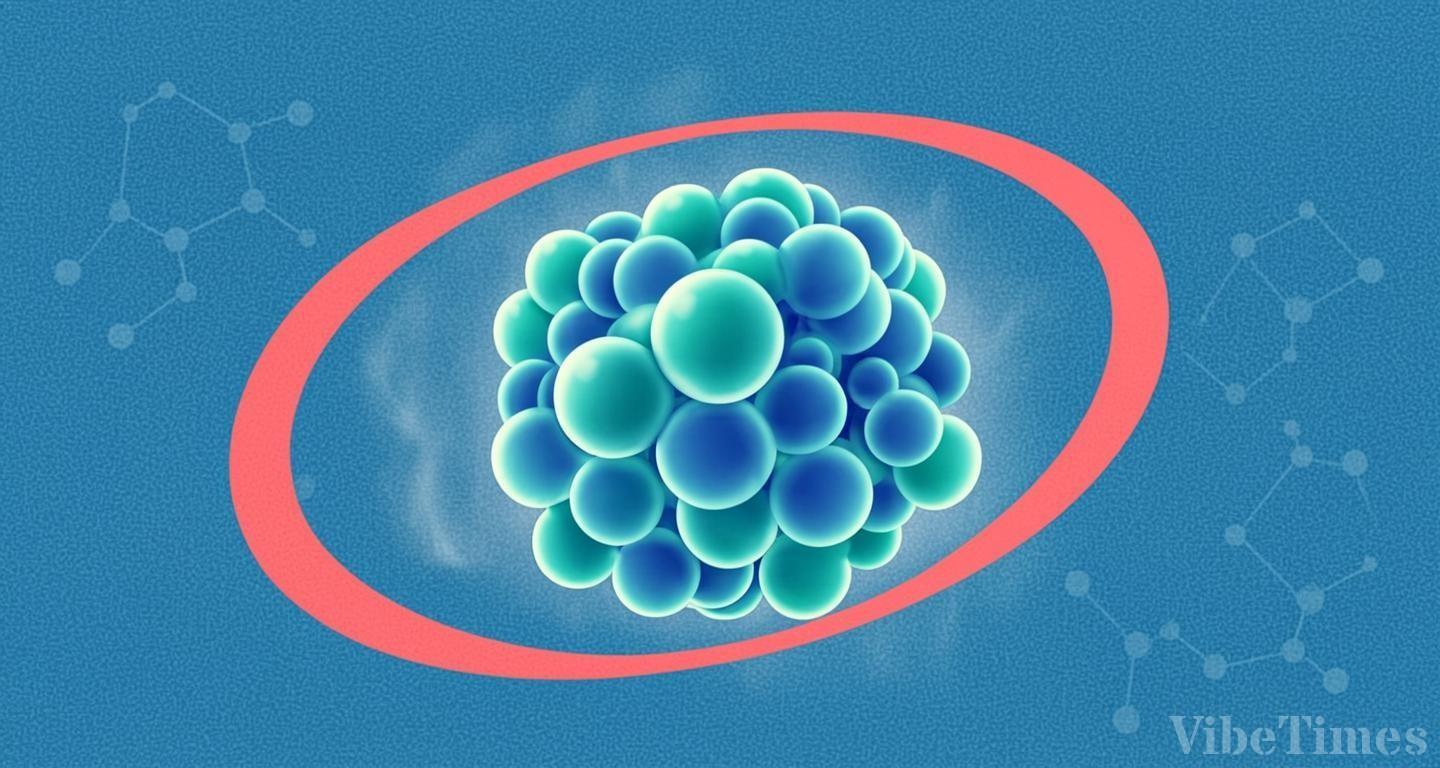
Researchers at MIT have succeeded in creating previously unknown crystalline structures from nanoparticles. The key was flexible linkers. Nanoparticles are tiny particles tens of thousands of times thinner than a human hair, and this achievement opens up new possibilities for developing next-generation materials. Nanoparticles have long attracted attention as a core material for outstanding material performance, but assembling them into desired structures has been no easy task. This is because it was difficult to precisely control how much, and in what directions, each nanoparticle would connect with its neighbors.
Previously, the common approach was to change the shape of nanoparticles or design them so that bonding occurs only at specific spots on their surface. For 20 years, the conventional wisdom held that ligands linking particles had to be rigidly bonded to maintain a fixed orientation, and that even slightly flexible linkers would cause assembly to fail. Professor Robert Macfarlane's research team in MIT's Department of Materials Science and Engineering took the opposite path, making the linkers flexible.
The nanoparticles used by the team are surrounded by flexible ligands carrying positive and negative charges. Because opposite charges attract, the ligands bend toward linkers with the opposite charge, connecting the particles. Rather than pre-specifying bonding directions through complex synthesis methods, the researchers allowed the linkers to move freely, and the ligands spontaneously arranged themselves in ways that enhanced bonding stability.
In experiments led by Nicola Svalbi, a member of the research team, it was confirmed that particle-to-particle connections can be controlled by varying the size of the nanoparticles and the length of the ligand chains. Through such adjustments, the team controlled the number of bonds without pre-designing particle shapes or bonding positions, and established that adjusting linker flexibility, particle size, and molecular chain length can change the number of bonds a single particle forms with its neighbors. The team also succeeded in forming crystalline structures with low bond counts, distinct from conventional dense arrangements. Macfarlane's team described the method as a new way to control nanoparticle arrangements without complexly designing particle shapes or surface bonding positions.
Nanoparticles, whose size, shape, and surface properties can be freely tuned, are materials with potential applications across diverse fields including energy storage, medicine, and electronic devices. The researchers said the new approach could be applied to developing nanomaterials designed for specific functions, such as optical materials, chemical catalysts, and drug delivery.
The findings were published in the latest November issue of the international journal Nature Materials. The research was supported by the U.S. National Science Foundation (NSF), the Department of Energy (DOE), and the U.S. Army and Navy, with experiments conducted at MIT.nano.
