How to Practice Minimalism for 3 Months With Just 33 Items of Clothing

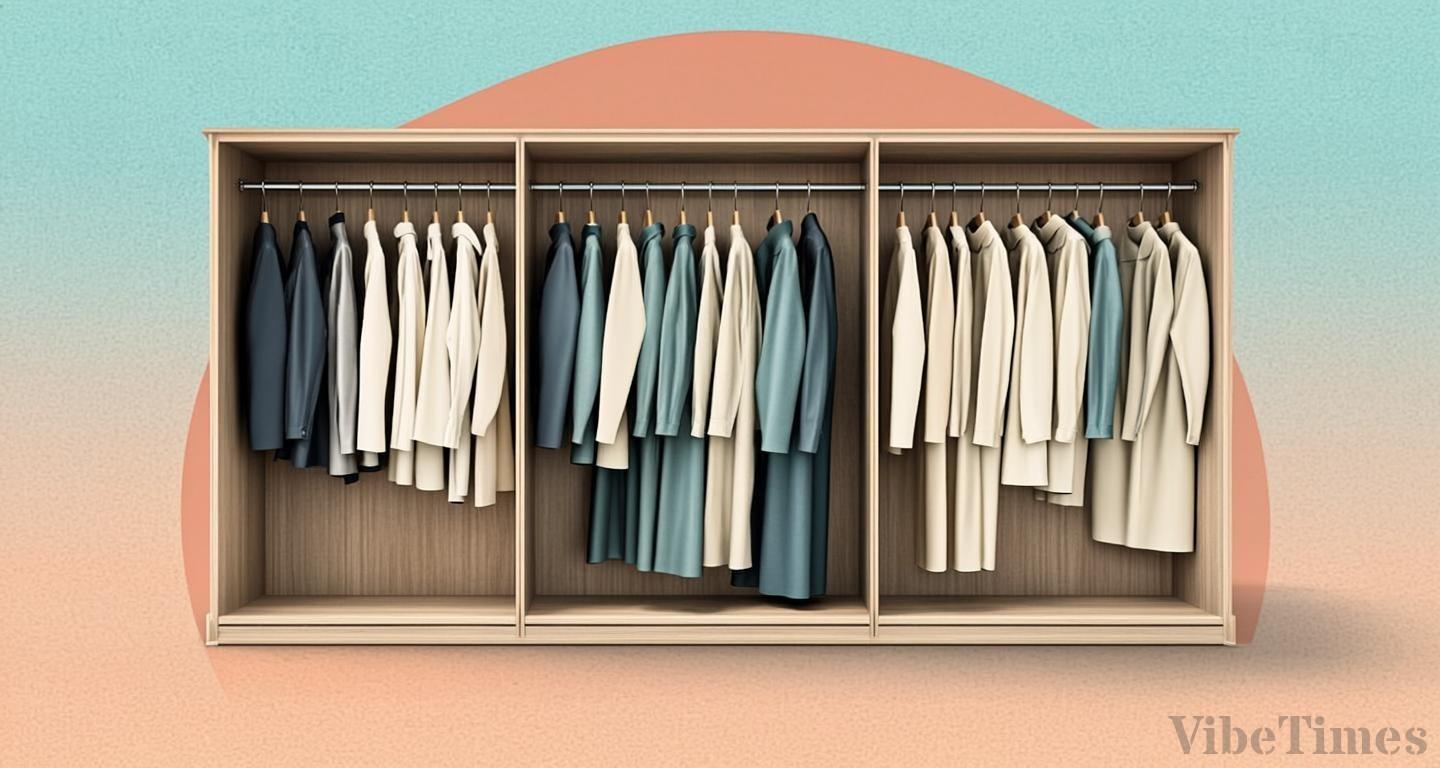
What would change if you could live for three months with just 33 items of clothing?
'Project 333,' launched in 2010 by American minimalist Courtney Carver, began from exactly that experiment. Devised during her efforts to simplify her life after being diagnosed with multiple sclerosis, the challenge has since grown into a minimalism movement joined by hundreds of thousands of people worldwide. The core rule is simple: for three months, wear only 33 items and store everything else in a box, out of sight. Because it involves hiding clothes rather than throwing them away, the psychological burden is low, and since underwear, socks, and pajamas are excluded, the barrier to entry is lower than it might seem. Carver later turned her experience into the book "Project 333" (published in Korean as 'Emptying Your Closet Reveals Your Life').
The Rules of Project 333 — What Counts and What Doesn't
What's Included in the 33
The items that count are the clothes you actually wear every day. Tops and bottoms, outerwear such as coats and jackets, dresses, and shoes are the basics. Add to that accessories like necklaces, earrings, and watches, as well as scarves, hats, and belts. In other words, nearly everything you put on when going out falls within the 33-item limit.
What's Excluded — Surprisingly Generous Exceptions
Underwear, socks, pajamas, and loungewear are not counted. Workout clothes worn only for exercise are also excluded. Uniforms and special work attire are exceptions as well. Jewelry worn daily, like a wedding ring, is excluded as an item not being 'worn.' Thanks to these exceptions, the real burden is far smaller than the headline number suggests.
A Step-by-Step Process for Getting Started Without Failure
Step 1: Audit Your Entire Closet to Confirm the 80/20 Rule
First, take all the clothes out of your closet and gather them in one place. In the process, you will typically confirm for yourself that only 20% of the clothes you own — 80% of the total — are actually worn. This intuitive realization becomes the motivation that drives the entire challenge.
Step 2: Sort Into Four Categories
Divide the clothes into four categories: 'love,' 'discard,' 'pending,' and 'seasonal.' Clothes worn frequently over the past year become candidates for the 33, while old or ill-fitting clothes go to donation, sale, or recycling. Ambiguous items are sealed in a box for reassessment after three months, and out-of-season clothes are stored separately outside the closet.
Step 3: Select the 33 — Allocation Ratio Is Key
When choosing items, maximize combination potential. An example allocation: 10 tops, 6 bottoms, 4 outerwear pieces, 4 pairs of shoes, 3 dresses, and 6 accessories. Restricting your color palette to three or four hues — black, white, navy, beige — automatically multiplies the number of combinations. With 10 tops, 5 bottoms, and 3 outer layers alone, you get more than 150 theoretical outfits. When in doubt, prioritize versatile basics.
Step 4: Seal the Rest in a Box, Decide After 3 Months
Don't throw away the clothes that didn't make the cut — box them up and store them out of sight. This 'pending box' is the safety net that prevents regret. After three months, any clothes you don't miss become candidates for donation or sale. The challenge itself acts as a filter for decluttering your closet.
How to Handle Sticking Points in Practice
Set aside formal wear in advance
Sudden weddings or funerals are often what trip people up. Check whether any special events fall within the three-month period, and include one appropriate formal outfit among your 33 items to be practical. Exceptions allow for rentals or using the pending box. Carver herself emphasized "practice over perfection."
Don't get hung up on the numbers
As Carver herself said, "The number is just a guide — adjust it to suit yourself, whether that's 35 or 40." Flexibility is key. Rather than hitting exactly 33 from day one, you can start with 40 to 50 items and gradually cut back. When the season changes, simply build a new set of 33 for each season; in winter, when more outerwear is needed, reduce accessories and increase outer layers. Don't forget to manage laundry cycles and make repairs to extend the life of your items.
After 3 Months — Transitioning to a Capsule Wardrobe
Once the challenge ends, reassess the clothes in the box. Participants commonly cite shorter morning routines, reduced clothing spending, and freed-up closet space as shared benefits. This ties into the psychological concept of 'decision fatigue' — fewer choices mean conserved cognitive resources. A closet that has gone through the challenge naturally transitions into a 'capsule wardrobe' system that maintains 30 to 40 items per season. Because Project 333 is not a grueling exercise in throwing clothes away, but an experiment to identify what you truly need during a three-month trial period, it is regarded as the most accessible entry point to minimalism for beginners.