After Meeting Trump, Lee Jae-myung Asks Xi Jinping for Cooperation (Character count check: 22 characters including spaces)

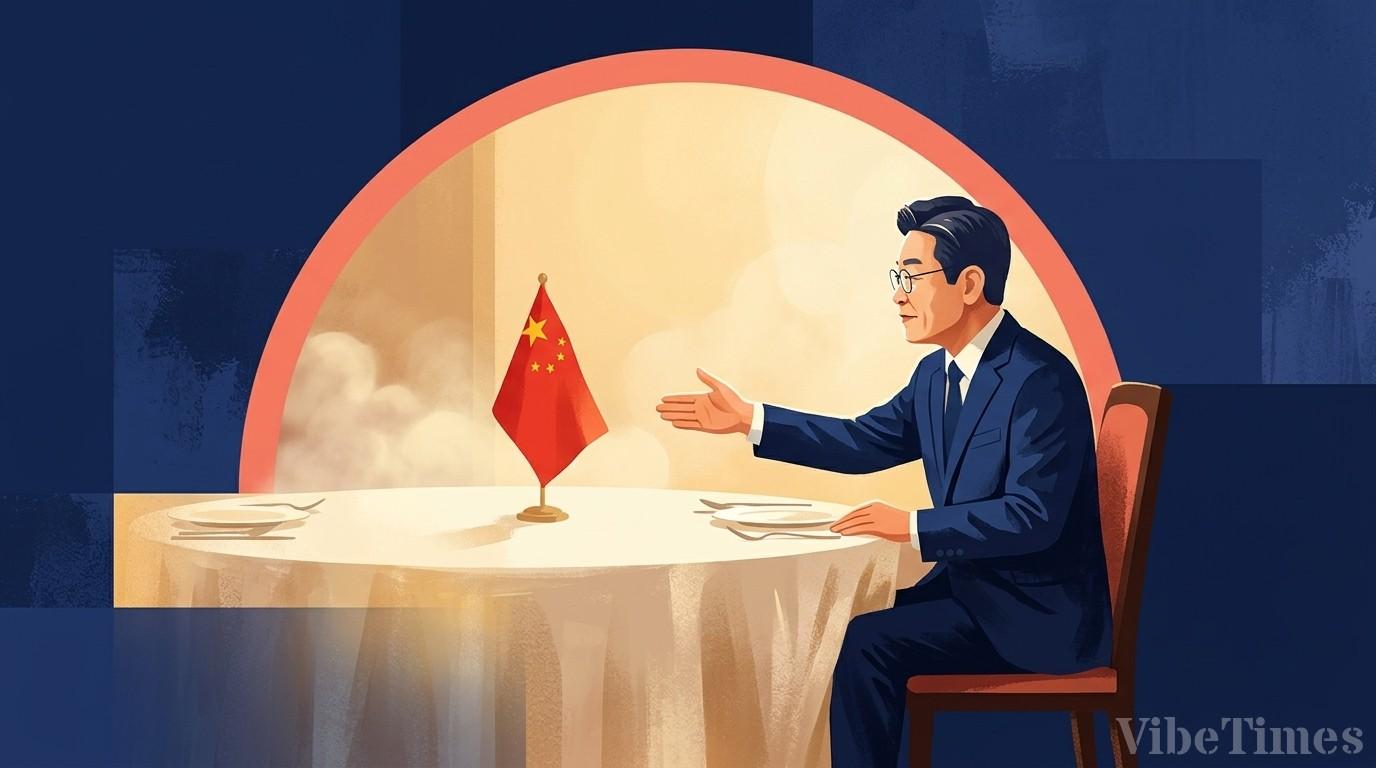
President Lee Jae-myung made a direct request for cooperation to China on the APEC stage.
On the 18th (local time), President Lee and his wife attended the welcome banquet for the 33rd APEC Summit held in Shenzhen, China, where they were seated alongside Chinese President Xi Jinping. At the banquet, President Lee emphasized the need for cooperation, saying, "Amid geopolitical crises, we must work together to secure the supply of critical minerals and energy." He is also reported to have asked China on the 17th to play a constructive role in resolving Korean Peninsula issues. According to summary information, President Xi responded that he "supports North Korea-U.S. dialogue," while President Lee called for "cooperation for peace on the Korean Peninsula."
The Diplomatic Context Behind Consecutive ASEAN and APEC Trips
This itinerary forms a continuous diplomatic sequence leading to President Lee's first attendance at the East Asia Summit (EAS) since taking office. From the 16th to the 19th, President Lee is on an overseas trip to attend the ASEAN Summit and the APEC Summit. On the 17th, he spoke at the ASEAN+3 (South Korea, China, Japan) Summit held at the Philippine International Convention Center (PICC) in Manila, and that same day, at a banquet hosted by Philippine President Marcos, he spoke with U.S. President Trump for about 40 seconds. According to media reports, this was the first contact between the two leaders in 56 days.
The key point is that President Lee made back-to-back contacts with both the U.S. and China. President Trump, at the banquet in question, mentioned Korea's proposed $200 billion investment in the U.S. energy sector and raised the approval of the Alaska LNG pipeline project, though the Korean government maintains that the investment has not yet been finalized. In a situation where trade pressure is mounting, President Lee's immediate proposal to China for critical mineral and energy cooperation reveals the calculations behind his balancing diplomacy.
Critical Minerals and Energy: Why Now?
Critical minerals are materials described as the lifeblood of the semiconductor, battery, and electric vehicle industries. China holds an overwhelming share of the global critical mineral refining market, so as trade friction with the United States grows, Korea's dependence on China for its supply chains emerges as a structural risk. President Lee's use of the phrase "geopolitical crisis" is interpreted as a remark reflecting this dual pressure.
Energy supply follows the same logic. The $200 billion energy investment card aimed at the U.S. is on the negotiating table, but whether the investment is finalized could shake domestic energy costs and industrial competitiveness. The strategy appears to be one of securing negotiating leverage through multilateral stages like ASEAN and APEC, rather than being cornered into bilateral negotiations.
Handling the College Entrance Exam From Abroad: Any Political Fallout?
Domestic political schedules did not stop even during the overseas trip. From the Philippines, President Lee held a videoconference emergency briefing on the college entrance exam (CSAT), directing officials to consider a 100 million won reward for reporting cheating and measures to restrict cheating students from retaking the exam. He also ordered a review of extending exam time at test sites where students were disrupted by emergency alerts, for the duration of the disruption. Given the call costs and time difference, this was an unusual response, showing that the government classifies the CSAT cheating scandal as a critical issue.
Outlook: Balancing Diplomacy on Trial
In the short term, follow-up working-level consultations between Korean and Chinese leaders will be worth watching. If cooperation on critical mineral supply chains leads to a concrete agreement, it is expected to ease some of the Korean industry's uncertainty over sourcing materials from China. On the other hand, entangled with the U.S. energy investment negotiations, a U.S. reaction over "which side Korea is leaning toward" cannot be ruled out.
President Xi's remark expressing "support for North Korea-U.S. dialogue" is significant as a reconfirmation of China's role in Korean Peninsula issues. However, it remains to be seen whether it will stay at the level of rhetoric or actually lead to persuading North Korea. Including his first EAS attendance and his ASEAN+3 remarks, this trip is set to become the first comprehensive assessment stage for President Lee's diplomacy. Former U.S. President Jimmy Carter recalled that during the Cold War he "had to maintain peace"—and now balancing geopolitics between the U.S. and China has become the Korean president's task.