October 26 Public Data Report: Kyobo Life Steps Up Procurement

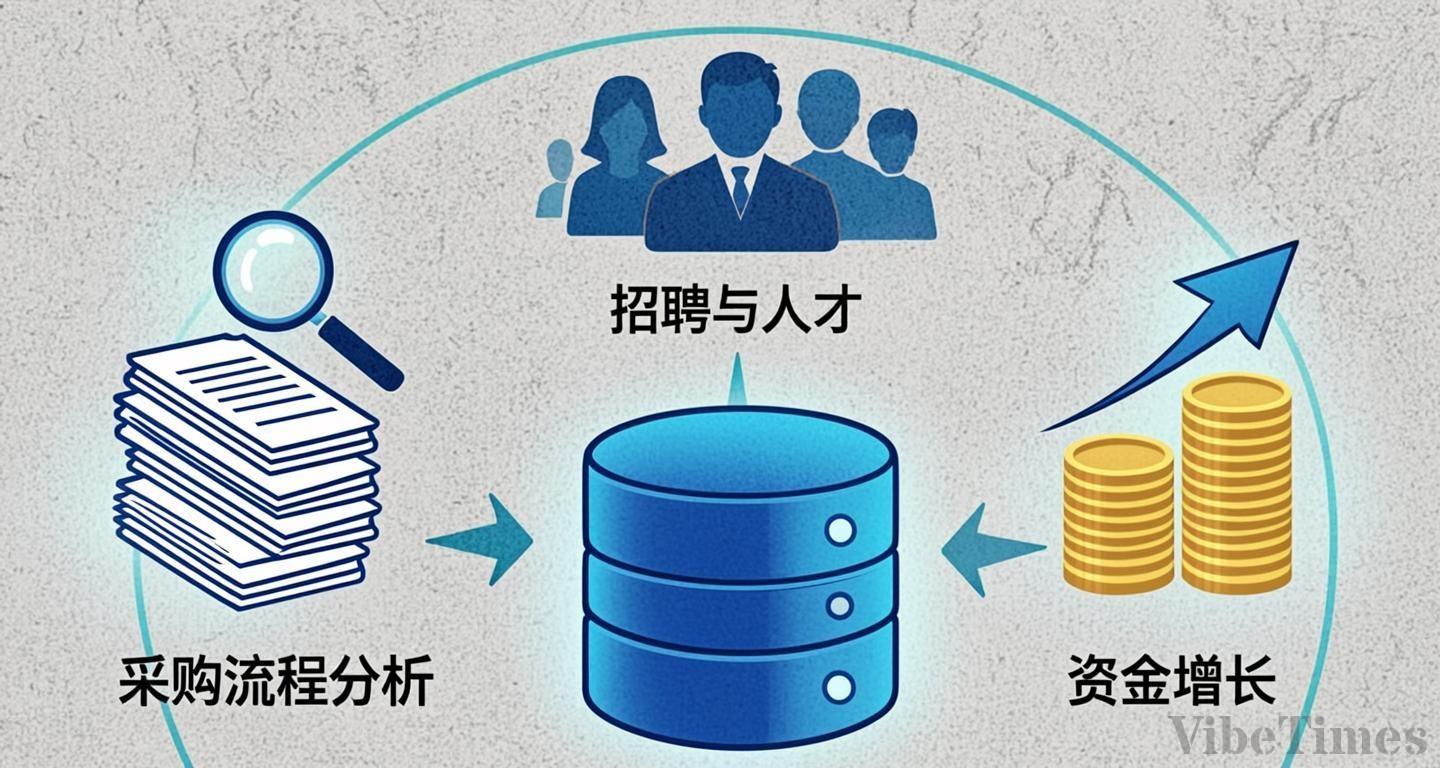
A Map of Small Business Activity Drawn by Public Data
206 public data records from 175 companies fall into three categories: procurement, hiring, and crowdfunding. The balanced distribution across these fields makes it possible to read broader shifts in industry ecosystems, beyond the movements of individual companies. Government procurement and hiring reflect companies' commitment to stable growth, while crowdfunding points to new products awaiting market validation.
The procurement field spans a wide range of industries, including environment, construction, forestry, geospatial information, and insurance. Environment and forestry specialists such as Daehun Environment and Daekyung Forest Development made the list, alongside technology-driven firms like Jinwoo ATS and Hyungsan Safety Technology Co. The inclusion of surveying and design players such as Geumgang Geospatial Information and Hanbit Engineering & Architects Office shows that public infrastructure demand is spreading across diverse sectors.
Kyobo Life Planet Insurance's entry into procurement is significant in that it signals a growing intersection between the financial sector and the public market. The flow of digital insurance products into public purchasing can be interpreted as a new market entry route for private service businesses. With the government's supplementary budget and regional infrastructure investment continuing, the base of companies participating in the procurement market is expected to widen further.
Reading Industrial Demand Shifts Through Job Postings
Hiring data most directly reveals the competencies companies currently need. Among the collected postings, overseas-linked roles stand out, including a global game GM, expatriate positions at a Vietnamese production plant, and defense overseas sales in electronics. Renewpeople recruiting multiple overseas-related positions at once suggests that cross-border expansion in manufacturing and content industries is materializing through hiring.
Technical roles have also grown in presence. Postings for a payroll system developer and an automation control programmer are evidence that software capabilities are seeping into traditional office and manufacturing domains. Add to this recruitment for quality control in advanced chemicals and an environmental health specialist, and one can interpret that safety and regulatory compliance have become a central pillar of corporate hiring.
Hiring in lifestyle-oriented services such as education and fitness also remains steady. Postings for an early childhood music instructor, a secondary school math teacher, and a freelance trainer reflect the spread of non-standard work arrangements across the service sector. This reads as a period when the center of gravity is shifting from permanent employment toward expertise-based flexible hiring.
Crowdfunding: Consumer Validation Comes First
Projects run on platforms such as Wadiz fell into food, fashion, AI tools, and household goods. King Ssung Ah's fruit project raised over 15.7 million won, proving the depth of the food category. An anti-theft travel sling bag raised about 2.92 million won and an AI content production service about 3.8 million won, showing that practical goods and AI products can attract backers even without a fanbase.
What stands out is the rise of AI-powered products. The successive appearance of projects like no-code service building tools and short-form video makers is a signal that generative AI has established itself as a mainstay of the content production tools market. Product lines that solve small everyday problems—massage devices, cooling apparel, silicone body pads—also posted steady funding results. Rather than one big hit, the repeated validation of modest demand is what strengthens the health of the crowdfunding market.
Risk Signals and Overall Outlook
It is not all bright news. The data includes sanctions from the Fair Trade Commission and various fraud-related issues. Some companies faced regulatory sanctions, and numerous negative signals involving consumer complaints or transactions were also identified. This serves as a reminder that in markets with clear growth momentum, transparency and regulatory compliance are the fundamental premises of investment decisions.
In sum, procurement supports stable demand, hiring points to expansion, and crowdfunding validates new products—each performing a distinct function that underpins corporate activity. The rise in overseas-linked hiring and AI-based crowdfunding products appears to be a structural trend that will persist for several quarters. With public infrastructure investment continuing, there is also room for improvement in the earnings of procurement participants. That said, both investors and consumers should bear in mind that companies failing to manage regulatory risk alongside growth may be weeded out during expansion phases.