Moore's Law Reaches Its Limit After 60 Years

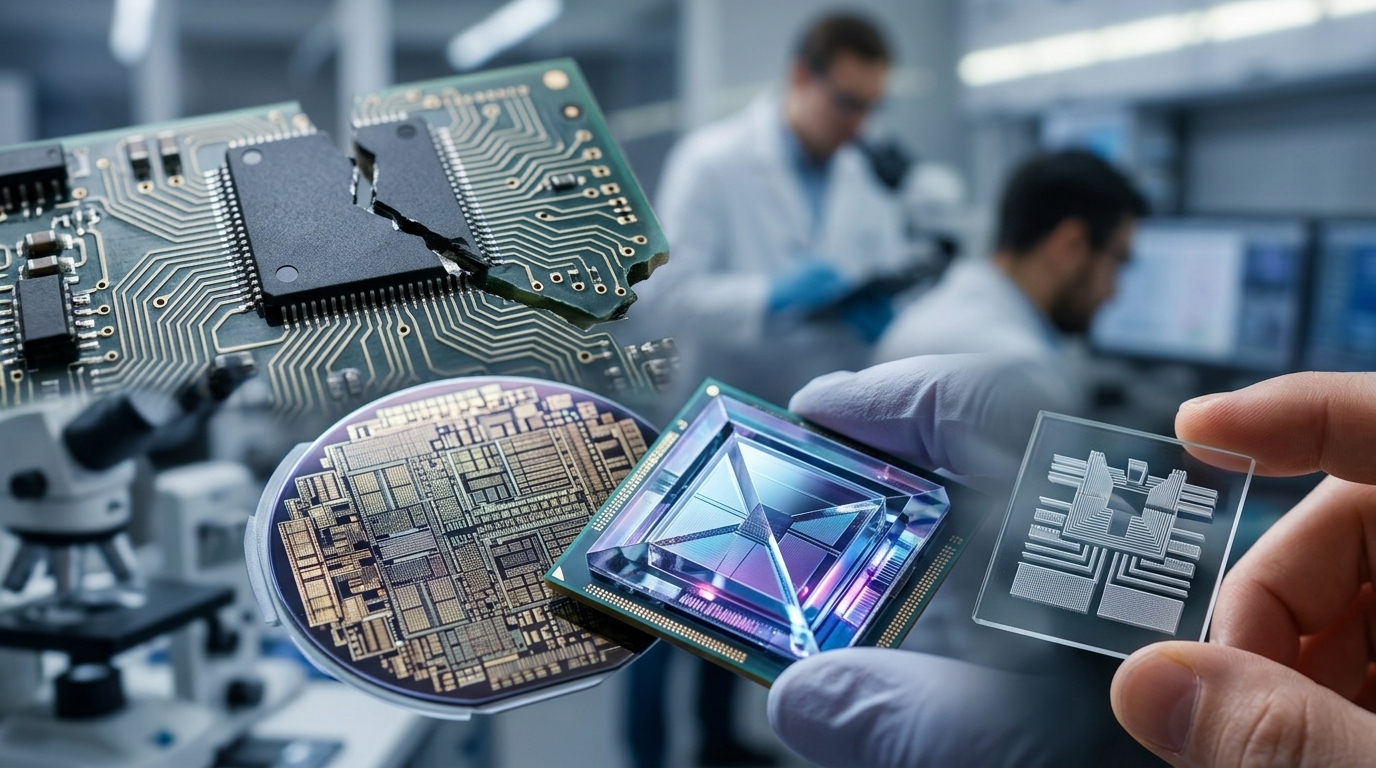
The era of intense technological competition has dawned as 'Moore's Law' hits its physical limitations after 60 years. With the traditional method of shrinking circuit widths reaching the atomic scale, making performance enhancements difficult, new design and process technologies are emerging as critical challenges for the semiconductor industry. As Moore's Law, which states that the number of transistors on a chip doubles approximately every two years, faces its physical limits, the Post-Moore era has begun. As circuit widths shrink to atomic proportions, nations that pioneer new technological paths, rather than relying on gradual improvements, are expected to lead the future of computing.
The United States is focusing its national capabilities on moonshot projects centered around quantum computing, neuromorphic computing, and reversible computing. This is a strategy to preemptively secure next-generation technological sovereignty through fundamental changes in computing systems.
Quantum computing, a core next-generation technology, aims to solve in seconds problems that would take conventional supercomputers tens of thousands of years. Neuromorphic computing is described as a future artificial intelligence infrastructure technology that mimics the human brain to perform cognitive functions with ultra-low power. Reversible computing is a technology that maximizes energy efficiency by minimizing heat loss during information processing.
As AI data centers become the backbone of national infrastructure, computational power and energy efficiency have become key factors influencing both economy and security. The U.S. is investing in next-generation computing technologies to secure a technological lead.
While South Korea boasts world-class capabilities in memory semiconductor manufacturing, it is vulnerable in terms of architectural sovereignty for designing entire computing systems. Therefore, a strategy is needed to advance Processing-in-Memory (PIM) technology, which adds computational functions to memory semiconductors, and combine it with neuromorphic and reversible computing. South Korea must pursue architectural sovereignty for entire computing systems, leveraging its world-leading memory semiconductor manufacturing prowess.
Choi Min-sung, Chairman of DelReality, has proposed advancing PIM technology, establishing national-led moonshot governance, and securing talent skilled in the convergence of quantum mechanics and brain science as challenges for Korea. A structure where government, universities, and businesses collaborate on long-term research and high-risk projects, along with measures to cultivate specialized professionals in related fields, has been proposed.