US Weapon Stocks Hinge on China's Rare Earth Supply Chain

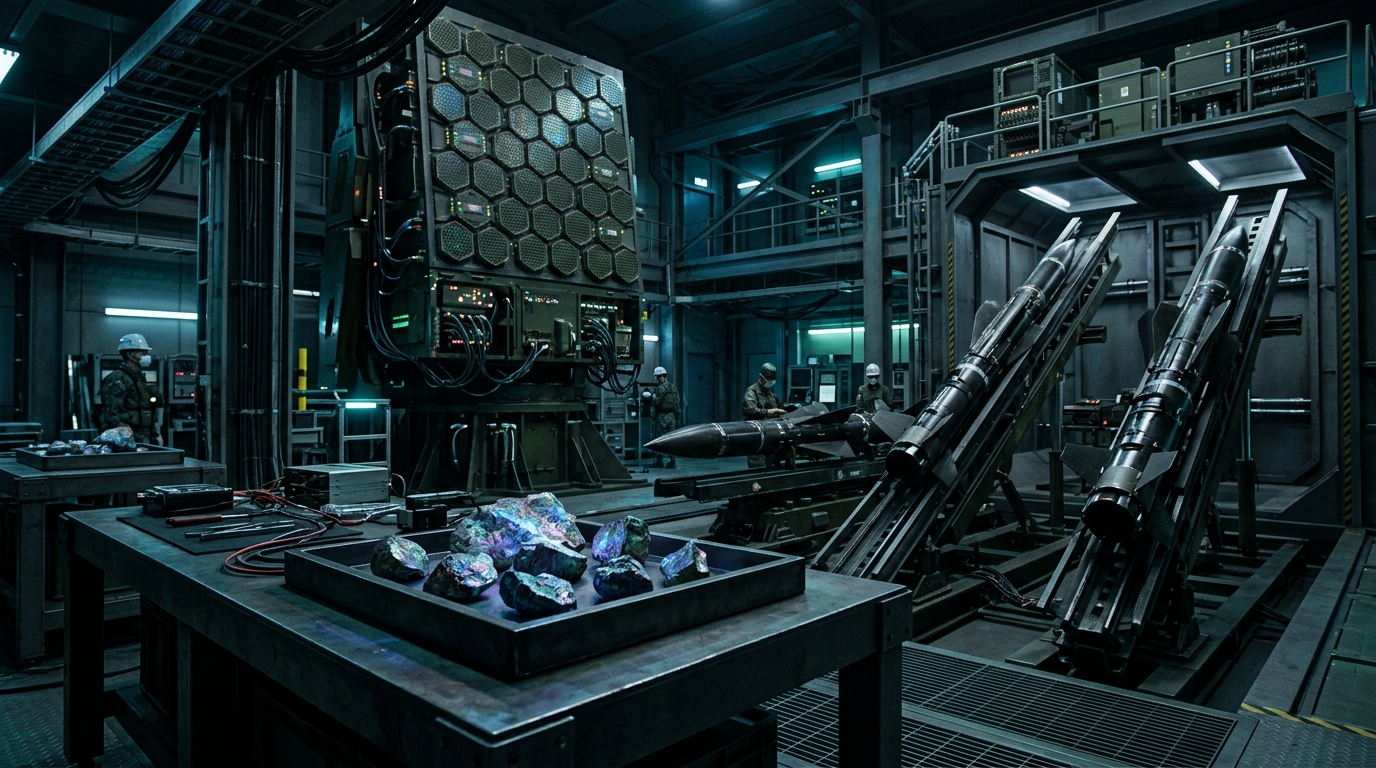
The US faces the critical challenge of increasing its weapon stocks and restoring defense systems. The Middle East war has depleted US weaponry, and several US radar systems deployed in the region were destroyed or significantly damaged during the conflict. Consequently, the US has expedited plans to replenish its depleted interceptor systems, precision-guided munitions, and detection assets during the ceasefire period. Restocking the rapidly diminished arsenal was the immediate priority.
However, the significant reliance on China for the supply of rare earth minerals (such as gallium), which are essential for producing advanced weapons, poses a challenge to strengthening US military power. A considerable amount of the core materials for these weapon systems is tied to China's supply chain. China holds a virtual monopoly in the processing of gallium, essential for radars, interceptor systems, and semiconductors. China also dominates over 90% of the market for heavy rare earth elements, needed for threat detection and target acquisition. While the US has been pursuing the establishment of a self-sufficient supply chain to prepare for potential Chinese export controls, completing the actual production and processing infrastructure will take time.
Strategic minerals and secure supply chain issues could become significant variables in future US-China relations. While a degree of stability has been maintained in bilateral relations since October last year, the Middle East war has introduced new complexities. The US must maintain military readiness following its confrontation with Iran, while China holds leverage in the supply chain of key minerals necessary for US military replenishment. The market reflects this tension: gallium prices, which had been declining after the US-China summit last October, have surged by 32% in the past month. Analyses suggest that holding what the other side desires grants negotiating power, and investors in strategic minerals have responded 'yes' when asked if the US has become more vulnerable. This indicates that supply chain issues could become a crucial factor in future US-China economic relations.
However, it remains uncertain whether China will use this situation as a bargaining chip. China also does not welcome the worsening Middle East situation. China is the largest buyer of Iranian crude oil, and instability in the Strait of Hormuz directly burdens the Chinese economy. For China, which is more dependent on Persian Gulf oil than the US, prolonged blockade of the strait or a renewed regional conflict would inevitably impact its energy supply and foreign trade. For these reasons, while criticizing US military actions, China has reportedly pressured Iran behind the scenes to return to the negotiating table.