Direct Negotiation Demands Surge After Yellow Envelope Act Implementation

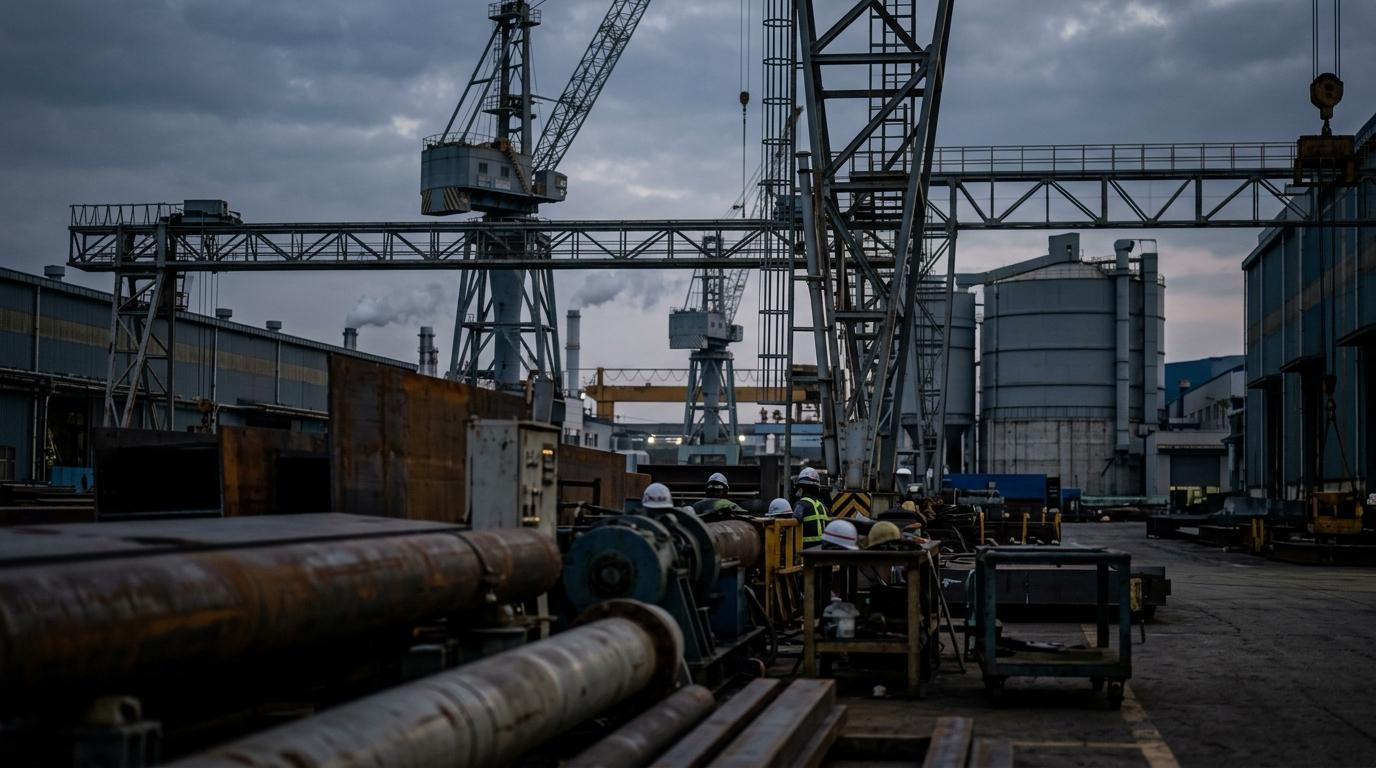
Within a month of the new 'Yellow Envelope Act' taking effect, subcontracted workers at major domestic companies, including Hyundai Steel, are increasingly demanding to meet directly with their prime contractors to negotiate wages and working conditions. This movement is spreading across the manufacturing, shipbuilding, and logistics sectors, creating a phenomenon described as a 'direct negotiation domino'.
The amendment to Article 2 of the Trade Union Act, central to the Yellow Envelope Act, has broadened the definition of 'employer' from merely 'parties to the employment contract' to include 'those who can substantially and concretely control and determine working conditions.' This provides a legal foundation for subcontracted workers, who previously fell into a legal gray area, to engage in direct negotiations with prime contractors.
On April 18, 2026, members of a subcontractor union at Hyundai Steel's Dangjin plant occupied the control center and demonstrated at the shipping gate, urging the prime contractor, Hyundai Steel, to come to the collective bargaining table. This strategic labor action began with a rally on April 15, 2026, in front of Hyundai Motor's headquarters in Yangjae-dong, organized by unions such as the Korean Metal Workers' Union Hyundai Motor and Kia branches, and the Hyundai Steel Irregular Workers' Union. Subsequently, in the shipbuilding industry, companies like HD Hyundai Heavy Industries and Hanwha Ocean have hinted at the possibility of occupying prime contractors' production facilities. In the logistics sector, delivery drivers at companies like CJ Logistics and Coupang are demanding collective bargaining with their headquarters, indicating a widespread industrial trend.
On April 10, 2026, the Ministry of Employment and Labor distributed interpretation guidelines to the field, strictly evaluating 'employer status' based on whether work is organizationally integrated and the degree of economic dependency. The Korea Employers Federation reported in a study released in early April 2026 that 84.2% of respondent companies stated their management uncertainty had maximized following the implementation of the Yellow Envelope Act. The Korea Labor Institute estimates that the cost of judicial risks faced by companies will increase by more than 30% annually after the law takes effect. It is expected to take at least five years for the legal definition of 'substantial control' specified in the Yellow Envelope Act to be finalized through Supreme Court rulings.