Latest Space Exploration: A Roundup of Astonishing Scientific Issues

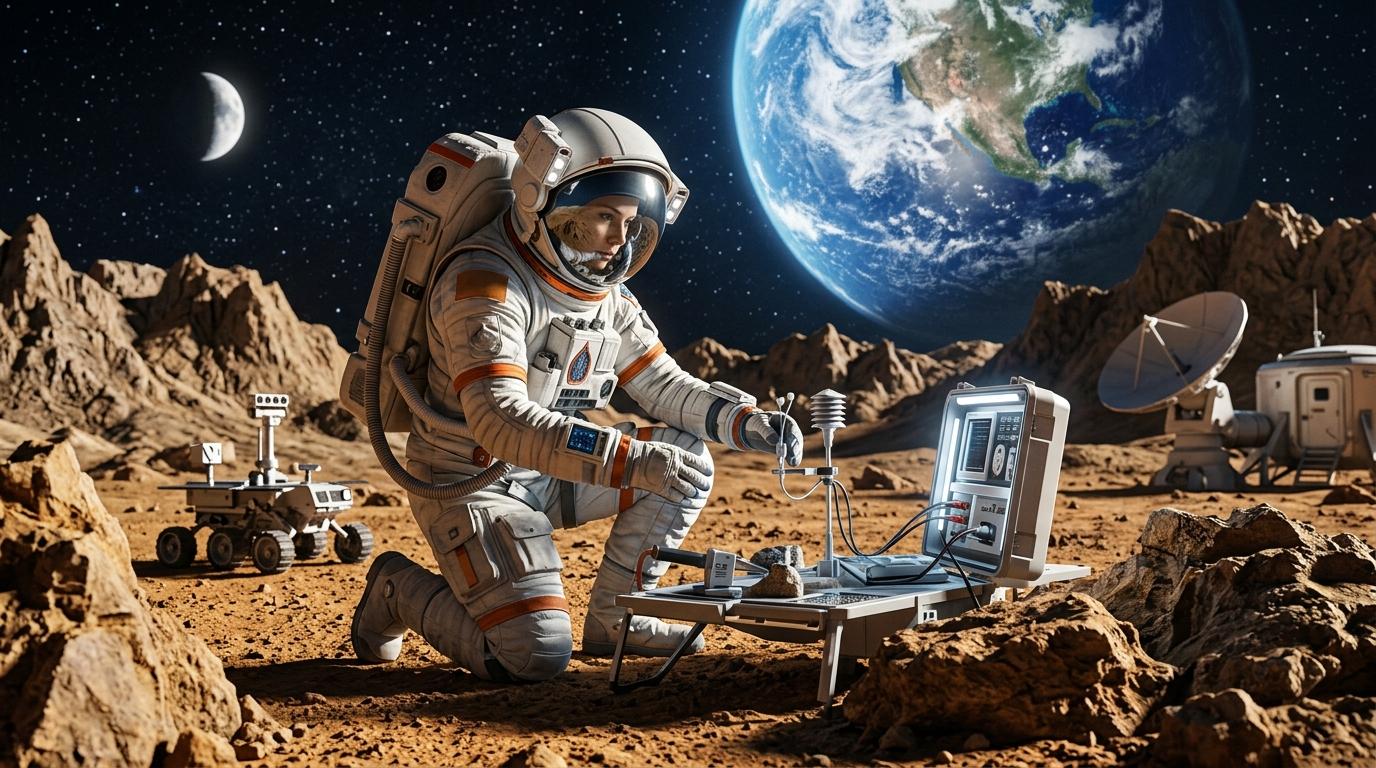
Recent space exploration is pushing the boundaries of human knowledge to an unprecedented extent, posing remarkable scientific questions that encompass the possibility of life, the fundamental secrets of the universe, and future human survival strategies. Through state-of-the-art observation technologies and continuous exploration activities, we are deepening our understanding of celestial bodies not only within our solar system but also beyond our galaxy, entering a period of fundamental paradigm shift in our understanding of the cosmos.
Clues to Life Discovered in the Vast Universe
The potential for biosignatures detected in the atmospheres of exoplanets is being validated by the capabilities of the latest space telescopes, particularly the James Webb Space Telescope (JWST), which analyzes exoplanetary atmospheric composition with unprecedented precision. Scientists detect the presence of specific molecules like methane, oxygen, and water vapor in particular ratios. On Earth, these molecules are closely linked to biological activity, and thus, detecting similar biosignatures in exoplanetary atmospheres could serve as a strong indicator of the existence of extraterrestrial life.
The scientific community is analyzing these detection results with great caution. This is because the detected molecules can also be produced through non-biological geological activity or atmospheric chemical reactions, rather than solely through life forms. The JWST has detected these potential biosignatures on dozens of exoplanets and is currently focused on enhancing the reliability of the results by comprehensively reviewing each planet's physical conditions and atmospheric chemical reaction models. For instance, the simultaneous detection of oxygen and methane in a planet's atmosphere would be interpreted as a highly intriguing outcome.
Regarding the potential habitability of subsurface oceans on icy moons, numerous explorations have confirmed the existence of vast liquid oceans beneath thick ice shells on Jupiter's moon Europa and Saturn's moon Enceladus. These subsurface oceans, similar to deep-sea hydrothermal vents or Antarctic lakes on Earth, showcase cases of 'exceptions to terrestrial life,' where organisms can exist even in extreme environments devoid of light. The ice shells effectively shield these oceans from harmful solar radiation, and tidal forces or internal geothermal activity of the moons can potentially supply the energy necessary for life.
Future probes are planned to directly analyze the chemical composition of these subsurface oceans and, crucially, to confirm the presence of organic molecules essential for life, such as proteins and nucleic acids, thereby conducting in-depth investigations into the conditions required for the origin of life. For example, analysis of materials ejected from Enceladus's geysers has revealed a high concentration of water, salts, and organic molecules, increasing the possibility of habitability. Such explorations are expected to mark a significant turning point in the search for life beyond Earth.
Exploration Transcending the Boundaries of Time and Space
As the exploration of secrets beyond the event horizon of black holes intensifies, the Event Horizon Telescope (EHT) project's successful first-ever observation of a black hole's shadow has brought humanity one step closer to understanding the fundamental nature of black holes, where gravity reaches its ultimate extreme. Black holes are regions of spacetime from which not even light can escape due to their incredibly strong gravity, with an incomprehensible 'singularity' at their core. Since the laws of physics beyond the event horizon cannot be explained by general relativity alone, this region is gaining attention as a potential source of clues to solve the greatest challenges in modern physics, such as unifying quantum mechanics and relativity.
Current observations have focused on determining the macroscopic properties of black holes, such as mass, spin, and charge. However, future efforts will involve more precise measurements of extreme physical phenomena occurring near the event horizon and comparing them with theoretical models to deepen our understanding of the internal structure and physical limits of black holes. This is a process that will fundamentally expand our comprehension of how the universe's most extreme environments operate. For example, the EHT is verifying spacetime distortion effects by analyzing the motion of plasma and radiation processes occurring in the accretion disk around black holes.
To uncover the origins of elements in the very early universe and the secrets of star formation, the James Webb Space Telescope is capturing the first stars and galaxies formed as the universe expanded shortly after the Big Bang with unparalleled clarity. Observations of these early celestial bodies push the history of the universe back billions of years, providing answers to fundamental questions about how the universe we observe today came to be. The early universe had vastly different compositions and physical conditions than today, and the stars born there synthesized a variety of heavy elements (carbon, oxygen, iron, etc.) beyond hydrogen and helium through nuclear fusion.
The heavy elements created during this process were dispersed into space through stellar death (such as supernova explosions), becoming the building blocks for subsequent generations of stars and planets. In essence, the elements that make up our bodies were also forged by stars billions of years ago. Studying the formation and evolution of these early celestial bodies is essential for understanding the universe's material cycles and the fundamental conditions for the origin of life. By analyzing the spectra of these early galaxies, the JWST estimates their chemical composition and formation epoch, providing concrete figures on the universe's evolutionary process.
Technological and Strategic Challenges for Future Space Exploration
As the presence of potential resources like water, helium-3, and rare earth elements has been confirmed on celestial bodies such as the Moon and Mars, in line with explorations into resource utilization and habitability in extreme environments, a crucial foundation is being laid for long-term human space habitation and deep-space exploration. The technology for directly extracting and processing resources on-site rather than transporting them from Earth, known as In-Situ Resource Utilization (ISRU), is a key challenge that can dramatically increase the economic feasibility of space exploration. ISRU technology can be utilized for producing spacecraft fuel, securing construction materials for habitats, and operating life support systems, significantly reducing dependence on resupply from Earth.
However, the harsh conditions of space, including extreme temperature fluctuations, high levels of cosmic radiation, and low gravity, pose serious threats to human survival and mission execution. Advanced life support systems, radiation shielding technologies, and ensuring the durability of spacesuits and habitat facilities for long-term stable operations in these environments are critical technological challenges that will determine the success of future space exploration missions. For instance, for lunar base construction, technologies such as 3D printing using lunar regolith or utilizing oxygen and hydrogen derived from water electrolysis as energy sources are being researched.
Amidst the explosion of space data and the growing importance of next-generation analysis technologies, the vast amounts of data pouring in from numerous operational probes, satellites, and powerful space telescopes are exponentially increasing our understanding of the cosmos. Simultaneously, the ability to efficiently process, analyze, and utilize this data is becoming more critical than ever. Artificial intelligence (AI) and machine learning technologies are establishing themselves as indispensable tools for discovering hidden patterns and generating new scientific hypotheses within petabytes (PB) of data generated across diverse fields such as astronomy, planetary science, and space physics.
AI-based analysis systems contribute to quickly detecting rare phenomena or anomalies within vast amounts of image and spectral data, and rapidly executing complex simulation models to derive scientific insights. For example, AI is used in exoplanet exploration to identify candidate planets with high potential for life among numerous others, or to detect subtle variations in black hole observational data. The advancement of these data processing and analysis technologies holds the potential to maximize the efficiency of future space exploration missions and lead to unexpected scientific discoveries.