Latest Space Science Insights: Explained for the General Public

From the breathtaking discoveries of the James Webb Telescope, redefining humanity's space exploration history, to the race for lunar and Martian exploration—key to securing future resources—and the rapidly emerging private space industry. This analysis delves into the latest achievements in cutting-edge space science, tailored for the public's understanding, and illuminates their potential impact on our lives.
Innovation Peering into the Early Universe and Accelerating Planetary Exploration
The James Webb Space Telescope (JWST) is capturing unprecedented views of the early universe, successfully detecting the first stars and galaxies formed shortly after the Big Bang—the most distant objects ever observed—thanks to its revolutionary advancements in infrared observation capabilities. This has confirmed the existence of large, mature galaxies that formed approximately 300 to 500 million years after the Big Bang, which were previously unseen. These discoveries, difficult to explain with existing cosmological models, offer clues to fundamental questions about how the early universe formed and evolved, suggesting a need to redefine our understanding of cosmology.
JWST is also opening new frontiers in the search for extraterrestrial life, demonstrating exceptional performance in analyzing the atmospheric composition of exoplanets. With just a few minutes of observation, it can detect molecules like water, carbon dioxide, and methane—indicators of potential life—at high resolution. For instance, it has successfully identified evidence of water and clouds in the atmosphere of the hot gas giant WASP-96 b. This achievement serves as a 'gold standard' for exoplanet life detection and represents a significant leap in providing scientific evidence for the long-standing question of whether humanity is alone in the universe. JWST's capabilities are expected to play a crucial role in finding biosignatures on potentially habitable planets in the future.
Giant strides are also being made toward Earth's neighbors, the Moon and Mars. Led by the Artemis program, which aims to realize the dream of sustainable lunar bases on the Moon as a new frontier, international manned lunar missions are reigniting interest. The Moon is emerging not just as an object of exploration but as a space with practical goals for resource mining and outpost construction. NASA's Artemis program aims to return humans to the Moon, establish a sustainable lunar habitat, and ultimately pave the way for Mars exploration. Unlike past space races, this initiative explores the possibility of sustainable space activities utilizing abundant lunar resources like water ice and helium-3, planting the seeds for a future space economy.
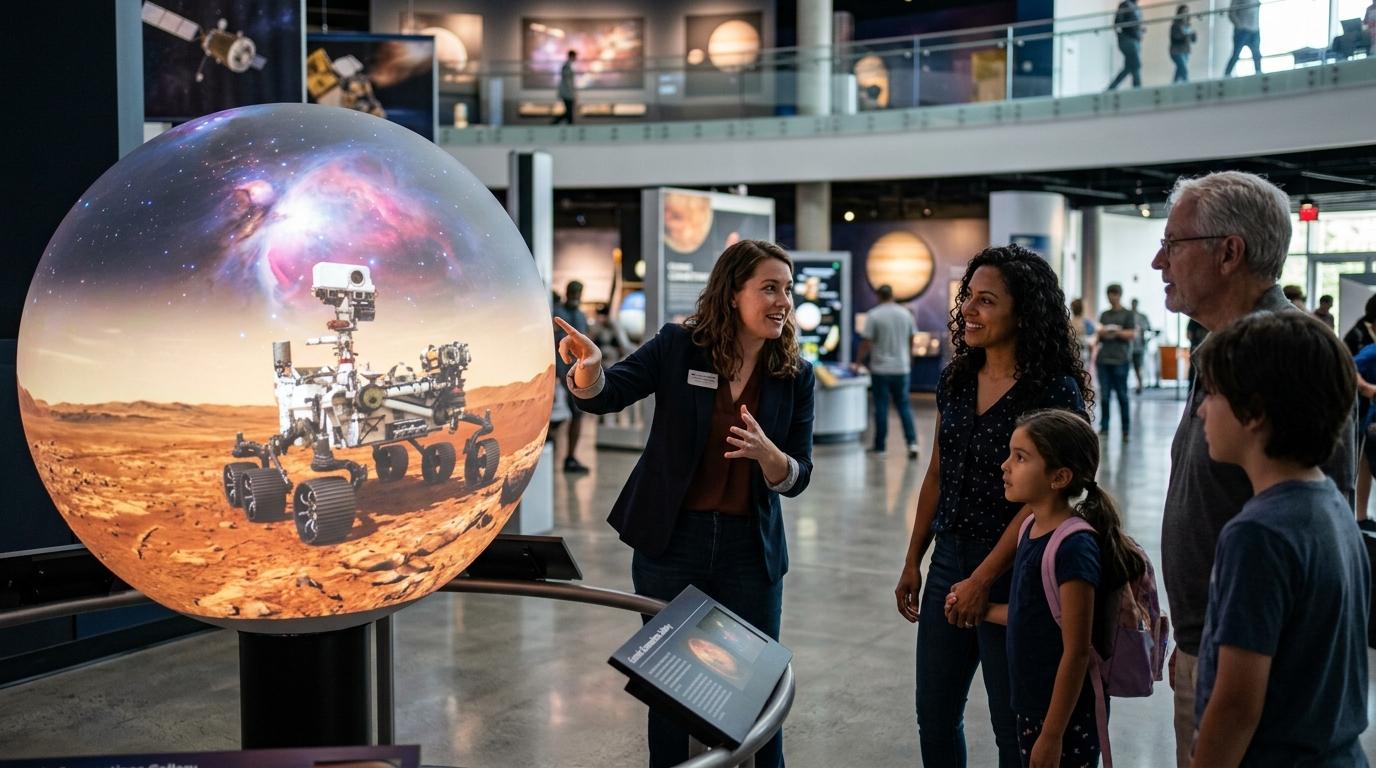
The significance of missions seeking traces of life is also growing for Mars. The ongoing Mars Sample Return (MSR) mission is a historic project to bring rock and soil samples collected from Mars back to Earth for analysis. This mission is the definitive undertaking to scientifically determine whether life existed on Mars in the past or if traces of it remain today, increasing the likelihood of humanity finding life beyond Earth. A primary objective is to explore potential subsurface habitats on Mars, and the analysis of returned samples could also offer clues about Mars's past climate change and the origin of life on Earth.
Growth of the Private Space Economy and Humanity's Sustainable Future
As private ventures push towards space and a new space economy unfolds, SpaceX's Starship is leading a paradigm shift in space transportation. The development of SpaceX's Starship, a reusable super-heavy rocket, promises to drastically reduce space transportation costs and heralds an era of large-scale space activities beyond manned missions to the Moon and Mars. This exemplifies the expansion of space development from state-led initiatives to private enterprises, and the successful operation of Starship is expected to significantly enhance the economic viability of deep space exploration, not only in Earth's low orbit but also to the Moon and Mars.
The rise of a new space economy, from satellite internet to space tourism, is also accelerating. Satellite internet services like Starlink are providing high-speed internet access globally, increasing information accessibility. This not only contributes to bridging the digital divide worldwide but also opens up possibilities for establishing communication networks in extraterrestrial regions. Furthermore, with the full-scale launch of the space tourism industry, allowing ordinary people to experience space, it demonstrates that space is expanding beyond the domain of scientists and special agents to become a venue for new economic activities and experiences. The development of this private-led space industry is expected to accelerate technological innovation, create new markets, and continuously expand the scale of the space economy.
Space science for the future serves as a link between technological advancements and daily life, directly impacting our lives. Advanced technologies developed for space exploration have permeated various aspects of our lives, including GPS, satellite communications, medical imaging technology, and new materials. Latest space science issues, such as the precise optics of the James Webb Telescope, robotics and life support technologies for lunar and Martian exploration, and innovative propulsion systems from the private space industry, act as catalysts for such technological advancements. These hold the potential to drive future societal innovation and ultimately contribute to improving our quality of life.
Humanity's sustainability and future visions are also being concretized on the vast stage of space. There is an increasing effort to find solutions to global challenges like climate change and resource depletion in space. Harnessing lunar and asteroid resources, and space-based solar power generation, present new possibilities for humanity's sustainable future. This suggests that space science is moving beyond mere exploration to become central to human survival strategies, raising expectations for securing new energy sources and solving Earth's environmental problems through space utilization.