May 17 Legislative Report: 22nd National Assembly Sees Over 18,000 Bills Proposed, but Approval Rate Hits Record Low

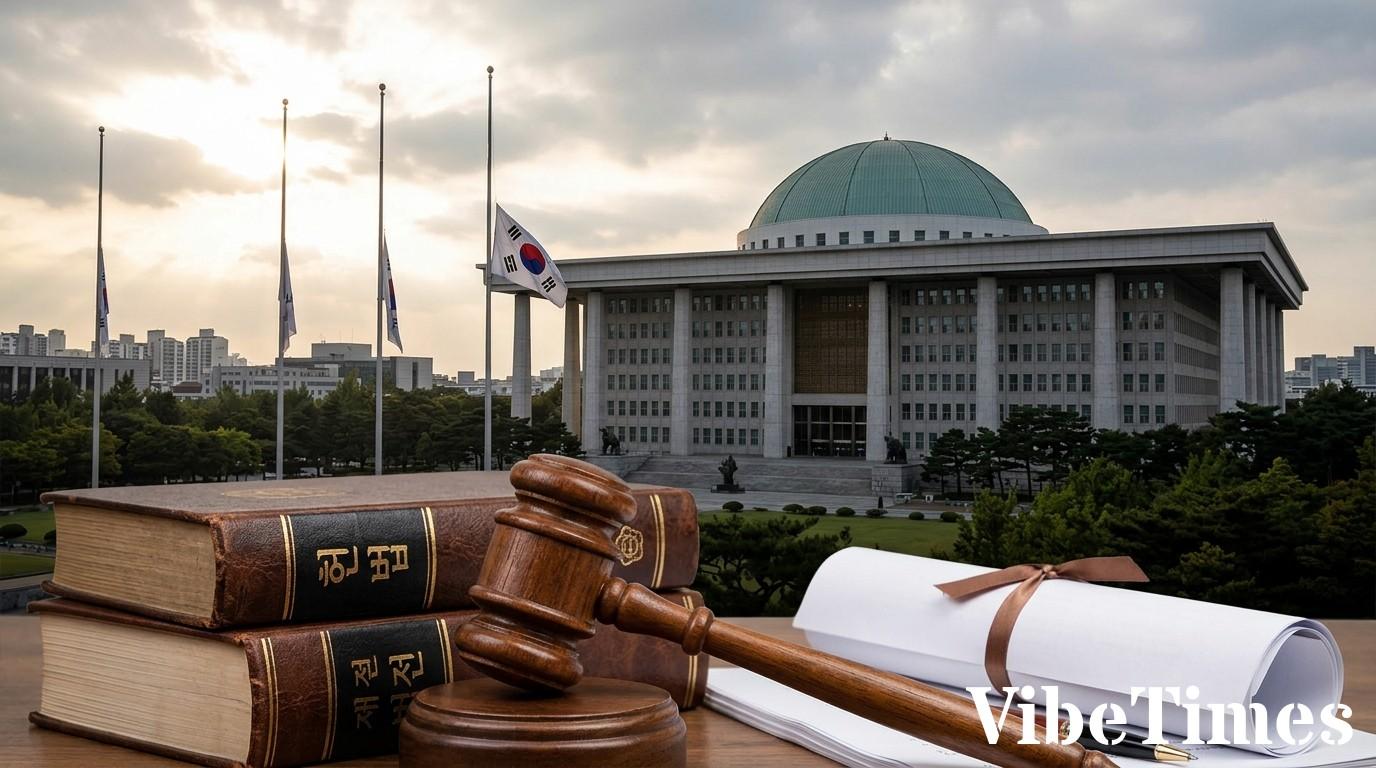
22nd National Assembly: Legislative Activities, Current Status, and Challenges
Since the inauguration of the 22nd National Assembly, a variety of bills have been actively proposed and debated within the legislature. In particular, legislative activities within the Education Committee, spearheaded by members of the Jo Guk Innovation Party, are drawing attention. While movements to reflect the voices from the education field and create a National Assembly that meets public expectations are taking shape, the overall legislative performance of the Assembly remains at an all-time low, raising questions about its effectiveness. This reflects a reality where even crucial public welfare bills are delayed amidst extreme partisan confrontation and unproductive debates.
According to recent data from the National Assembly's Bill Information System, the number of bills proposed during the first half of the 22nd National Assembly reached 18,473. This represents a 21.8% increase compared to the 15,163 bills proposed in the first half of the 21st National Assembly. However, surprisingly, the bill approval rate during the same period stood at a mere 7.5%, marking a record low. This is a significant decrease compared to the 11.5% approval rate during the first half of the 21st National Assembly. These figures clearly indicate that while the number of submitted bills has increased, the number of bills that fail to pass, are shelved, or remain pending has surged. Roughly only 7 out of every 100 proposed bills are making it through.
The primary reason cited for this low approval rate is the intense conflict between the ruling and opposition parties. The 22nd National Assembly has been marked by sharp confrontations from its outset, including debates over budget cuts and the impeachment of cabinet members. The People Power Party, in response to the Democratic Party's legislative dominance, has resorted to tactics like filibusters and boycotting bill reviews, drawing criticism of a "disappearing politics." This situation is not merely an issue confined to a specific party; it suggests that the confrontational dynamic between the two major parties is paralyzing the legislative functions of the entire Assembly. Furthermore, an analysis suggests that an increase in the proposal of bills for show, intended to appease strong supporter bases, is fostering a legislative environment focused more on political maneuvering than on addressing fundamental problems.
Jo Guk Innovation Party Focuses on Legislative Efforts in Education
Members of the Jo Guk Innovation Party in the 22nd National Assembly are concentrating their legislative efforts on resolving educational issues as members of the Education Committee. Many Jo Guk Innovation Party lawmakers, including Yoon Chang-geun, Oh Eun-young, Park, Han, Ha, Jeong Gyu-ri, Kim Seo-won, Kang Yu-kyung, and Park Woo-yeol, are actively participating in discussions and inquiries regarding educational challenges within the Education Committee. They are working to draft bills that will bring about tangible changes in various areas, such as protecting teachers' rights, ensuring students' learning rights, and improving the education system.
Shortly after the opening of the 22nd National Assembly, Oh Eun-young proposed the necessity of amending the National Assembly Advancement Act to create an Assembly that meets "public expectations." This demonstrates a commitment to building a more productive and efficient decision-making system by improving unnecessary regulations and practices. Additionally, Oh stated her support for the passage of the "Chae Sang-byeong Special Prosecutor Bill" and her intention to actively participate in related discussions, thereby contributing to efforts to uncover the truth behind sensitive social issues. This stance is interpreted as an effort to strengthen democratic procedures and accountability by maintaining an active approach towards bills of high public interest.
Kang Yu-kyung, leveraging her experience as a legal expert in laws concerning the protection of children and youth from sexual abuse, has stated her intention to focus on improving unreasonable systems in the education field. Specifically, she announced preparations to propose her first bill of the 22nd National Assembly, an amendment to the "Integration of Early Childhood Education and Care" (Yubo Tonghap) law, aimed at protecting teachers' rights and ensuring students' learning rights. This signals a concrete legislative intent to enhance the stability and quality of the entire education system, from early childhood to primary and secondary education. Furthermore, lawmaker Han announced plans to propose a bill granting teachers immunity for legitimate guidance, focusing on establishing legal safeguards to balance teachers' rights with students' human rights. These initiatives are expected to contribute to resolving long-standing conflicts within the education sector and fostering an environment where all educational stakeholders can focus on their work with peace of mind.
Meanwhile, Park is contributing to legislative efforts aimed at gaining public trust by increasing transparency in party operations, such as participating in the representative proposal of an amendment to the "Law on Strengthening Party Transparency." Kim Seo-won is actively engaged in the Education Committee, holding numerous site visits and consultations to listen to voices from the education field and reflect them in policy, as well as to propose and review education-related bills. Park Woo-yeol is working on measures to alleviate financial burdens and expand support in higher education, participating in discussions on curbing university tuition hikes and increasing financial support for higher education.
Improving the Legislative Environment and Future Outlook
The lackluster legislative performance of the 22nd National Assembly goes beyond a mere numerical decline, exposing serious ailments within Korea's political system. Extreme partisan confrontation delays bill reviews and voting processes, ultimately leading to crucial bills for public welfare and national development being discarded. To overcome this situation, it is urgently necessary to alleviate the extreme confrontational dynamics and restore parliamentary democracy based on mutual respect and compromise. It is time to move beyond the criticism of "disappearing politics" and focus on the Assembly's essential functions: legislation and the aggregation of public will.
The specific legislative efforts focused on the education sector, led by members of the Jo Guk Innovation Party, can be seen as a positive sign. In particular, proposing bills to solve chronic problems in the education field has a high potential to build public consensus. Protecting teachers' rights, ensuring learning rights, and integrating early childhood education are crucial issues directly linked to the growth of future generations, and strengthening the legal foundation for these matters will contribute to the development of society as a whole. For these bills to translate into actual social change without getting caught up in partisan warfare, achieving consensus through bipartisan cooperation is essential.
However, if the current political environment does not improve, it will be difficult to expect a rebound in the bill approval rate going forward. Alongside efforts to reform the parliamentary operational system, such as amending the National Assembly Advancement Act, each party must refrain from unproductive political struggles and engage in substantive policy debates. For the active legislative efforts of individual lawmakers to bear fruit, the entire political sphere must make concerted efforts to restore communication channels between parties and revive politics of dialogue and compromise. Whether the 22nd National Assembly can meet the expectations of voters and achieve tangible legislative outcomes during its remaining term hinges on the improvement of this political environment.