#정치
Parliamentary Data Analysis: Lawmaker Lee Heon-seung's KRW 1.6 Billion KB Financial Holdings Raise Conflict of Interest Concerns

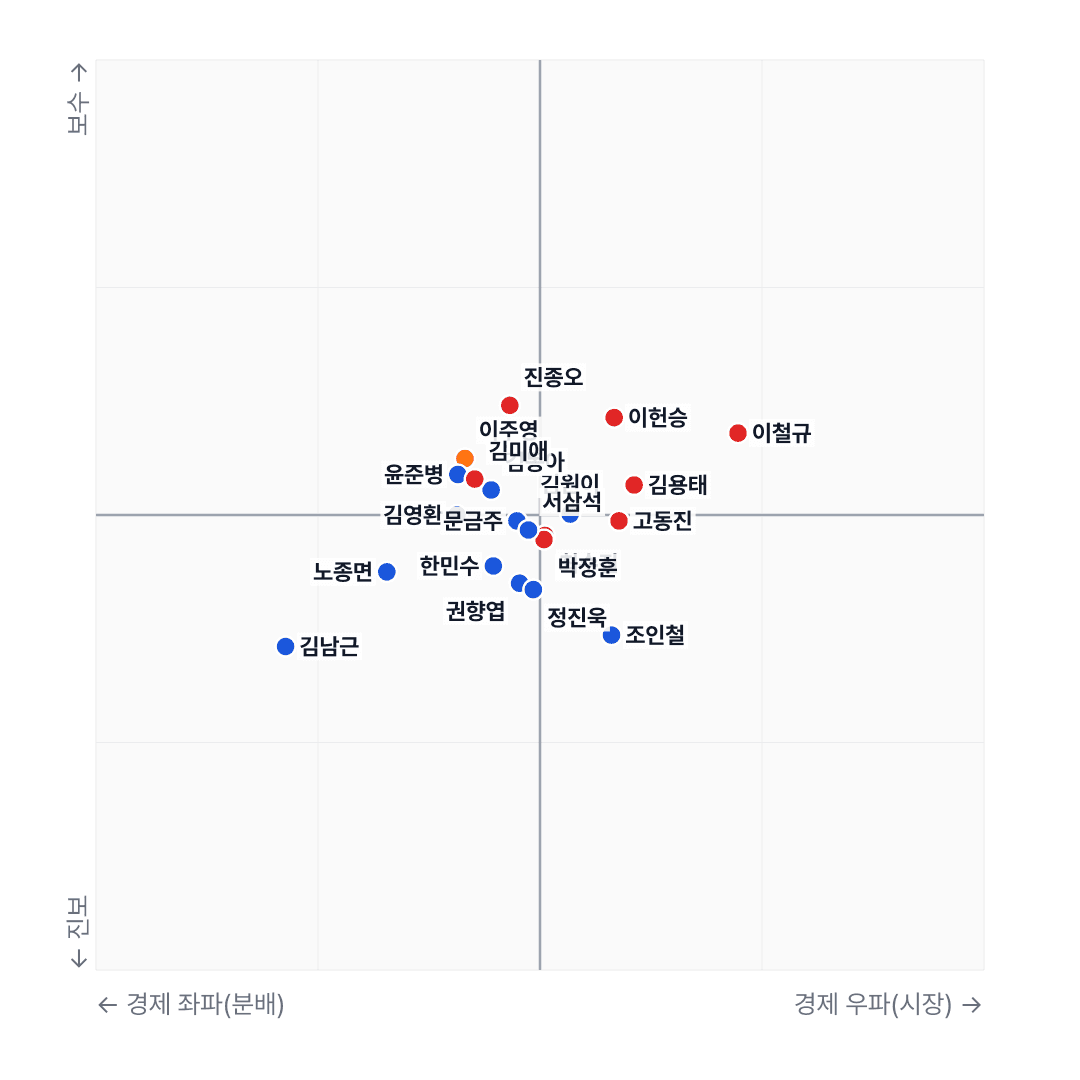
National Assembly Discloses Assets Amid Potential 'Conflict of Interest' Concerns: Analysis of Overlapping Committee Jurisdictions and Industries
An analysis of asset holdings by National Assembly members, where job duties and interests could potentially overlap, has revealed that some lawmakers hold substantial shares in industries overseen by their respective standing committees or have made significant financial contributions to those sectors. These findings are noteworthy in light of societal demands for increased fairness and transparency among lawmakers. This article focuses on quantitatively analyzing and interpreting the asset linkages between standing committees and the industries they oversee, based on publicly available data on legislative proposals and voting records.Asset Holdings with Potential Conflict of Interest by Standing Committee
According to compiled data released by the National Assembly, numerous lawmakers have disclosed stock ownership or significant contribution records related to industries managed and supervised by their standing committees. Particularly striking were cases involving large asset holdings or clear potential for conflicts of interest. One of the most prominent examples is Representative Lee Heon-seung (People Power Party, Strategy and Finance Committee), who held KRW 1.64 billion worth of shares in KB Financial Group, a company within the financial sector overseen by the Strategy and Finance Committee, which includes the Financial Services Commission. Given that the Strategy and Finance Committee is a key body that audits financial institutions such as the Financial Supervisory Service and deliberates on financial policies, holding shares in the financial sector presents a direct potential conflict of interest. Similar cases were found in the pharmaceutical and bio sectors. Representative Lee Ju-young (New Reform Party, Health and Welfare Committee) held KRW 730 million in stocks related to the pharmaceutical and bio industries, which the Health and Welfare Committee is deeply involved with. This committee has oversight over ministries like the Ministry of Health and Welfare and the Ministry of Food and Drug Safety, wielding significant influence over new drug approvals, health insurance policies, and medical fee determinations. In the semiconductor and IT sector, Representative Ko Dong-jin (People Power Party, Trade, Industry, and Energy Committee) was found to own KRW 630 million in Samsung Electronics shares. The Trade, Industry, and Energy Committee makes policy decisions across the entire semiconductor and IT industry, including policies for fostering advanced industries, deregulation, and export support. Additionally, Representative Choi Soo-jin (People Power Party, Science, ICT, Future Planning, Broadcasting and Communications Committee) holds KRW 22.84 million in combined shares of SK Hynix and Samsung Electronics, while Representative Park Jeong-hoon (People Power Party, Science, ICT, Future Planning, Broadcasting and Communications Committee) holds KRW 31.59 million in Nvidia shares, indicating multiple lawmakers with assets linked to the semiconductor and IT sector. Within the financial sector, Representative Kim Nam-geun (Democratic Party, Strategy and Finance Committee) held stocks worth approximately KRW 590 million through DB Financial SPAC. Representative Kim Young-hwan (Democratic Party, Finance and Economy Committee) held KRW 34.07 million in Korea Exchange shares, and Representative Yoon Jun-byeng (Democratic Party, Agriculture, Food, Rural Affairs, Oceans and Fisheries Committee) made a substantial KRW 10 million contribution to the food and agriculture/fisheries sector, revealing various forms of potential conflicts of interest.Unexpected Findings Diverging from Common Perceptions: Unforeseen Individuals and Cross-Pressures
This analysis also identified unexpected individuals holding assets with potential conflicts of interest, as well as surprising overlaps between standing committees and industries, diverging from common perceptions. For example, Representative Cho In-cheol (Democratic Party, Science, ICT, Future Planning, Broadcasting and Communications Committee) held KRW 170 million in Adobe Inc. stock, which could be interpreted as an investment more directly related to the semiconductor and IT industry than to telecommunications or media. Investments in the telecommunications and media sector were also observed, with Representative Noh Jong-myun (Democratic Party) of the same committee holding KRW 7.56 million in YTN shares and Representative Jin Jong-oh (People Power Party) holding KRW 5.54 million in KT shares. These findings are significant given the substantial influence the Science, ICT, Future Planning, Broadcasting and Communications Committee has over the media industry, including the Korea Communications Commission. Investments in the semiconductor and IT sector were evenly distributed among lawmakers from both the ruling and opposition parties. Representatives Ko Dong-jin, Lee Chul-gyu, Choi Soo-jin, and Park Jeong-hoon from the People Power Party, along with Representatives Cho In-cheol, Han Min-soo, Kim Dong-a, and Jeong Jin-wook from the Democratic Party, hold semiconductor and IT-related stocks, reflecting both the importance of the industry and broad parliamentary interest. Notably, Representative Kim Won-i (Democratic Party) and Representative Kwon Hyang-yeop (Democratic Party), members of the Trade, Industry, and Energy Committee, hold LG Electronics shares (KRW 15.35 million) and Seong An Materials shares (KRW 12.78 million) respectively, showing links to the automotive/heavy industry and semiconductor/IT sectors. While this committee covers a wide range of industries, these holdings offer insight into lawmakers' individual investment preferences in advanced technology sectors. Significant contribution cases with potential conflicts of interest also warrant attention. Representatives Seo Sam-seok and Yoon Jun-byeng (both Democratic Party, Agriculture, Food, Rural Affairs, Oceans and Fisheries Committee) each made large KRW 10 million contributions to the food and agriculture/fisheries sector. While this aligns with the committee's focus on agricultural and fisheries policies, issues of transparency in interests could arise depending on the specific beneficiaries and nature of these contributions. Representative Kim Yong-tae (People Power Party, Education Committee) contributed KRW 9.5 million to the education sector, and Representative Kim Mi-ae (People Power Party, Health and Welfare Committee) contributed KRW 9 million to the pharmaceutical/bio sector, demonstrating connections to their respective committees' roles.Limitations of Quantitative Analysis and Future Challenges
This analysis combined quantitative indicators based on lawmakers' legislative proposals and voting behaviors with publicly disclosed asset details. It objectively demonstrated that some lawmakers hold assets that pose a potential conflict of interest between their standing committees and the industries they oversee. However, quantitative indicators alone have limitations in fully capturing all job-related connections for lawmakers. There may be discrepancies between these findings and a lawmaker's public image or actual legislative activities. Furthermore, it is difficult to definitively conclude that asset holdings or contributions directly influence legislative activities. While disclosed asset details serve as important indicators of transparency as 'facts,' classifying them as illegal acts requires further legal judgment. Nevertheless, such analyses can contribute to preemptively recognizing potential conflicts of interest among lawmakers and enhancing transparency. Moving forward, the National Assembly must refine its asset disclosure system and conflict-of-interest prevention mechanisms to build a public service society that earns the trust of the people.Lawmakers Mentioned in the Article
| Lawmaker | Party | Political Leanings | Notes |
|---|---|---|---|
| Lee Heon-seung | People Power Party | Economic Conservative & Social Conservative | Strategy and Finance Committee · KB Financial Group |
| Lee Ju-young | New Reform Party | Economic Progressive & Social Conservative | Health and Welfare Committee · JW Allison |
| Ko Dong-jin | People Power Party | Economic Conservative & Social Progressive | Trade, Industry, and Energy Committee · Samsung Electronics |
| Kim Nam-geun | Democratic Party | Economic Progressive & Social Progressive | Strategy and Finance Committee · DB Financial SPAC |
| Cho In-cheol | Democratic Party | Economic Conservative & Social Progressive | Science, ICT, Future Planning, Broadcasting and Communications Committee · ADOBEINC |
| Lee Chul-gyu | People Power Party | Economic Conservative & Social Conservative | Trade, Industry, and Energy Committee · SOFITECHNOLOGIESINC |
| Choi Soo-jin | People Power Party | Economic Conservative & Social Progressive | Science, ICT, Future Planning, Broadcasting and Communications Committee · SK Hynix |
| Kim Young-hwan | Democratic Party | Economic Progressive & Social Progressive | Finance and Economy Committee · Korea Exchange |
| Han Min-soo | Democratic Party | Economic Progressive & Social Progressive | Science, ICT, Future Planning, Broadcasting and Communications Committee · KG Inisis |
| Park Jeong-hoon | People Power Party | Economic Conservative & Social Progressive | Science, ICT, Future Planning, Broadcasting and Communications Committee · Nvidia |
| Kim Won-i | Democratic Party | Economic Conservative & Social Conservative | Trade, Industry, and Energy Committee · LG Electronics |
| Kwon Hyang-yeop | Democratic Party | Economic Progressive & Social Progressive | Trade, Industry, and Energy Committee · Seong An Materials |
| Kim Dong-a | Democratic Party | Economic Progressive & Social Conservative | Trade, Industry, and Energy Committee · Samsung Electronics |
| Moon Geum-ju | Democratic Party | Economic Progressive & Social Progressive | Agriculture, Food, Rural Affairs, Oceans and Fisheries Committee · WK Kellogg |
| Seo Sam-seok | Democratic Party | Economic Progressive & Social Progressive | Agriculture, Food, Rural Affairs, Oceans and Fisheries Committee · Food/Agriculture/Fisheries Sector |
| Yoon Jun-byeng | Democratic Party | Economic Progressive & Social Conservative | Agriculture, Food, Rural Affairs, Oceans and Fisheries Committee · Food/Agriculture/Fisheries Sector |
| Kim Yong-tae | People Power Party | Economic Conservative & Social Conservative | Education Committee · Education Sector |
| Kim Mi-ae | People Power Party | Economic Progressive & Social Conservative | Health and Welfare Committee · Pharmaceutical/Bio Sector |
| Noh Jong-myun | Democratic Party | Economic Progressive & Social Progressive | Science, ICT, Future Planning, Broadcasting and Communications Committee · YTN |
| Jin Jong-oh | People Power Party | Economic Progressive & Social Conservative | Culture, Sports and Tourism Committee · KT |
| Jeong Jin-wook | Democratic Party | Economic Progressive & Social Progressive | Trade, Industry, and Energy Committee · Microsoft |

Related Articles
사업가 출신 '캡틴코리아' 김영훈 "결과로 증명하는 정당 만들겠다"
정치
삼전닉스가 밀어준 821조 예산…법인세, 15년 만에 소득세 넘었다
정치
National Assembly Data Analysis: Kim Ki-hyun Followed His Party, but His Ideological Coordinates Sit in the Center
정치
Negative Assessment of Presidential Performance Falls 3.3%p, from 63.4% to 60.1%
정치
Sept. 28 Legislative Report: Rep. Son Hui-su Serves on Both the Budget Committee and the Education Committee
정치
Passage of Jangbogo-N Special Act Opens the Path to Nuclear Submarines
정치