Sudan Refugees Face Severe Food, Sanitation, and Health Crises

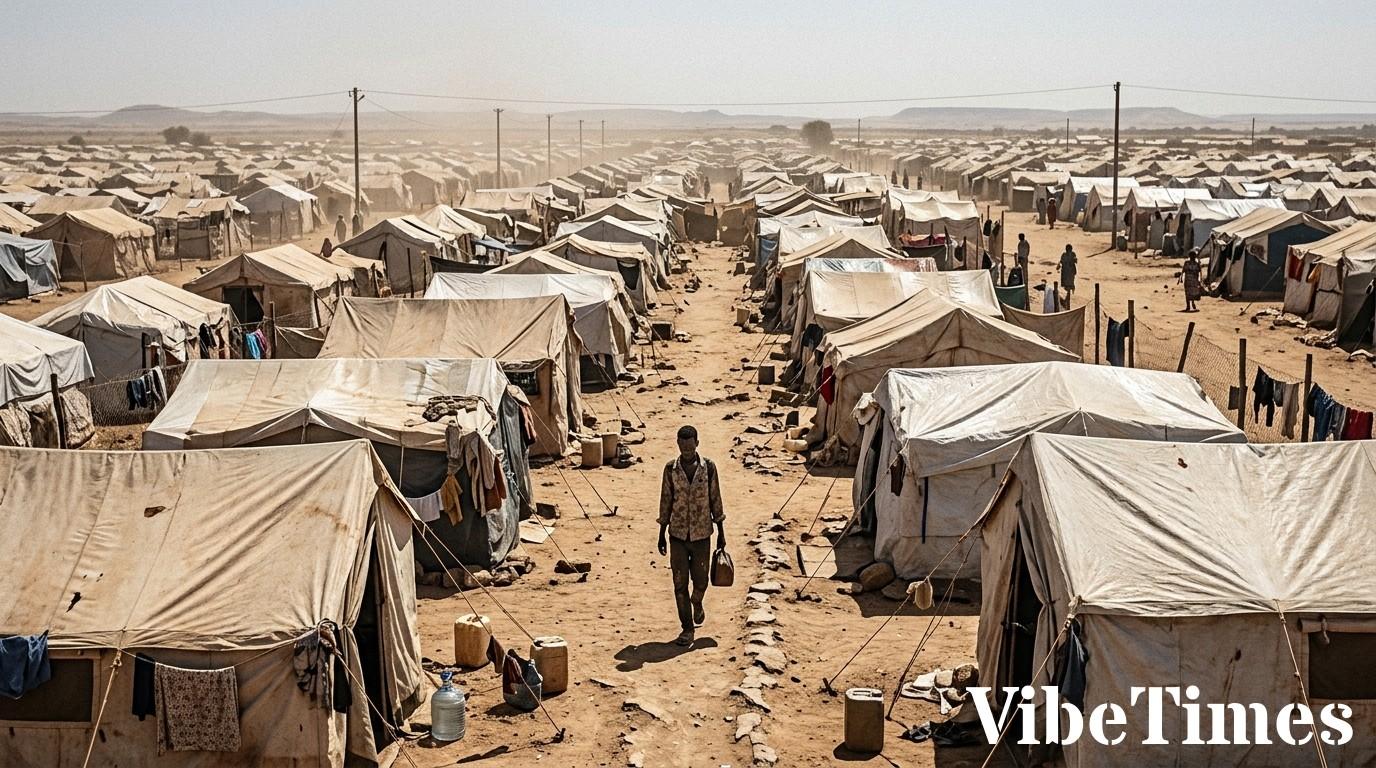
Conditions regarding food, sanitation, and health are severely deteriorating in internal refugee camps in Sudan. Millions have been displaced by over a year of civil war and are living in these camps, facing financial realities where even securing basic necessities is difficult. According to the United Nations (UN), the civil war in Sudan is causing the world's most severe humanitarian crisis. Approximately 14 million people have lost their homes, and 19 million have limited access to food. Ten million children are unable to attend school, and 34 million people, two-thirds of Sudan's population, require humanitarian assistance. More than 10 million internally displaced persons (IDPs) reside within Sudan, with some fleeing to neighboring countries.
In April, 23-year-old Alamien Hafeez walked alone among thousands of tents in the Al-Apat IDP camp in Sudan. He was born in El-Fasher, the capital of North Darfur, and was attending university with dreams of becoming a doctor. Just 18 months before graduation after more than five years of study, the civil war struck his hometown. The armed conflict between the Rapid Support Forces (RSF), a paramilitary group, and the Sudanese Armed Forces (SAF) began in the capital, Khartoum, and spread to the western Darfur region. After an 18-month offensive, the RSF took control of the area, including Hafeez's hometown, in October 2025. His studies were inevitably interrupted. Hafeez continued working at a hospital without leaving his hometown, but as violence intensified, he was forced to flee Darfur. He walked 745 miles (about 1,200 km) from El-Fasher to the Al-Apat camp, a journey that took a month. Hafeez was left alone, separated from his studies and his family. He stated that he continues to work to survive, hoping for the day he can reunite with his family.
Al-Apat camp is one of over 10,000 refugee sites scattered across Sudan's 18 states, hosting more than 25,000 residents. The inhabitants construct temporary shelters using wood and tarpaulin, with reeds used for fences and walls. The SAF authorities operating the camp allow local and international non-governmental organizations (NGOs) to provide breakfast six days a week, but medical and educational facilities are severely lacking in financial support. Manal Abdulla, another resident of Al-Apat camp, sits on the edge of a wooden bed shared with her six children, aged between five and sixteen. She is boiling water and oil in a large pot over a charcoal stove in their cramped dwelling. Abdulla shared that her husband died six months ago in an explosion near the local market. Like Hafeez, she and her children walked to Al-Apat seeking safety from El-Fasher. During their journey, they slept under trees and survived by begging for food. Constant shelling instilled fear in the children. Currently, Abdulla says she does not know what the next step is. She cannot find work in the camp and lacks the capital to start a business. Without work, she cannot afford essential goods or pay for her children's education.
As the civil war drags on, Sudan faces a severe economic crisis. The massive displacement of refugees urgently calls for financial support from the international community, threatening even the basic foundations of survival.