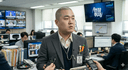
Former President Yoon Investigated Again by Special Prosecutor for Insurrection, Foreign Exchange Allegations


Comprehensive Special Probe Re-investigates Former President Yoon; Focus on Insurrection, Foreign Exchange Charges
Special Probe's Second Investigation: Former President Yoon Undergoes 9-Hour Intense Questioning
The second comprehensive special prosecution team (Special Prosecutor Kwon Chang-young) summoned former President Yoon Suk-yeol again on the 13th, conducting an intense investigation for approximately nine hours. This investigation focused on allegations of insurrection and foreign exchange, including whether the deployment of troops to the National Assembly during the December 3rd state of emergency constituted rebellion under military law. Former President Yoon arrived at the special prosecutor's office in Gwacheon, Gyeonggi Province, by a Ministry of Justice escort vehicle around 9:42 AM and departed for Seoul Detention Center after concluding his questioning around 6:46 PM. This was the second summons for questioning, following the first investigation in August.
During this investigation, the comprehensive special prosecution team reportedly pressed Yoon on the details of his conversations with the military leadership at the time and related reports to probe the alleged offenses. In particular, the team intensely scrutinized the specific decision-making process related to the declaration of the state of emergency and its legality. The special prosecution team plans to determine whether to summon Yoon again and how to proceed with further investigations based on his testimony.
Legislative Issues and Background: The Judiciary Committee, Key to 22nd National Assembly Formation Negotiations
Ahead of the formation of the 22nd National Assembly's second-half leadership, a fierce tug-of-war is underway between the ruling and opposition parties. The positions of the Democratic Party of Korea and the People Power Party are sharply divided over the chairmanship of the Legislation and Judiciary Committee. The Democratic Party insists it cannot cede the chairmanship under any circumstances, while the People Power Party argues it must secure the position to prevent 'judicial destruction maneuvers.' This battle for the chairmanship is expected to have a decisive impact on the speed and direction of legislation in the future. As the Legislation and Judiciary Committee is a key standing committee with the final deliberative and decision-making authority over bills, control by either party can significantly alter the speed and nature of bill processing.
This confrontation between the parties goes beyond a mere competition for securing a parliamentary majority. It is also a crucial factor determining the momentum for pushing various special prosecutor bills and judicial reform-related legislation that have been repeatedly proposed in political circles recently. Furthermore, discussions on parliamentary inspections or the introduction of special prosecutors for sensitive issues, such as the shortage of ballots in the June 3rd local elections caused by the 'incompetence of the Election Commission,' are also aligned with the role of the Legislation and Judiciary Committee. The People Power Party clearly advocates for parliamentary inspections and special prosecutors to resolve these issues, emphasizing the importance of securing the chairmanship to lead these efforts. Conversely, the Democratic Party expresses its intent to push for the swift processing of livelihood and reform bills by securing the Legislation and Judiciary Committee, citing the need for checks and balances against 'legislative unilateralism.'
Current Affairs Analysis: Comprehensive Probe, Scope of Investigation and Potential for Truth Discovery
With the second comprehensive special prosecution team summoning former President Yoon Suk-yeol for intensive investigation into allegations of insurrection and foreign exchange, the pursuit of truth regarding past alleged military operational interference is taking a step forward. Whether the deployment of troops to the National Assembly during the December 3rd state of emergency constitutes rebellion under military law is expected to be a significant legal point of contention. The special prosecution team is deeply investigating whether former President Yoon's actions at the time could violate Article 33 (Rebellion, etc.) of the Military Criminal Act, which penalizes military personnel for initiating or participating in rebellion. The core of the investigation is to clarify the circumstances at the time and Yoon's role.
This investigation is drawing attention not merely as a political dispute but as a process of holding legal accountability for critical matters related to national security. Notably, it is being conducted concurrently with the summoning of former Prosecutor General Lee Chang-soo and former Seoul Central District Prosecutors' Office Deputy Chief Prosecutor Choi Jae-hoon in connection with the 'Deutsch Motors stock manipulation case,' demonstrating the comprehensive special prosecutor's resolve to investigate alleged improper interference within the judicial system. Former Daegu Mayor Hong Joon-pyo's expression of concern, criticizing that 'legislative unilateralism for prosecutorial reform' would usher in an 'era of criminal heavens,' further underscores public interest in these legislative and investigative processes. However, concerns also exist that judicial reform discussions, such as the Jo Guk Innovation Party's policy of 'excluding proportional representatives who are criminals,' can sometimes become trapped in partisan logic. Politicians like Representative Yoon Su-il emphasizing 'national unity' and 'developing practical policy alternatives beyond partisan logic' can be understood in this context.
Furthermore, the People Power Party's assertion of the need for parliamentary inspections and special prosecutors, rather than a 'self-investigation by the Election Commission,' highlights the necessity of objective and fair investigative bodies for addressing current issues. The Democratic Party's argument for 'checking the unilateral push for special prosecutor bills' is also interpreted as a move to ensure fairness and procedural justice in the investigative process. Amidst these intense debates between the parties, the comprehensive special prosecution team is expected to make legal judgments by comprehensively analyzing the evidence and testimonies collected during the remaining investigation period. Despite the nine-hour lengthy investigation, the possibility of a gap between the position of former President Yoon's side and the special prosecution team's proof of charges cannot be ruled out. Changes in the positions of the relevant political circles are also anticipated based on whether the special prosecution team summons Yoon again and announces the investigation results.
Future Outlook: Legislative Procedures and Market/Industrial Impact
As negotiations for the formation of the 22nd National Assembly's second-half leadership gain momentum, the power struggle between the ruling and opposition parties over the chairmanship of the Legislation and Judiciary Committee is expected to continue for a considerable period. If the parties fail to reach an agreement, legislative activities will inevitably be disrupted as the process of assigning standing committees and electing chairpersons is delayed. In particular, the momentum for various policy initiatives, such as strengthening support for small business owners and self-employed individuals for economic recovery (as advocated by Rep. Ko Min-soo), developing policies for climate crisis response and carbon neutrality (a concern of Rep. Ko Min-soo), and expanding childcare support and elderly welfare facilities to address low birth rates and an aging population (proposed by Rep. Suzuki Kazuto), could weaken. Moreover, the processing of politically sensitive bills, such as the re-advancement of the 'First Lady Kim Keon-hee Special Prosecutor Bill' (emphasized by Rep. Yoon Su-il), will heavily depend on the outcome of the leadership formation negotiations.
From a macroeconomic perspective, such legislative delays and political instability can negatively impact investment sentiment. Especially in a global economic environment marked by increasing uncertainty, such as National Security Advisor's office's (Satellite Rang) efforts to prevent the EU's economic security self-reliance efforts from becoming barriers to entry for Korea and reaffirming the importance of the free trade order, domestic political uncertainty can further heighten investor caution. Companies may adjust or postpone investment plans due to the possibility of new regulations or policy direction uncertainty, which could also affect the growth potential of specific industrial sectors. Whether the checks and balances mechanism against 'legislative unilateralism,' as advocated by the People Power Party, operates effectively will be a critical factor determining the stability and predictability of future economic policies. If the future leadership formation negotiations are resolved smoothly and productive legislative activities ensue, it could signal positive developments for related markets and industries; conversely, the uncertainty is likely to persist if the opposite occurs.