US CBDC Bill with Temporary Ban Nears Trump's Signature

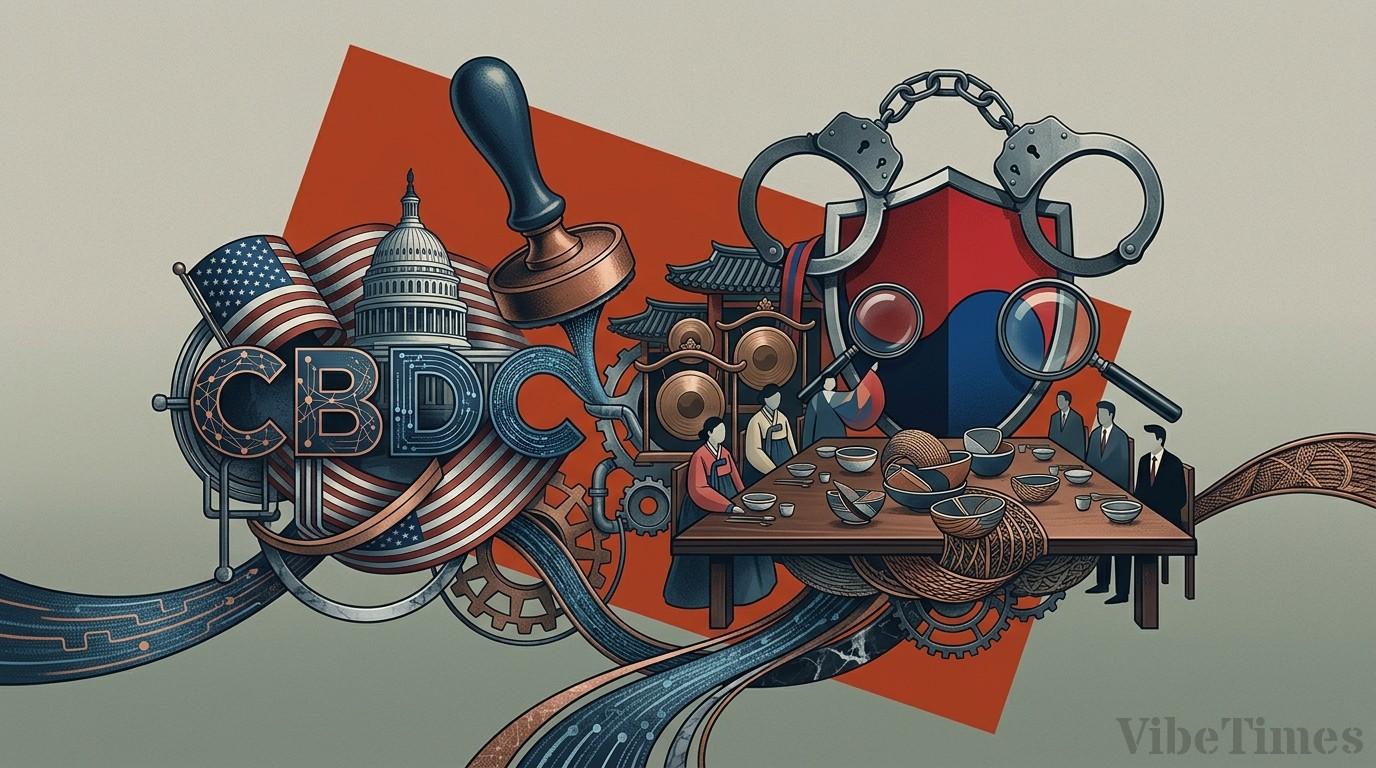
Will US CBDC Introduction Be Halted? Bill Including Temporary Ban Provision Enters Trump's Signature Process
Discussions surrounding the introduction of a Central Bank Digital Currency (CBDC) in the United States have entered a new phase. With a provision to temporarily ban CBDC issuance included in a bill recently passed by the US Congress, there are concerns that the momentum for advancing a US CBDC may be halted. The bill is nearing former President Donald Trump's signature, drawing attention to its potential outcome.
The core of this bill is to establish a moratorium on the private sector issuance of a digital dollar. While specific details such as the bill's exact name or the duration of the ban have not yet been clearly disclosed, it is already signaling considerable ripples in the digital currency market. Major cryptocurrencies, including Bitcoin, also showed volatility, with prices falling 2.01% in 24-hour trading to drop below $58,988.3 following this news.
Background and Key Issues of the Temporary CBDC Ban Provision
Several complex factors contributed to the US Congress passing a bill that includes a provision to temporarily ban CBDC issuance. The most significant concerns revolve around privacy and the stability of the financial system. Critics have argued that the introduction of a CBDC could allow the government or central bank to track and control all transaction histories, infringing on privacy. Potential risks also include conflicts with the private banking system and vulnerabilities to cyberattacks from adversarial nations.
Some observers highlight that a CBDC could fundamentally alter the existing financial system. In the US, there are voices arguing that hastily introducing a CBDC without in-depth discussion on the Federal Reserve's monetary policy direction and the role of existing banking systems would be risky. Specifically, some politicians, such as Representative Yim Jong-seok (context implies a US representative, but the name and party seem Korean; assuming it's a placeholder for a US political figure or a mistranslation of a Korean politician mentioned in a broader context), have expressed concerns about the Federal Reserve's monetary policy and inflation response, advocating for a delay in interest rate cuts and urging caution across broader financial policy. This stance could translate into similar cautiousness regarding CBDC adoption.
The passage of this bill is interpreted as a reflection of these diverse concerns and calls for caution. A majority opinion suggests that sufficient social consensus and technical and institutional review are necessary before official adoption, and the temporary ban provision is seen as an attempt to secure time for such a process. However, there are also strong counterarguments that such measures could hinder the development of innovative digital financial technologies.
Bipartisan Discussions on Special Prosecutors and Legislative Tasks
Meanwhile, various legislative bills and issues are simultaneously being pursued in domestic political circles, drawing attention. President Lee Jae-myung is scheduled to have dinner with the Democratic Party's floor leader group on the 1st of next month to discuss major legislative tasks. It is expected that key agenda items, such as the 'Election Commission Special Prosecutor' initiative proposed by the Democratic Party as a party platform, will be discussed.
Previously, the Democratic Party decided to pursue the passage of a special prosecutor bill as a party platform to investigate allegations related to the shortage of ballots in the June 3rd local elections. This decision stems from accepting the People Power Party's proposal to pursue both a parliamentary inquiry and a special prosecutor. There is a possibility that the legislative process may accelerate through bipartisan agreement. Han Byung-do, the Democratic Party's floor leader, stated at a supreme council meeting, "The Democratic Party has adopted the pursuit of a special prosecutor as its party platform to clarify suspicions related to the Election Commission." The People Power Party is expected to engage in negotiations by demanding the appointment of a special prosecutor recommended by the opposition party.
Furthermore, the situation where a special investigation team is indicting and summoning individuals related to alleged 'obstruction of arrest' by former President Yoon Suk-yeol is also emerging as a legal and political issue. The second comprehensive special prosecutor's team has reportedly indicted additional figures, including lawmakers Na Kyung-won, Kim Ki-hyeon, Kwon Young-jin, and Yoon Sang-hyun of the People Power Party, and has sent them notification for investigation. As matters related to special prosecutor investigations attract significant public interest regarding the rule of law and the judicial system, they are likely to become a focal point of controversy moving forward. The emphasis by Rep. Lee Jong-chan of the Progress Party on 'realizing fair and just rule of law' and 'clarifying the truth of judicial overreach' can be interpreted in this context.
AI Industry Development and Efforts to Establish Legal Foundations
In addition, the Democratic Party is emphasizing legislative efforts to lay the groundwork for an AI industrial revolution as part of President Lee Jae-myung's 'Three Major Mega Projects for South Korea's Great Leap Forward.' Regarding the government's announcement of a semiconductor cluster, Reform Party leader Lee Jun-seok criticized the policy implementation method by likening it to "prescribing medication first and then finding the illness later, which is a violation of medical law due to treatment without diagnosis." This highlights the importance of coherence in policy formulation and the establishment of legal frameworks.
Establishing the legal and institutional foundation for fostering the AI industry is recognized as an essential task for securing future growth engines. If related bills pass the National Assembly, government support for AI technology development and commercialization is expected to expand, further invigorating the related industrial ecosystem. However, it is crucial to thoroughly review the various social and economic impacts during this process, including the pace of technological advancement, ethical issues, and potential conflicts with existing industries. The Democratic Party's assertion that legislative efforts are needed to lay the groundwork for AI industry development is based on the importance of these future industries and the complex challenges anticipated.
The fate of the US CBDC-related bill is expected to be determined by whether former President Trump ultimately signs it. If the signing process is completed, discussions on introducing a CBDC in the US could be significantly delayed or recalibrated in a new direction. This is a significant issue that could indirectly influence the global race to develop CBDCs.
Domestically, the key legislative task, including the Election Commission Special Prosecutor bill, hinges on whether it will gain momentum through bipartisan agreement. If the special prosecutor bill is passed, progress is expected in clarifying related suspicions, which is directly linked to restoring trust in the judicial system. The establishment of a legal foundation for fostering the AI industry is also anticipated to materialize through legislative efforts by the National Assembly. However, given the differences in positions between proponents and opponents on each issue, considerable discussion and coordination will likely be required until final legislation is enacted. Continuous attention is demanded regarding the direction of related bills and their ripple effects.