Lee Jae-myung Administration's 800 Trillion Won Southwestern Peninsula Semiconductor Cluster: A National Survival Strategy

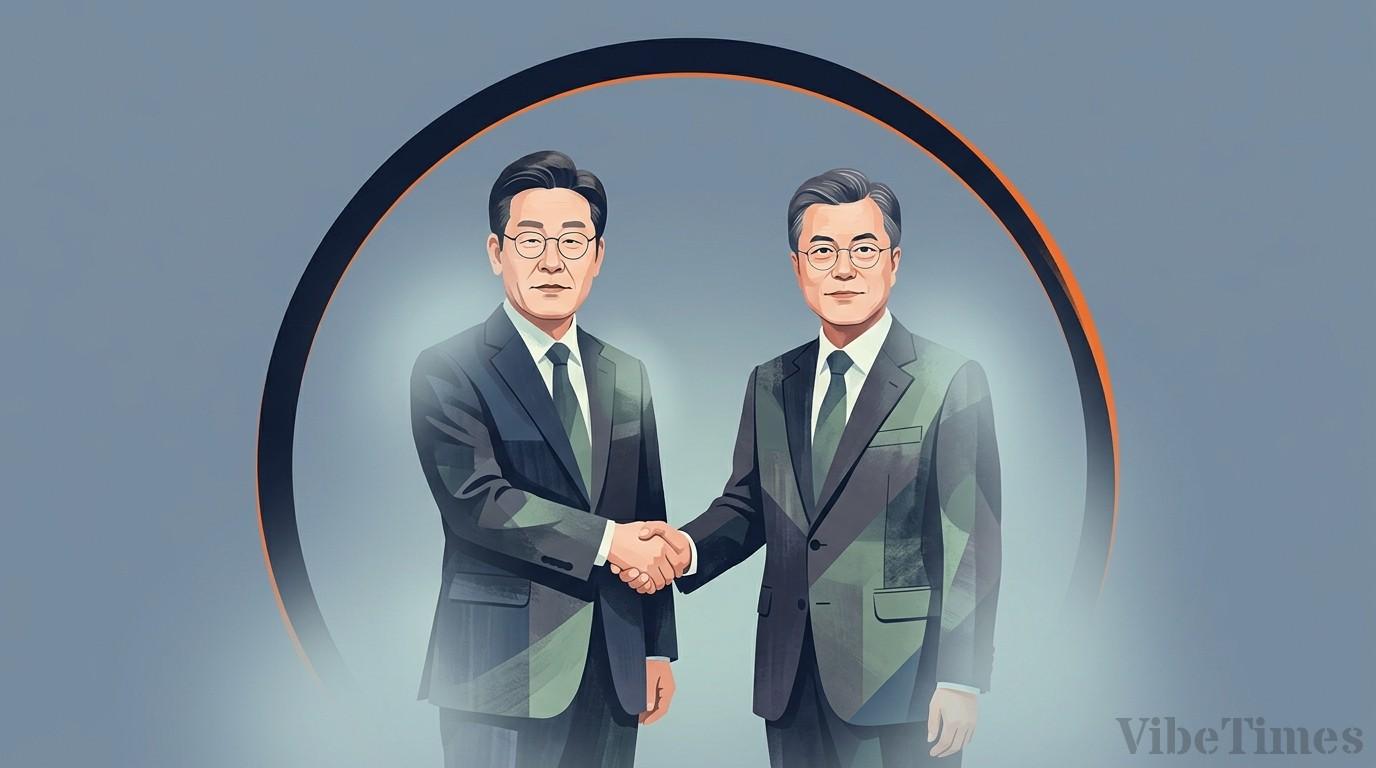
Lee Administration Builds Foundation for National Survival Through 'Region-Led' Future Strategy
Entering its second year in office, President Lee Jae-myung has called for accelerated legislative processing of state agenda items, clearly stating his commitment to pursuing concrete policies for South Korea's future survival strategy. Notably, the administration is planning a massive investment of 800 trillion won to establish a Southwestern Peninsula Semiconductor Cluster, aiming to simultaneously revitalize regional economies and strengthen national industrial competitiveness. This approach differentiates itself from past controversies surrounding projects like the Four Major Rivers Project by focusing on establishing a foundation for national survival through the development of future industries. President Lee secured policy momentum by appointing Han Sung-sook as Prime Minister after her nomination and subsequent approval, signaling a message of consolidating national drive through internal unity and external expansion. This move is interpreted as presenting a vision for South Korea's new leap forward amidst an increasingly uncertain global economic environment.
Southwestern Peninsula Semiconductor Cluster Emerges as 'National Survival Strategy'
During a recent dinner with the floor leadership of the ruling Democratic Party of Korea at the Presidential Office, President Lee Jae-myung emphasized the importance of establishing the 'Southwestern Peninsula Semiconductor Cluster' as a national future strategy. He stressed that this project transcends mere balanced regional development, calling it 'South Korea's national survival strategy' and revealing plans for an 800 trillion won investment. This suggests that the semiconductor industry is not only a core driver of future advanced industries but also the sole means to secure national economic security amidst geopolitical risks and global supply chain realignments. The establishment of this cluster is expected to inject vitality into regional economies by creating a high-value industry ecosystem through the construction of an advanced semiconductor production base and generating a large number of related jobs. Furthermore, the integration of Jeonnam and Gwangju regions is understood in the context of presenting a national development model through fostering region-specific industries, emphasizing 'region-led development that will change the nation's future.'
Such a massive scale of investment necessitates meticulous review of funding sources and concrete execution plans. In particular, the figure of 800 trillion won is unprecedented for a single regional investment, requiring not only government financial support but also active attraction of private capital and comprehensive backing for technological development for successful project implementation. Moreover, addressing practical challenges such as infrastructure expansion in the cluster's designated area, securing a skilled workforce, and environmental concerns is essential. The Lee administration is expected to make multifaceted efforts to overcome these challenges, including full government support, legislative reforms, and deregulation. It also appears poised to focus on managing external risk factors and fostering a stable investment environment by simultaneously pursuing efforts to improve relations with North Korea under a 'peaceful coexistence Korean Peninsula framework.' This differs from the Four Major Rivers Project, which faced controversies over its effectiveness relative to its massive budget, by having a clear objective of securing future growth engines.
Policy Acceleration Ordered and Capital Market Order Emphasized
Entering its second year in office, President Lee Jae-myung has repeatedly called for accelerated legislative processing of state agenda items, emphasizing the efficiency of state administration. This can be seen as an expression of the current administration's determination to stably pursue its policy direction and achieve tangible results. His remark, 'Ensure the perception that getting caught will lead to ruin,' demonstrates a firm resolve to crack down on unfair capital market transactions such as stock manipulation. President Lee declared, 'We will show that those who manipulate stock prices will face ruin,' strongly expressing his commitment to establishing fair market order, protecting investors, and enhancing the credibility of the capital market. This policy direction is expected to foster a transparent and predictable financial market environment, securing the trust of domestic and international investors and driving sound corporate growth and capital market development in the long term. This can serve as an important factor in improving the investment environment amidst recent increases in global economic uncertainty.
Additionally, President Lee signaled concrete commitment to the public-led AI data center construction project, promised during a recent town hall meeting in Jeju. This is an essential infrastructure investment for the development of the artificial intelligence (AI) industry, a key driver of the Fourth Industrial Revolution, and is expected to contribute to strengthening national competitiveness and fostering new industries. Regarding the proposed easing of the public vehicle odd-even driving rule, he stated, 'If there are no issues, lift it,' and 'Just release them all,' emphasizing the speed of policy decisions aimed at improving convenience for citizens. These policy decisions are interpreted as an intention to enhance convenience through deregulation in areas closely related to people's daily lives. Thus, the Lee administration is consolidating national drive by accelerating the implementation of policies to foster future industries and improve citizens' convenience, signaling an important direction for future economic policy.
Economic and Industrial Impact and Future Outlook
The large-scale national projects being pursued by President Lee Jae-myung, such as the creation of the Southwestern Peninsula Semiconductor Cluster and the construction of AI data centers, are expected to have a significant impact on South Korea's economic and industrial landscape. The 800 trillion won investment can serve as a catalyst for technological development in related industries, create high-value jobs, and revitalize underdeveloped regional economies. The semiconductor industry, in particular, is a high-tech intensive sector, and synergistic growth of related material, component, and equipment industries is also anticipated. This will serve as a foundation for further solidifying South Korea's advanced technology competitiveness amidst global supply chain realignments. Furthermore, the construction of AI data centers, as critical infrastructure for the Fourth Industrial Revolution era, will accelerate digital transformation across various industries and lay the groundwork for the creation of new services.
The government's resolve to crack down on unfair capital market transactions is expected to contribute to fostering a sound investment culture and enhancing financial market transparency in the long term. This will play a crucial role in securing the trust of domestic and international investors and creating an environment that supports long-term, stable corporate growth. However, the possibility of encountering unexpected obstacles during the implementation of these massive national projects cannot be ruled out. Challenges such as securing large-scale funds, land compensation and environmental issues, and close cooperation with local governments remain to be addressed. The government must maintain momentum by establishing detailed plans and making flexible policy adjustments to successfully overcome these challenges. Attention is focused on whether the policies proposed by President Lee Jae-myung in his second year in office, aimed at securing future growth engines and establishing market order, will lead to concrete results. If successfully pursued, South Korea is expected to lay the groundwork for a new leap forward and play an even more significant role in the global economy.