Row Over 'Third-Party Recommendation' Heats Up Election Commission Special Prosecutor Bill

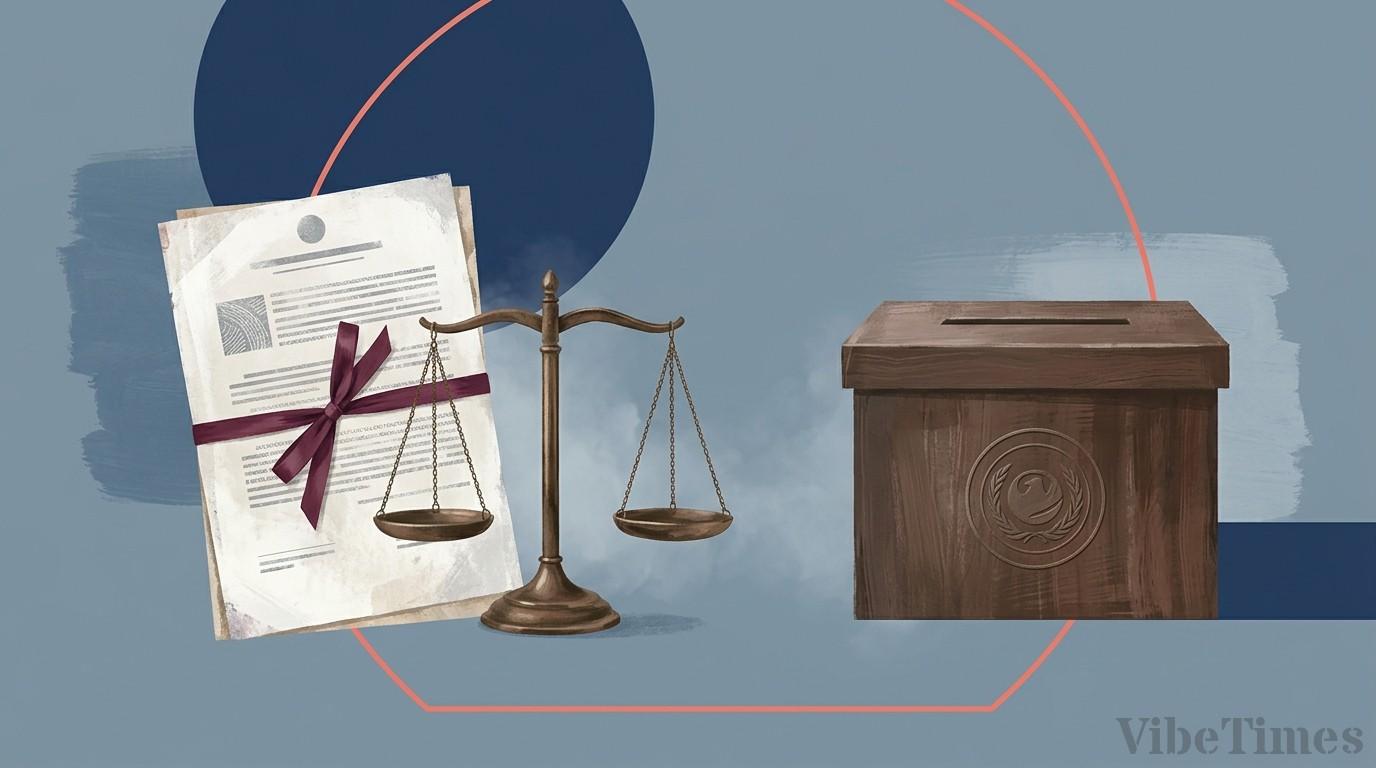
Aftermath of June 3 Local Elections: Election Commission Special Prosecutor Bill Faces Fairness Dispute Over 'Third-Party Recommendation'
Moves to introduce a special prosecutor to investigate the Central Election Commission (CEC) are gaining momentum following the ballot paper shortage incident during the June 3 local elections. However, the bill's passage is expected to face hurdles as the ruling and opposition parties remain divided over the nomination method for the special prosecutor. In particular, the ruling party's proposal for a 'third-party recommendation' method has drawn strong backlash from the opposition, including the People Power Party, citing concerns about fairness. The push for this special prosecutor bill is seen as transcending mere mismanagement of election administration, with significant implications for future parliamentary operations and political dynamics.
Han Byung-do, acting leader and floor leader of the Democratic Party of Korea, announced, "We will submit the Election Commission Special Prosecutor Bill this week" in relation to the ballot paper shortage during the June 3 local elections. He repeatedly emphasized his stance that "a third-party recommendation will be fair," suggesting consideration for granting the recommendation authority to third-party organizations like the Korean Bar Association. This reflects a judgment that a nomination process independent of political interests is necessary to ensure the autonomy and fairness of election management. The Democratic Party aims to investigate past election-related suspicions and establish preventive measures through this approach.
Key Issue in Election Commission Special Prosecutor Bill: The 'Third-Party Recommendation' Method and Opposition
The central point of contention in the current special prosecutor bill is who should be responsible for nominating the special prosecutor. The Democratic Party argues that a method where external third-party organizations, such as the Korean Bar Association or the Court Administration Office, make the recommendation is desirable to minimize political interference and enhance objectivity and fairness. Floor Leader Han Byung-do stressed via Facebook that "as we have consistently stated, the push for a special prosecutor for the Election Commission should not be delayed due to parliamentary non-cooperation," adding, "appointing a special prosecutor through third-party recommendations will be more realistic and fair." This logic posits that it is a way to avoid political conflicts that have arisen in past special prosecutor nomination processes and to gain public trust.
Conversely, the People Power Party strongly opposes the Democratic Party's 'third-party recommendation' proposal, deeming it ineffective. A bill spearheaded by Rep. Choi Eun-seok includes provisions mandating hearings focused on senior party officials in cases where election management failures infringe upon suffrage rights. The People Power Party contends that the third-party recommendation method proposed by the Democratic Party effectively limits the opposition party's right to recommend a special prosecutor and maintains its original stance that the opposition should have this right. A People Power Party official stated, "The third-party recommendation method is an attempt to effectively neutralize the opposition's role," and "The People Power Party has consistently advocated for introducing a special prosecutor recommended by the opposition to clearly identify those responsible for election mismanagement." This divergence in positions between the ruling and opposition parties is expected to be a major stumbling block for the swift passage of the Election Commission Special Prosecutor Bill.
Furthermore, this incident, coupled with the ballot paper shortage during the June 3 local elections, has amplified public distrust. The situation where some voters were unable to exercise their right to vote due to insufficient ballots was recognized as a grave issue that undermines the foundation of election management. Analysis suggests that public demand is rising to prevent the recurrence of such election management failures and to clarify accountability. Given that this issue can directly impact election outcomes, attention from all sectors of society is focused on the current push for a special prosecutor.
Market and Industry Impact and Future Outlook
Separately from the Election Commission Special Prosecutor Bill initiative, the sluggish progress of normal parliamentary legislative schedules is also noteworthy. The 22nd National Assembly is currently experiencing difficulties in processing legislation due to delays in negotiating the formation of parliamentary committees, and a 'half-baked parliament' appears to be prolonged due to the hardline confrontation between the ruling and opposition parties. While the Democratic Party intends to speed up the processing of livelihood-related bills by convening a special session in July, the People Power Party is continuing an extreme standoff, boycotting parliamentary schedules citing a violation of the rule of law. This political deadlock is bound to negatively affect not only the Election Commission Special Prosecutor Bill but also various legislative discussions aimed at stabilizing livelihoods and restoring the economy.
If the gap in political stances and the parliamentary paralysis continue, the legislative process for the Election Commission Special Prosecutor Bill is expected to become more complex. Although the Democratic Party initially intended to submit and swiftly pass the bill this week, delays are highly likely due to strong opposition from the People Power Party and issues surrounding parliamentary normalization. Even if the July special session is indeed convened, passage of the bill will inevitably face difficulties if the sharp confrontation between the parties persists. However, considering the gravity of the election management failure and public consensus, there is also an outlook that discussions on introducing a special prosecutor will advance in some form.
Reaching an agreement on the special prosecutor nomination method will be the biggest hurdle. If the Democratic Party's third-party recommendation method is pushed through, some controversies surrounding the special prosecutor's neutrality and fairness might be resolved, but the People Power Party's backlash could intensify. Conversely, if the People Power Party's opposition-party recommendation method is accepted, concerns about political bias may arise. These exchanges will directly impact the content and future schedule of the Election Commission Special Prosecutor Bill, and there is a possibility that public distrust in politics could be further exacerbated. As such, the tug-of-war between the ruling and opposition parties surrounding the Election Commission Special Prosecutor Bill is poised to be a significant test, gauging the direction of future government operations, beyond a mere legislative act.