Cheongju Councilor Accused of Sex Crimes Forces Candidacy Despite Acknowledging Victim, Exposing Legal Loopholes

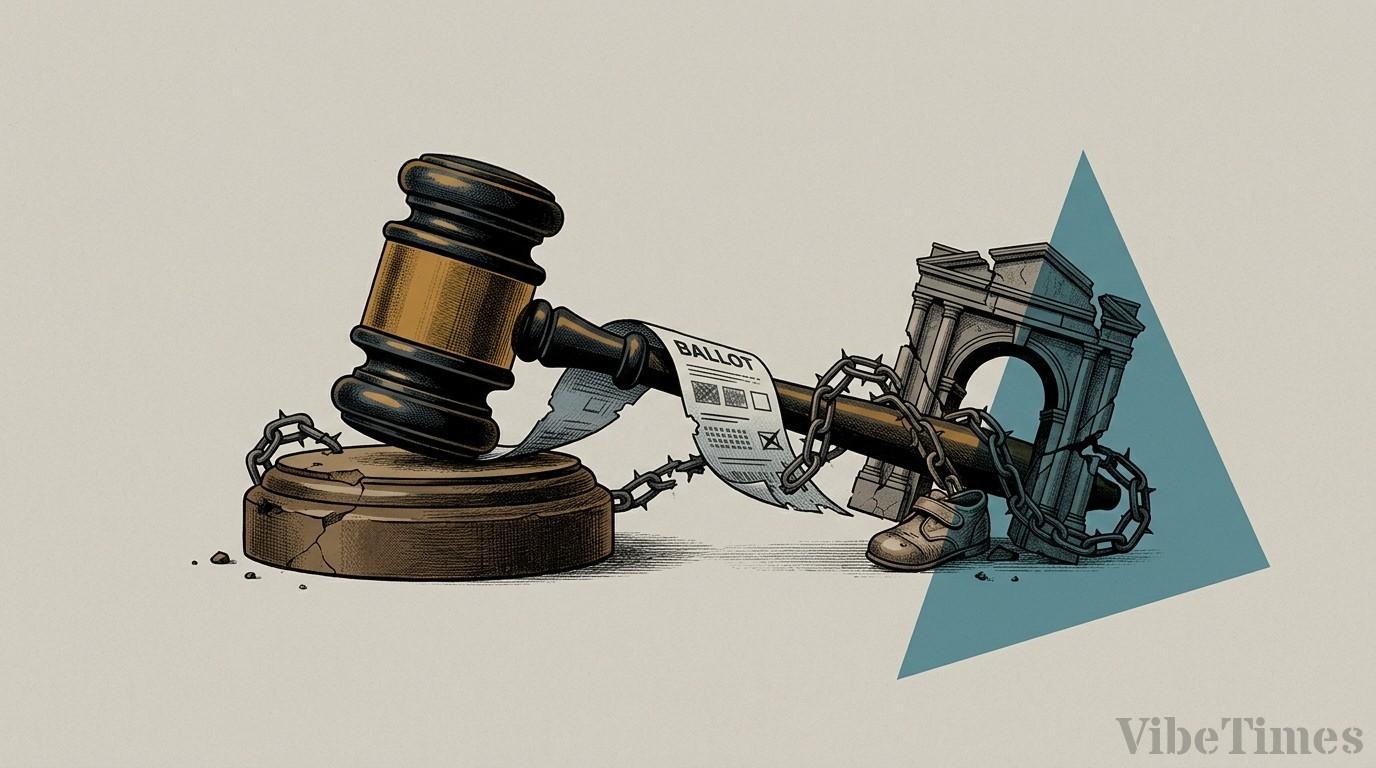
Public Service Election Law's Loophole Exposed as Councilor Accused of Sex Crimes Runs for Office
A Cheongju city councilor, currently undergoing intense police investigation including search and seizure, has caused a stir by proceeding with his candidacy for the local elections despite admitting to having sexual relations with a middle school victim. According to Yonhap News, the Cheongju Cheongwon Police Station recently conducted a comprehensive search and seizure of the councilor's office and residence, securing computers and digital devices. During the investigation, he reportedly admitted to the physical relationship with the minor victim but denied the criminal charges. As the local councilor under investigation formally announced his bid for re-election rather than stepping aside, the flaw in the current system—effectively granting political impunity to criminal suspects—has emerged as a controversial issue across the political spectrum.
Political Divide on Restrictions on Candidacy
A legislative gap exists that cannot completely block a suspect from running for office until legal punishment is finalized. The current Public Official Election Act stipulates that a candidacy cannot be prevented unless a fine of over 1 million won is confirmed or the right to stand for election is revoked. This leads to criticisms of a structural problem where politicians facing investigation for serious crimes exploit their immunity and election privileges to prolong their political lives. In particular, as crimes such as the production of sexual exploitation materials and child sex trafficking carry significant social repercussions, voices calling for restrictions on their candidacy are growing louder.
The opposition party is strongly condemning the councilor's candidacy amid allegations of child sexual exploitation, demanding an official apology from the People Power Party rather than mere disciplinary action like expulsion. The opposition argues that the party bears moral responsibility, citing the councilor's repeated evasion of police summonses and refusal to surrender his mobile phone. They argue this cannot be dismissed as a simple personal lapse. Meanwhile, the councilor’s own party has stated that it will strip him of his party membership immediately depending on the outcome of the investigation, moving to contain the situation. However, in the absence of clear legal sanctions and with the candidate registration deadline passed, the party is destined to shoulder this political burden until the election concludes.
Abuse of Election Immunity and Flawed Vetting Process
Regardless of party lines, the fact that an individual's criminal allegations have escalated into a national issue in the local elections highlights the structural limitations of the nomination verification system. This is the result of political parties rushing to nominate candidates after failing to properly check for basic criminal records or ethical disqualifications during the candidate review process. Attempts to cover up serial or serious criminal allegations through candidacy or to gain political protection underscore the need for stricter institutional control in the future. Critics from both inside and outside the political circle argue that an appropriate institutional balance must be struck between the public's right to know and the suspect's basic rights.
Prospects for Stricter Enforcement and Election Law Revision
Sex crimes against children and minors are evaluated as categories with high social impact and high risk of recidivism. Legal experts analyze that institutional supplements to completely block the entry of criminal suspects into public office, alongside thorough investigations, are inevitable. As cases where politicians accused of crimes exploit the election system to avoid disadvantages and evade responsibility continue to be repeated, strong institutional remedies are urgently needed.
Discussions on revising the election law are expected to gain full momentum centered on the National Assembly. Proposals include significantly expanding the disqualification criteria for eligibility stated in the Public Official Election Act to prevent those under investigation for serious crimes from running in the first place. Concurrently, arguments for establishing strong legal sanctions for non-compliance with investigations, such as refusing to submit mobile phones, are likely to gain traction. While voters will ultimately pass judgment through the ballot, legislative measures to significantly strengthen candidate registration requirements are expected to be prepared soon to reduce the social confusion and costs caused by the neglect of the system.