Jung Chung-rae Declares Bid for Democratic Party Leadership… Pledges to Protect President Lee Jae-myung as Party Race Heats Up Amid Boycott Showdown

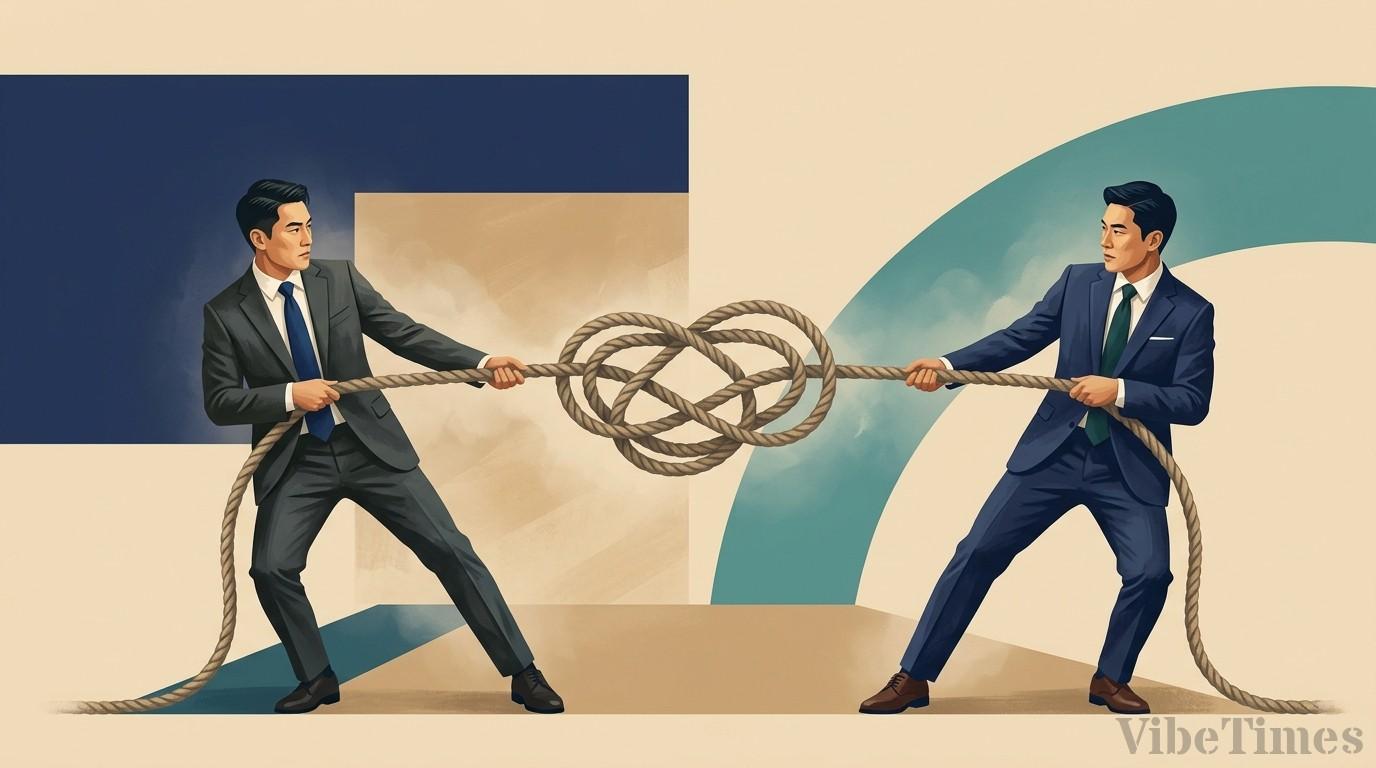
Amid Verification of Political Strength, Democratic Party Leadership Race and Realignment of Opposition Platform
With the Democratic Party’s national convention approaching, Rep. Jung Chung-rae officially declared his candidacy for party leader, pledging full support for President Lee Jae-myung. He outlined a strategy to foster party unity by simultaneously promising not to run in the presidential election and to protect President Lee. Meanwhile, the People Power Party has taken the drastic step of boycotting the National Assembly to check the ruling party’s dominance, exerting political pressure regarding the core issue of pushing for a special counsel on the National Election Commission. Both parties have effectively entered a battle of platforms for survival, going beyond simple personnel changes. President Lee recently urged the political circle to engage in competition to improve itself, stating that political competence determines the nation’s rise and fall. These remarks are interpreted as a call to enhance policy density and the quality of communication with the public amidst the fierce power struggle between the ruling and opposition parties. Former Prime Minister Kim Min-seok, who recorded a suitability rating of 15.7% for the next presidential candidate in a June 2026 opinion poll, is also challenging for the party leadership, emphasizing complete alignment between the party and the government. Inside the Democratic Party, an under-the-surface competition for the next generation of power is beginning in earnest. In this process, candidate Jung Chung-rae criticized former Prime Minister Kim, arguing that the Prime Minister’s remarks about his aspirations for the party leadership had stirred up controversy. This aggressive statement, warning against causing administrative confusion through personal political ambition, highlights just how intense the intra-party competition has become.
Parliamentary Boycott and Special Counsel Politics, The Background of the Political Stalemate
The prolonged boycott of the National Assembly by the People Power Party is not merely a resistance to the legislative schedule but a tactical move with a clear target: a special counsel investigation into the National Election Commission. The opposition party is maintaining its stance that it cannot abandon its qualifications to recommend a special counsel candidate, thereby pressuring the government and the ruling party. This clash has become even more complex as it coincides with the situation where, despite President Lee announcing the appointment of a special inspector in July 2025 shortly after taking office, a year has passed without the Democratic Party proceeding with the recommendation process. The ruling party is pointing out the void in inspection authority and holding the Democratic Party responsible. As the political standoff deepens, the risk of a decline in the momentum of state administration is growing. President Lee’s recent expression of his intent to request a reconsideration of bills in the National Assembly in case of emergency is analyzed as an attempt to break through this legislative gridlock. The President urged the opposition party to use language of responsibility toward the people and emphasized not being trapped in partisan silos. However, as the gap between the ruling and opposition parties’ positions shows no sign of narrowing, the possibility of a parliamentary paralysis remains a real threat. Such political uncertainty acts as a variable in macroeconomic judgments. This is because if economic players cannot read the policy direction, investment and consumer sentiment could be dampened.
Mega-Projects and Tax Reform: The Impact of Political Stability on the Economy
The Lee Jae-myung administration has designated the period from 2026 to 2027 as the golden time for economic transformation and is pursuing expansionary fiscal policy centered on three mega-projects. At a recent public briefing held at the Blue House, Samsung Electronics Chairman Lee Jae-yong’s investment plan was also discussed, confirming the will for public-private cooperation. Through the 2026 National Fiscal Strategy Meeting, the government concretized plans for a record budget exceeding 800 trillion won and investments in future cutting-edge industries such as artificial intelligence. The fact that the National Tax Service recovered 40.4 billion won—over 90% of the 43.7 billion won in tax collection coordination results—also reveals the government’s will to strengthen tax justice. However, for this economic blueprint to succeed, backing from the political circle is essential. If the budget bill and tax reform bill are not passed in the National Assembly on time, the effectiveness of the policies will inevitably be significantly undermined. President Lee’s announcement that he will preside over a major real estate debate on the 23rd and reflect the results in the 2026 tax reform plan is also a measure to solidify the institutional foundation. For businesses to turn political risk into economic opportunity, policy predictability must be secured. Amid criticism that it has become harder for the 2030 generation to buy their own homes, striking a proper balance between easing real estate regulations and providing tax benefits will be a key task for future economic stability. To boost corporate investment morale and improve the economic sentiment felt by the younger generation, an environment where the political circle can devote itself to state administration must be created urgently.
Qualitative Shift in Political Competition and Future Outlook
Rep. Jung Chung-rae’s declaration of candidacy for party leadership and former Prime Minister Kim Min-seok’s challenge signify the beginning of a platform competition within the Democratic Party, rather than a simple transfer of power. The key verification standard will be who can more stably support President Lee’s steering of state affairs. Candidate Jung is inducing the consolidation of the conservative wing within the party with a clear message to protect President Lee. In contrast, former Prime Minister Kim is emphasizing the maximization of policy efficiency through complete party-government alignment, projecting a pragmatic line. The People Power Party is also seeking a new identity for conservative politics that goes beyond the simple role of an opposition party, as calls for internal leadership change continue. If the political circle fails to move beyond partisan logic toward policy competition, there is a high risk of missing the economic golden time. The exercise of the political competence emphasized by the President must ultimately be proven by legislative achievements that improve the lives of the people. The upcoming political competition between the ruling and opposition parties is expected to face a real test during the real estate debate and the 2026 tax reform discussions. Only when political stability is secured can the grand economic blueprint of mega-projects successfully land. For additional tax revenue intended to boost economic development potential to be properly executed, political consensus and cooperative governance must follow. Both the ruling and opposition parties will expand the stage of political competition from the main hall of the National Assembly to the election field, facing the stern judgment of the voters.